Closing summary
It is 5pm in Gaza and in Tel Aviv. We will be closing this blog soon, but you can stay up to date on the Guardian’s Middle East coverage here.
Here is a recap of the latest developments:
An Israeli incursion in Rafah could result in ‘slaughter’, a UN official said on Friday. “It could be a slaughter of civilians and an incredible blow to the humanitarian operation in the entire strip because it is run primarily out of Rafah,” said Jens Laerke, spokesperson for the UN humanitarian office, at a Geneva press briefing.
A World Health Organization (WHO) official said on Friday that the agency had a contingency plan prepared in case of an Israeli incursion into Gaza’s Rafah but said it would not be sufficient to prevent a substantial rise in the death toll. “I want to really say that this contingency plan is a Band-Aid,” said Rik Peeperkorn, WHO representative for the occupied Palestinian territory, at a Geneva press briefing via video link.
Turkey’s trade halt with Israel will continue until a permanent ceasefire in Gaza is secured as well as unhindered humanitarian aid flow to the region, Turkish trade minister Omer Bolat said on Friday. Turkey stopped all exports and imports to and from Israel on Thursday, citing the “worsening humanitarian tragedy” in the Palestinian territories. Turkish exporters with firm orders are looking at ways to send their goods to Israel via third countries four export sector sources told Reuters on Thursday.
Israel’s foreign minister, Israel Katz, accused Turkey’s president, Recep Tayyip Erdoğan, of acting like a “dictator” after the trade restrictions were first reported. Katz added that blocking ports for Israeli imports and exports ignores trade deals, adding on social media platform X that Israel would work toward alternatives for trade with Turkey.
The UK on Friday imposed sanctions on two “extremist” groups and four individuals in Israel who it blamed for violence in the West Bank. The British Foreign Office named Hilltop Youth and Lehava as two groups which it said were known to have supported, incited and promoted violence against Palestinian communities in the West Bank. The four individuals sanctioned were responsible for human rights abuses against these communities, the statement added. The UK’s foreign secretary David Cameron said extremist settlers were undermining security and stability and threatening the prospects for peace.
An Israeli man held hostage in Gaza since the 7 October Hamas attack has been confirmed dead, the government said early Friday. Dror Or, 49, was killed and his body was held in Gaza since 7 October, said the Be’eri kibbutz where he had lived.
International criminal court (ICC) prosecutors warned on Friday against “individuals who threaten to retaliate” against the tribunal or its staff, saying such actions might constitute an “offence against its administration of justice”. The ICC did not say if the comment related to its investigation into possible war crimes by Israel or Palestinian groups in Gaza and the West Bank.
The availability of food in the Gaza Strip has very slightly improved, though the risk of famine remains, Rik Peeperkorn, the WHO representative in the Palestinian territories told a press briefing in Geneva via video link from Jerusalem. He said that the threat of famine had “absolutely not” gone away due to the slight improvement in the food situation. Ahmed Dahir, the WHO’s Gaza sub-office team lead added that “access to food now has to be sustained”.
Since October 2023, more than 100 Palestinian reporters have been killed in Gaza, including at least 22 in the course of their work, said Reporters Without Borders (RSF) which published its annual World Press Freedom Index on Friday, marking World Press Freedom Day 2024. The Maghreb and Middle East regions performed the worst in terms of restrictions on press freedom by government forces, according to the report.
At least 34,622 Palestinians have been killed and 77,867 injured in Israel’s military offensive on Gaza since 7 October, the Hamas-run Gaza health ministry said in a statement on Friday.
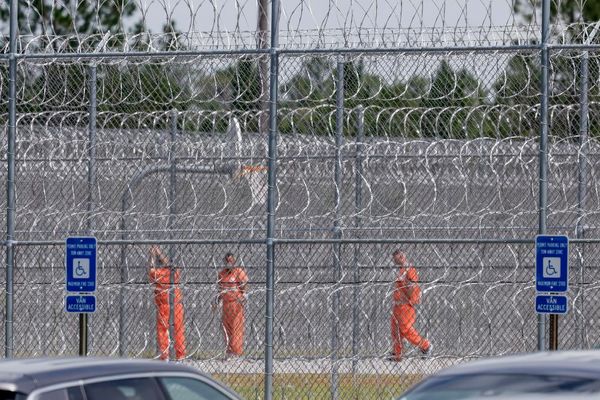
A senior Palestinian doctor died in an Israeli prison after more than four months of detention, two Palestinian prisoner associations said on Thursday, blaming Israel for his death. The associations said in a joint statement that Adnan al-Bursh, head of orthopedics at al-Shifa hospital, Gaza’s largest medical facility, had been detained by Israeli forces while temporarily working at al-Awada hospital in north Gaza. They called his death an “assassination” and said his body remained in Israeli custody.
Francesca Albanese, the UN special rapporteur on the occupied Palestinian territories, said in comments on X that she was alarmed by the death of Bursh in Israeli detention. “No Palestinian is safe under Israel’s occupation today. How many more lives will have to be taken before UN member states, especially those demonstrating genuine concern for human rights globally, act to protect the Palestinians?” she said.
On Thursday, the Israeli authorities released 64 Palestinians they had detained during their military offensive in Gaza via the Israeli-controlled Kerem Shalom crossing, the Palestinian borders and crossings agency said. One of them was the body of a man who had died in detention, the prisoners’ associations said. Another freed detainee arrived in critical condition and was moved into hospital upon arrival, the crossings agency added.
Iran has released the crew of a seized Portuguese-flagged ship linked to Israel, but remains in control of the vessel itself, foreign minister Hossein Amirabdollahian said. “The seized ship, which turned off its radar in Iran’s territorial waters and jeopardized the security of navigation, is under judicial detention,” Amirabdollahian said, according to a foreign ministry post on X late Thursday night. He said the release of the crew was a humanitarian act and they could return to their countries along with the ship’s captain
Police in Paris entered France’s prestigious Sciences Po university on Friday and removed student activists who had occupied its buildings in protest against Israel’s conduct in its war against Hamas in Gaza. A Reuters witness saw police go into the buildings and take out many of the 70-odd protesters inside.
Seven people were killed in an overnight airstrike on a home in northern Rafah, according to Al Jazeera’s Tareq Abu Azzoum who was reporting from the southern Gaza district. He said that four of the victims were children. Elsewhere in Rafah, especially to the east, there had been a “surge in airstrikes and artillery bombardment,” Abu Azzoum told Al Jazeera.
The Australian government faces a decision next week on whether to support admitting Palestine as a full member of the UN and is swapping notes with allies including South Korea and Germany. A copy of the draft resolution, seen by Guardian Australia, expresses “deep regret and concern” that the US used its veto power to block the proposal at the UN security council last month.
Hundreds of pro-Palestinian protesters on Friday met a counterprotest supporting Israel at the University of Sydney. The Australian Broadcasting Corp (ABC) reported a scuffle between the groups. Supporters of both sides later backed down because of a heavy security presence, while the University of Sydney vice-chancellor Mark Scott said there was space for both groups of protesters.
Annie Kelly is a human rights journalist for the Guardian and Observer.
Political attacks on press freedom, including the detention of journalists, suppression of independent media outlets and widespread dissemination of misinformation, have significantly intensified in the past year, according to the annual World Press Freedom Index published by Reporters Without Borders (RSF).
The index ranks 180 countries on the ability of journalists to work and report freely and independently.
The Maghreb and Middle East regions performed the worst in terms of restrictions on press freedom by government forces, according to the report. In the past year, said RSF, governments across the region have attempted to control and curtail the media through violence, arrests and draconian laws, compounded by “systematic impunity for crimes of violence against journalists”.
The RSF says that, since October 2023, more than 100 Palestinian reporters have been killed in Gaza, including at least 22 in the course of their work.
Elsewhere in the region, journalists have been killed in Sudan, where there have been serious attempts to curb independent reporting of violence and civil war. The situation for media professionals in Syria has also deteriorated, with journalists who have fled press repression in their home country threatened with expulsion from neighbouring Jordan, Turkey and Lebanon. The RSF also says that four of the world’s biggest jailers of journalists – Israel, Saudi Arabia, Syria and Iran – have continued to attack and detain them.
You can read the full piece here:
Updated