A New York Meeting Reopens an Unfinished Case
On the sidelines of the United Nations General Assembly's 81st session, Mexican Foreign Secretary Roberto Velasco sat down with UN High Commissioner for Human Rights Volker Türk on September 25. Per Proceso's account of the meeting, the two men reviewed the disappearances and human-rights agenda raised during Türk's April visit to Mexico, along with the deaths of Mexican citizens inside U.S. immigration detention facilities. El Universal reported that the Foreign Ministry's statement did not specify whether the two officials also discussed the General Assembly's separate debate over forced disappearances inside Mexico, a UN committee finding the government has rejected as biased.

How the Death Toll Reached 17
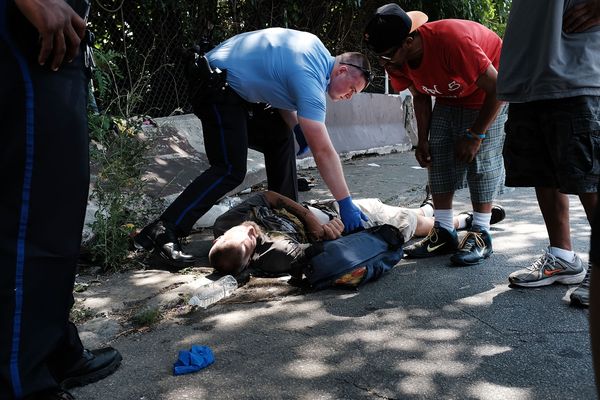
Mexican officials trace the count to 14 nationals who died inside ICE detention and three who died during enforcement operations since President Trump's second term began, a tally Velasco laid out in July, according to CNN's review of the 17 cases. The most recent of the three field deaths belongs to Lorenzo Salgado Araujo, a 52-year-old construction worker shot by an ICE officer on July 7 while driving his crew to a Houston job site. Federal officials said Salgado Araujo tried to ram an agent with his van; his family and two passengers in the vehicle have disputed that account. PBS NewsHour's rundown of the shooting notes it set off protests in Houston and calls from Democratic lawmakers for an independent review.
From Cease-and-Desist Letters to Criminal Complaints — and a Rebuff From Washington
Velasco announced in July that Mexico would pursue criminal complaints rather than rely solely on diplomatic notes. Ambassador Roberto Lazzeri filed 20 of them on July 13 — eight with state prosecutors and twelve with county prosecutors — spanning Arizona, California, Florida, Georgia, Illinois, Louisiana, Missouri and Texas, according to Mexico News Daily's breakdown. The ministry separately sent a cease-and-desist letter to GEO Group, the company that runs California's Adelanto detention center and the site of four of the 17 deaths, demanding improved medical care and a review of alleged rights violations, The Hill reported. Within days, the U.S. State Department's Bureau of Western Hemisphere Affairs publicly returned that letter to Lazzeri, arguing Mexico had no standing to direct the conduct of U.S. government personnel on U.S. soil, Mexico Solidarity Media reported; Mexico's embassy responded that the letter was issued strictly under its consular-protection authority. The Department of Homeland Security has continued to maintain that detainees receive full due process along with proper meals, water and medical treatment, a position CNN reported the agency has repeated in response to each new case.
What the UN Actually Did After Mexico Wrote In
Separately from the criminal complaints, Velasco wrote to Türk's office on July 14, asking UN investigators to gather information from U.S. authorities and assess whether the deaths are consistent with international human rights obligations, per UPI's account of the letter. Türk's office answered on August 5, telling Mexico it had forwarded the cases to the UN Human Rights Council for independent consideration and would keep monitoring conditions inside U.S. detention facilities, Diario.mx reported. Velasco described that reply as more substantive than what Mexico had received from several U.S. prosecutors: four state attorneys general — in Illinois, Texas, Florida and California — and four county-level prosecutors, in Atlanta, Chicago, Oxnard and San Bernardino, had at that point only confirmed receiving the complaints.
What a Detained Mexican National or Their Family Can Do
Beyond the diplomatic track, Mexico's Center for Information and Assistance to Mexican Nationals, known by its Spanish acronym CIAM, runs a free hotline staffed around the clock that helps families locate a detained relative, explains the U.S. legal process a detainee faces and connects callers to the nearest consulate for legal guidance, according to the program's official listing. Mexican consulates have also increased in-person visits to detention and processing centers to interview detained nationals directly. Anyone with a missing or detained family member in the U.S. can reach the hotline toll-free from inside the country.
What's Still Unresolved
Neither the Foreign Ministry's brief statement on the September 25 meeting nor the UN correspondence has produced a public timeline for when investigations into the 17 deaths might conclude. Florida's state prosecutor has already declined to pursue its case further, telling Mexican officials its own review reached the same conclusion as ICE's — that the death was a suicide — so no additional investigation would open, per Diario.mx. For now, the September 25 meeting signals Mexico intends to keep the issue in front of the UN's top human rights official rather than let it fade from the diplomatic agenda.