Nearly every government in the Western Hemisphere lined up this week behind a push to hold Nicaragua's Daniel Ortega accountable for vowing to do away with future elections. Mexico chose not to join them.
The OAS Permanent Council approved a resolution on Aug. 19 calling for an emergency gathering of the region's foreign ministers, by a count of 29 in favor and one opposed. Brazil cast the sole "no" vote. Haiti and Venezuela weren't in the room, according to reporting from EWTN News that named the two absent delegations. Mexico neither backed nor blocked the measure, choosing instead to abstain — a move Proceso confirmed left Mexico standing apart from the rest of Latin America's major economies on the question. The measure invokes Articles 61 through 63 of the OAS Charter, tools the body typically saves for crises serious enough to warrant a unified hemispheric response, framing developments inside Nicaragua as a matter "of an urgent nature and of common interest to the American States."
Why Mexico's Ambassador Says the Vote Went Too Far
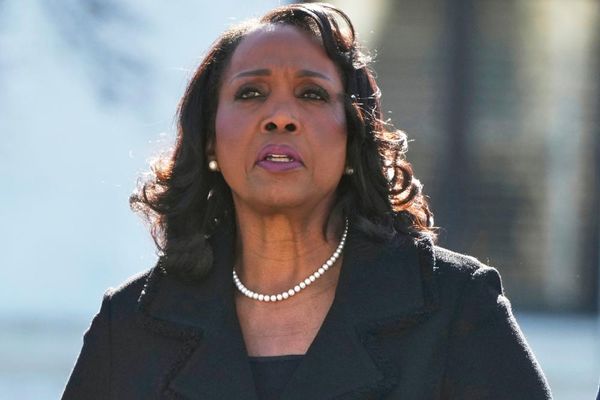
Mexico's representative to the OAS, Ambassador Alejandro Encinas Rodríguez, told fellow delegates that Managua's internal turmoil didn't rise to the level of a hemispheric emergency. He argued the OAS risked reaching beyond its mandate by intervening in the affairs of a country that formally exited the organization years ago, cautioning that treating a domestic political crisis as a security threat tends to deepen isolation rather than ease it, according to La Jornada. In Encinas's own words, the situation "does not constitute a threat to hemispheric peace or security." He pressed the council to keep treating the standoff as a political and human-rights matter, not a security one — while signaling that Mexico would back a narrower path centered on strengthening dialogue with Nicaragua's government, provided it respects the country's sovereignty.
The Speech That Triggered the Alarm
Concern had been building since Ortega's July 19 remarks at a rally marking the 47th anniversary of Nicaragua's Sandinista revolution, where he declared the country would hold no more elections that might let opposition figures take control of the government. Legislation now moving through Nicaragua's Congress would tack another year onto the presidential term — stretching it to seven years — let electoral authorities dissolve any party receiving money from abroad, and bar candidates branded "traitors to the homeland" from running, Al Jazeera reported. It isn't the first such move: an earlier round of reforms roughly a year and a half ago already lengthened the term from five to six years and pushed the next vote from November 2026 to November 2027. Lawmakers are expected to finalize the newest changes in September. UN High Commissioner for Human Rights Volker Türk weighed in last month, warning that the latest developments "further deepen the severe restrictions on fundamental freedoms" that have taken hold under Ortega and co-president Rosario Murillo, according to OHCHR.
Washington Wants a Deadline, Not Just a Meeting
The United States co-sponsored the measure alongside Argentina, Costa Rica, Panama and Paraguay, according to a State Department release. Michael Kozak, the senior State Department official overseeing Western Hemisphere affairs, told the council the U.S. "cannot continue to act alone against the threat the Murillo-Ortega dictatorship poses." Washington is pushing for the ministers to convene before September, when Nicaragua's legislature is expected to lock in the disputed reforms.
Sheinbaum's Answer Hasn't Changed
Mexico's abstention lines up with President Claudia Sheinbaum's response when Ortega first made his announcement a month earlier. Asked about it at her July 27 morning press briefing, Sheinbaum avoided criticizing her Nicaraguan counterpart, leaning instead on Mexico's constitutional principle of nonintervention in other nations' affairs. "Whatever the people of Nicaragua decide" was her answer, she said, adding that Mexico stands behind democracy in whatever shape it takes, per Infobae. The position tracks the decades-old Estrada Doctrine that has guided Mexican foreign policy since the 1930s and that predecessor Andrés Manuel López Obrador leaned on repeatedly regarding Nicaragua and Venezuela — though Infobae notes that some analysts argue López Obrador didn't apply that doctrine evenly, pointing to his willingness to weigh in on Ecuador's politics and on Peru's 2022 removal of President Pedro Castillo, a episode that briefly ruptured relations between Mexico City and Lima.
A South Florida Community Is Watching
The dispute carries weight well beyond diplomatic circles. An estimated 450,000 U.S. Hispanics traced their roots to Nicaragua as of 2021, per Pew Research Center, with Florida home to the largest share of that population. Much of that community is concentrated in Sweetwater, the Miami-Dade city long nicknamed "Little Managua" for its decades of Nicaraguan settlement, according to Caplin News at Florida International University; smaller Nicaraguan communities have also grown in Houston and Los Angeles. Many families in these communities left Nicaragua for the same kind of political consolidation Ortega and Murillo are now working to lock in, which makes Mexico's abstention a sore point for a government that otherwise markets itself as a champion of migrants and human rights across the region.
What Happens Next
No date has been set for the foreign ministers to meet, and the OAS can't sanction Nicaragua on its own — its options run to diplomatic censure or urging individual member states to act, since Managua isn't bound by the organization's decisions anymore. The council's president has been instructed to draft a proposed agenda without delay, with Washington still hoping for a session before Nicaragua's Congress can lock in the changes next month. Whether that produces more than a strongly worded statement will likely come down to whether Brazil, Mexico and other holdouts eventually come around to Washington's position — or keep charting their own course, much as they have on Venezuela.