
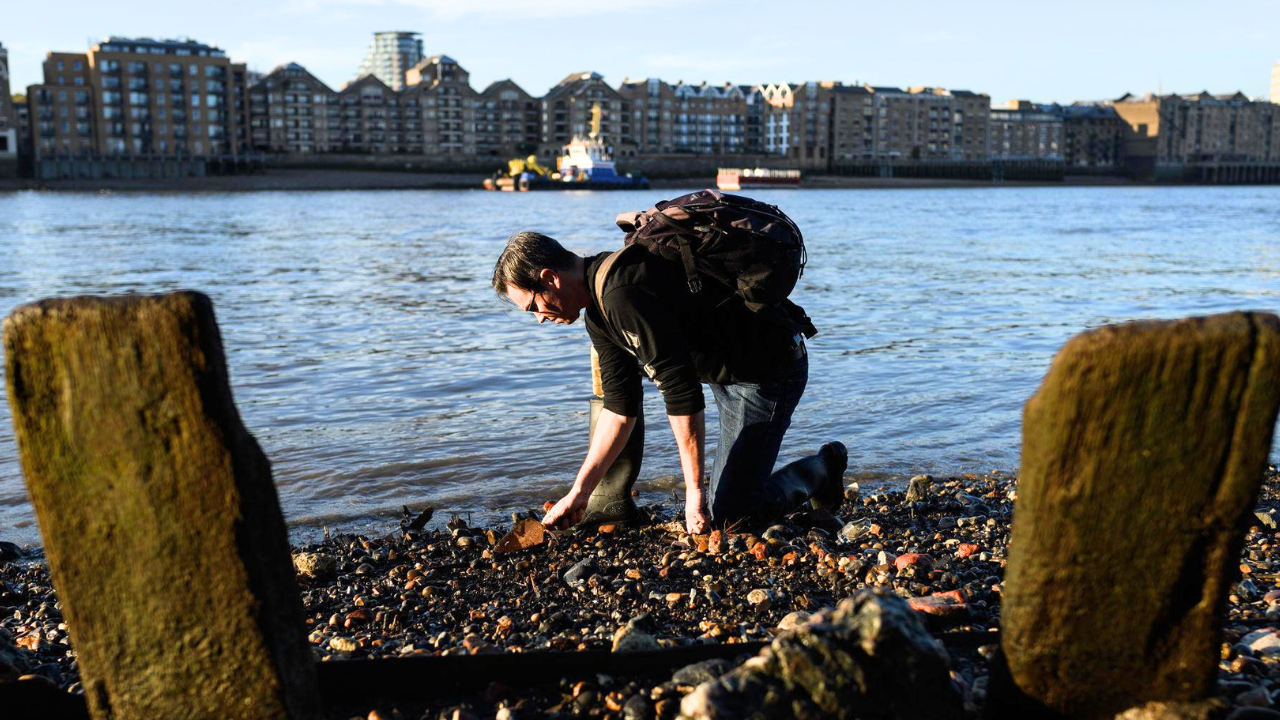
Just after midnight, while much of London sleeps, figures carrying headlamps and small shovels quietly descend the slippery banks of the River Thames. Kneeling in thick mud beneath bridges and beside ancient embankments, they sift through silt searching for fragments of forgotten history. Some discover Roman coins. Others uncover medieval jewellery, Victorian toys or centuries-old bones. These modern treasure hunters are known as mudlarks, and for many of them, the Thames is not simply a river but a vast archaeological archive hiding thousands of years of London’s past beneath its tides.
What makes mudlarking especially fascinating is that the river never fully stops revealing history. Every tide reshapes the shoreline. Every storm or shift in the mud can expose objects that may have remained hidden for centuries. Along the Thames foreshore, ordinary people can still stumble upon pieces of Roman Britain, medieval London or the Victorian era with their own hands.













