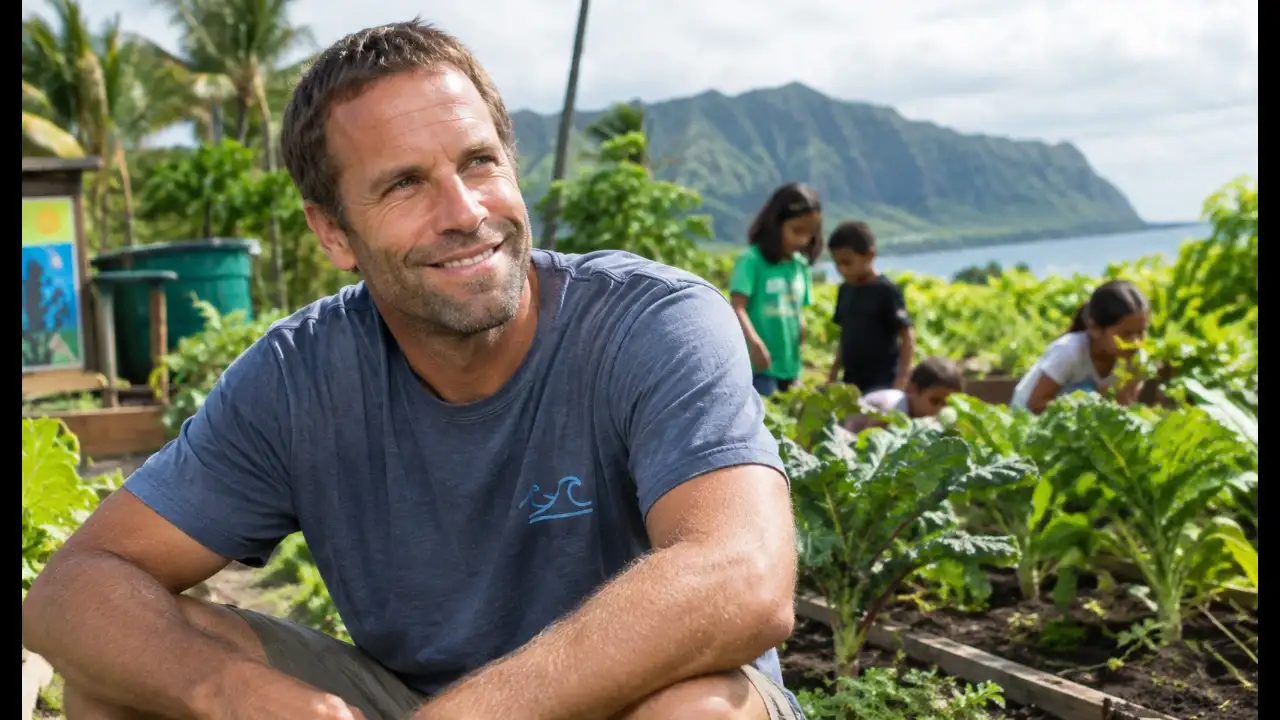
Jack Johnson has spent decades making music that reflects his love for Hawaii's beaches and oceans. Away from the stage, he has built something just as lasting. In 2003, the Hawaii-born singer-songwriter and his wife, Kim Johnson, co-founded the Kōkua Hawaiʻi Foundation to help children learn through nature and care for the environment in everyday life.
The foundation began with school recycling projects but soon expanded into school gardens, composting, sustainable food systems and environmental education across Hawaii. Today, its programs help thousands of students grow food, reduce waste and build a stronger connection with the land they call home, making Johnson's environmental work as meaningful as his music.

Jack Johnson: Turning Stage Lights into Eco-Action
One of the foundation’s notable efforts came through a partnership with the federal Every Kid in a Park program. Johnson and Kim committed $100,000 in field-trip grants with the goal of helping all 17,000 fourth-grade students across Hawai‘i experience national parks and other public lands.
The initiative was announced at the James Campbell National Wildlife Refuge on O‘ahu’s North Shore, where more than 200 local fourth-graders took part in hands-on environmental activities. Their day included a marine debris beach cleanup, an albatross bolus dissection and native plant restoration, along with lessons about endangered water birds, sea turtles and the yellow-faced bee.
The activities were designed to make environmental education tangible rather than confined to a classroom. Students could see the effects of discarded plastic, examine what seabirds had consumed and participate directly in restoring native habitat.
Each participating fourth-grader also received an Every Kid in a Park annual pass. The pass provided free admission for students and their families to more than 2,000 federally managed lands and waters, including national parks, wildlife refuges and national forests and grasslands.
Johnson connected music with conservation
By that point, Johnson was already using his public profile to bring environmental issues into a much wider cultural conversation. Since 2001, his albums had sold more than 20 million copies worldwide, giving him an audience far beyond Hawai‘i.
Yet the foundation’s work was focused less on celebrity advocacy than on practical environmental education. Its programs have supported school gardens, recycling initiatives, sustainable local food systems and plastic-free efforts, reflecting concerns that are especially visible on islands where land and natural resources are limited.