Get all your news in one place.
100's of premium titles.
One app.
Start reading
The Economic Times
The Economic Times
Team Global

Mary Kathleen’s uranium town still had 212 homes when its mine closed in 1982; the company settlement was dismantled and auctioned off in 1983

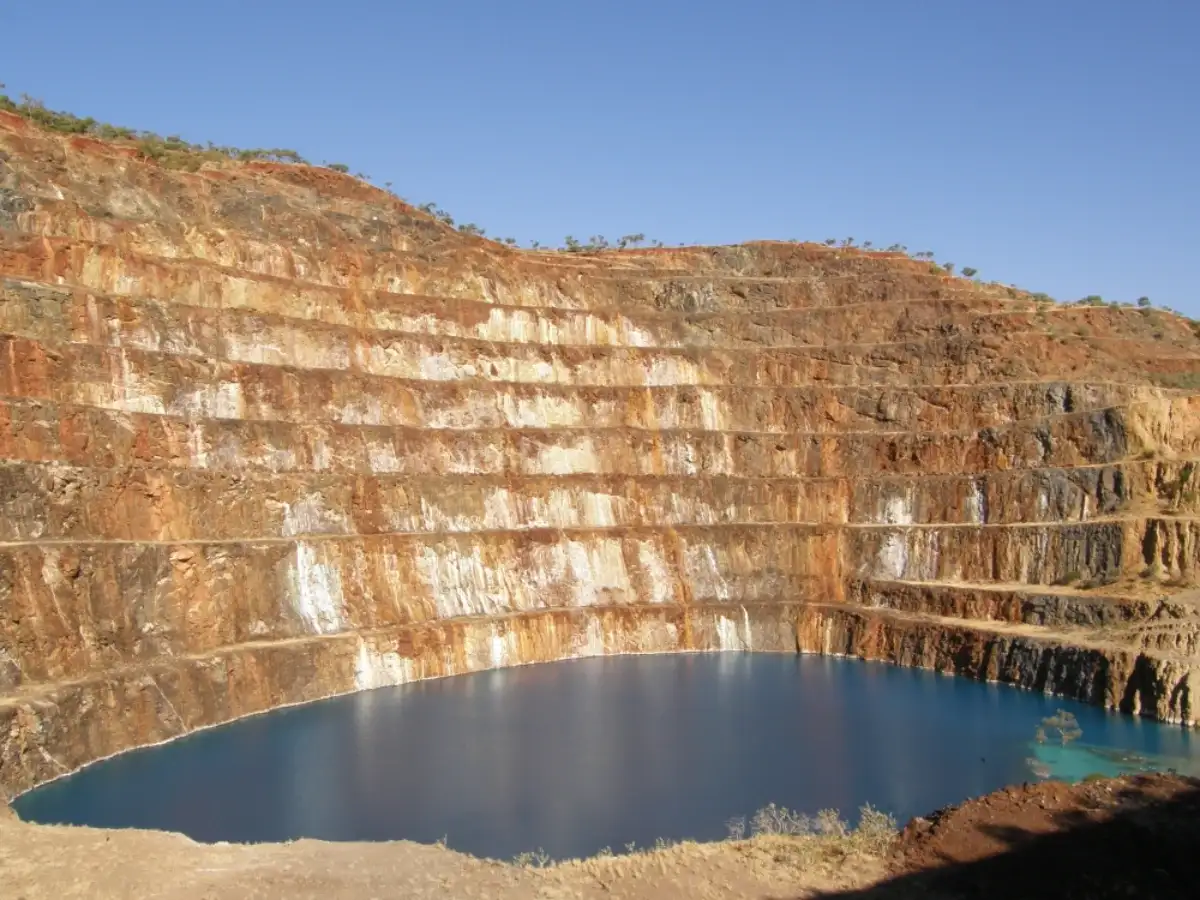
For a town to simply vanish is quite disturbing. Mary Kathleen, situated in the Selwyn Range of outback Queensland, was a mining settlement with schools, a movie theatre, a golf course and numerous homes. Geologists A.D. McKay and Y. Miezitis, in a mineral resource report published by Geoscience Australia, described it as an artificial town created to service the Mary Kathleen uranium mine. The township was built close to the open-cut mine and grew alongside the mining operation. When the mine closed for the second and final time in 1982, the township was dismantled rather than left to deteriorate. Many buildings and other structures were removed, leaving behind roads, concrete foundations and other remnants.

A company town with only one aim
Mary Kathleen was never intended to become a permanent settlement. The town was named after the wife of one of the prospectors associated with the discovery of the uranium deposit in 1954. Within a few years, an architect-designed township had emerged from the red dirt near the mine. Houses were provided for families, while single workers lived in accommodation known as 'dongas'. By the early 1960s, roughly a thousand people were living in the settlement, which had a hospital, swimming pool, sporting grounds and other facilities associated with a small but established community.

The mine's history unfolded in two main production campaigns, and the population of the township changed with them. The first operation began in the late 1950s, with uranium production continuing until 1963. The Queensland government says the mine was commissioned in 1956 and that its first commercial shipment of uranium concentrate was produced in 1963, fulfilling a contract to supply 4,082 tonnes of uranium oxide to the United Kingdom Atomic Energy Authority. The mine then entered a period of care and maintenance.

The second phase followed new demand for uranium. Queensland government records say the mine reopened in 1974 after new sales contracts were secured with Japan, Germany and the United States for uranium used in power generation. The second production campaign continued until 1982, when the deposit was considered mined out. The mine therefore did not reopen in 1976, as the earlier version of this account stated.

The dismantling of a town built around a mine

Once the uranium operation ended in 1982, the reason for maintaining a dedicated company township largely disappeared. The mine, processing plant, tailings facilities, evaporation ponds and township were subsequently decommissioned between 1982 and 1985. The Queensland government says the work cost about $19 million.

In 1983, the contents of the township and mine site were offered for sale, allowing buildings, household items, equipment and other assets to be dispersed rather than simply abandoned. Some houses were reportedly dismantled and transported to other communities, helping turn what had been a purpose-built mining settlement into remnants scattered across the region.

The environmental legacy proved more complicated than the disappearance of the town itself. Research by B.G. Lottermoser and P.M. Ashley examined seepage from the rehabilitated Mary Kathleen uranium mill tailings repository. Their study found acidic, saline, metal-rich and radioactive water within the capped tailings and reported seepage from the base of the tailings dam into the former evaporation pond and local drainage system.

A separate study by Lottermoser, P.M. Ashley and M.T. Costelloe examined contaminant movement from waste rock dumps and mineralised ground. The researchers found evidence of continued physical and chemical mobility of contaminants decades after rehabilitation, while also noting that rehabilitation had been partly successful in reducing the dispersion of uranium and related elements into the surrounding environment.

This makes it more accurate to describe the work as a major rehabilitation project rather than an entirely successful one. Queensland records say the rehabilitation was completed in 1985, but the government continues to identify environmental and safety risks at the abandoned mine site, including acid and metalliferous drainage, groundwater contamination and residual radioactivity.

Sign up to read this article
Read news from 100's of titles, curated specifically for you.
Already a member? Sign in here
Related Stories
Top stories on inkl right now
One subscription that gives you access to news from hundreds of sites
Already a member? Sign in here
Our Picks
Fourteen days free
Download the app
One app. One membership.
100+ trusted global sources.