
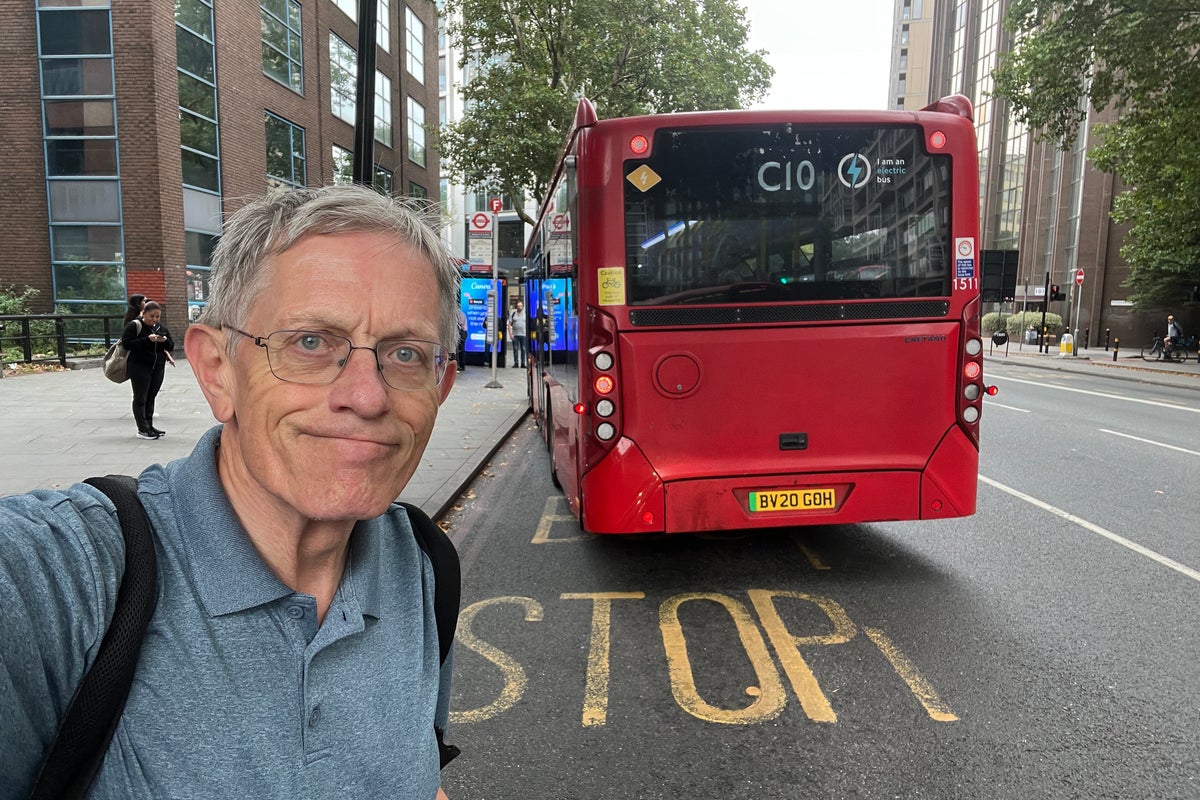
Only one of us was aware that a race was about to begin. At the start of the route of the C10 bus at Victoria station in central London, I mingled with a crowd of half a dozen prospective passengers. But when the bright red single-decker London bus pulled up and the doors opened, I stepped back, noted the registration number (BV20 GUG) and the time (8.47am) and waited for everyone to board. As the driver pulled away, I started to walk – with a four-mile journey, pounding the streets of the capital to see if it was possible to out-stroll a normal vehicle on a standard Transport for London service.
The route I had chosen to tackle toe-to-tyre is one of a tranche whose routes have recently been modified. The aim: to try to extract the maximum benefits for passengers at a time when transport budgets are tight. The C10 connects one of London’s most important rail stations with the South Bank, Bermondsey and the Docklands suburb of Canada Water – itself a key transport hub, with lots of buses as well as the Jubilee line of the London Underground and the Windrush line of the Overground. (This used to be known as the East London line, and is confusingly underground rather than overground at Canada Water.)












