The Complexity of Modern Local SEO
Local SEO once relied on simple tactics like adding a city name to a webpage title. Today, it demands a much more sophisticated approach. For example, 46% of all Google searches aim to find local information. Businesses that fully optimize their Google Business Profile (GBP) are significantly more likely to be trusted by potential customers. To achieve success, agencies must implement a coordinated strategy involving GBP optimization, consistent technical SEO updates, maintaining citation accuracy, responding effectively to reviews, and adapting to the increasing prominence of AI-generated search summaries.
For agencies managing multiple client accounts, the challenge is not only understanding local SEO in practice; it lies in maintaining efficiency. Without standardized workflows, inefficiencies in managing client tasks can result in missed deadlines, inconsistent execution, and cost overruns. By adopting a structured local SEO process, agencies can systematically execute tasks, ensure consistency in reporting, and maintain profit margins.
This guide details a step-by-step local SEO workflow for agencies to achieve consistent and scalable results. By standardizing processes from client onboarding to regular reporting and optimization, agencies can reduce inefficiencies, ensure seamless management across multiple accounts, and enhance team productivity. Structured workflows enable better service delivery, even when handled by different specialists.
Step 1: Understand the Client's Business (Onboarding)
Every local SEO campaign should start with a structured onboarding process, not a rush to open Google Business Profile. During onboarding, document the client's service area, primary and secondary locations, target customer profile, and competitive positioning. Ask directly: who do they consider their top three local competitors, and why?
This is also the stage to audit existing digital assets, such as GBP listings, website structure, citation profile, and review history. A thorough onboarding questionnaire should capture NAP (Name, Address, Phone) details precisely as they should appear across the web. Consistency in this information is critical, as even small discrepancies can undermine the foundation of your entire SEO strategy.
Agencies that skip this step often build strategies based on assumptions rather than concrete data. This often leads to inefficient keyword targeting and poorly aligned content strategies.
Step 2: Perform Local Keyword Research
Local keyword research varies greatly from traditional approaches since searcher intent is tightly connected to specific locations. For example, while "plumber" is a common term, it's essential to include highly localized variations like "emergency plumber in [neighborhood]," reflecting consumer behaviors. Location-specific keywords often result in significantly higher in-person visits than generic terms, making them invaluable for driving local business interactions.
Leverage tools to analyze and map out local keywords segmented by both service and location. Dedicated keyword research tools significantly enhance audience targeting. Also, understanding "near me" behaviors is crucial since such searches have surged recently. Focus on service-specific modifiers like "affordable," "24-hour," or "same-day," as these terms often lead to higher conversion rates compared to generic options.
Group keywords into service-specific and location-specific categories to directly guide the optimization strategies outlined in Step 4.
To identify and analyze local keywords, use tools capable of categorizing queries based on service and location. Understanding "near me" searches is vital, as such queries have become increasingly popular. Emphasize service qualifiers like "affordable," "24-hour," or "same-day," which often result in higher conversions compared to broader, more generic terms.
Group keywords into service-specific and location-specific categories to directly guide the optimization strategies outlined in Step 4.
Step 3: Analyze Local Competitors
To effectively understand your client's competitive landscape, identify who is ranking for your target keywords. Businesses in the top three positions of the local pack typically attract the majority of clicks, emphasizing the importance of assessing competitors in these spots. Begin by analyzing the top five local pack results and the top ten organic results for your priority keywords. Evaluate their Google Business Profile (GBP) categories (primary and secondary), as businesses with accurate categories often achieve better search rankings. Investigate their review count and frequency, as a steady flow of recent reviews significantly impacts trust. Scrutinize their website structure for technical SEO elements that contribute to visibility and examine their backlink profiles. By gaining insights into these factors, you can identify gaps to target and refine your client's strategy.
This isn't a one-time exercise. Competitors adjust their GBP categories, post frequency, and review responses regularly, which is why ongoing competitor monitoring (covered in Step 11) needs to be built into the workflow from day one rather than treated as an afterthought.
Step 4: Audit and Optimize the Client Website
Audit the client's website using data-backed local SEO fundamentals. Implement unique, non-duplicated location-specific landing pages, as businesses with localized content for each service area see increased user engagement. Utilize schema markup such as LocalBusiness, Service, and Review schema, since websites with structured schema data often experience better search engine click-through rates. Ensure internal linking effectively connects service and location pages; websites with strong internal links demonstrate improved crawlability and SEO performance. Additionally, optimize mobile page speed because even minor delays in loading can negatively impact conversions.
If the client serves multiple cities or neighborhoods, each should have a unique, non-duplicated landing page. Avoid using a template that merely swaps out city names; such techniques are easily flagged by Google's algorithms, as well as by users for lacking substance.
Ensure NAP details on the site match the GBP listing exactly, down to formatting and abbreviations.
Step 5: Optimize the Google Business Profile (GBP)
Google Business Profile (GBP) optimization is one of the most impactful activities in local SEO. According to research, businesses with fully completed GBP listings are significantly more likely to be trusted by potential customers. Start by carefully selecting primary and secondary categories, as accurate categorization improves relevance to highly targeted searches. Complete every available field, including services, products, business descriptions, attributes, and opening hours. Consistently updating GBP ensures your client’s information remains accurate and enhances visibility across local search results.
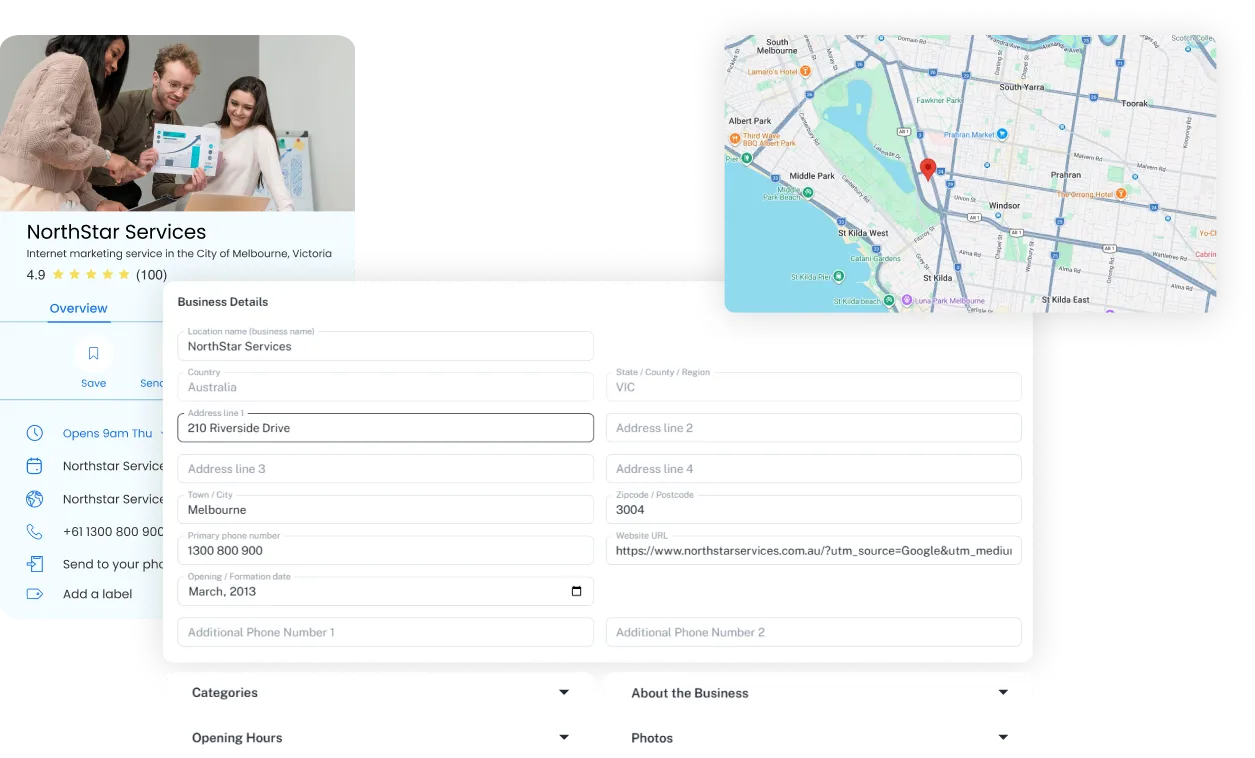
Upload fresh, geo-tagged photos regularly, and ensure the business description naturally incorporates target keywords without reading like a keyword list. A profile that's 100% complete typically outperforms an identical business with an incomplete one, simply because Google rewards profile completeness as a trust signal.
Step 6: Create a GBP Content Strategy
Google Business Profile (GBP) posts operate as a dynamic content feed integrated directly into local search results. Regular use of this feature can significantly enhance visibility and engagement. To maximize effectiveness, build a content calendar that emphasizes service highlights, time-sensitive promotions, seasonal offers, and Q&A responses aligned with primary keywords. GBP posts with targeted calls-to-action often achieve noticeably higher click-through rates compared to those without clear objectives.
To effectively manage multiple listings, batch-scheduling posts across accounts is essential, eliminating the need for manual updates on each client's Google Business Profile. Using tools like DAXRM's GBP Post Scheduler, agencies can plan, create, and automate post scheduling in advance. This workflow simplifies managing content across multiple locations and ensures consistent activity on profiles. By centralizing scheduling efforts, agencies improve efficiency and prioritize maintaining an active and optimized presence for their clients on local search.
Step 7: Schedule GBP Posts (Workflow)
Develop your content strategy as a repeatable workflow to enhance efficiency and consistency. Structured content calendars improve post engagement rates by providing clarity and direction. Assign a designated content owner to oversee the process, schedule monthly batch-creation sessions for posts, and prepare content in advance to avoid last-minute scrambling. Tag posts by campaign type, such as promotional, informational, or event-focused, to better track how posting frequency affects visibility metrics. Consistent pre-scheduling ensures reliability and efficiency, especially for agencies managing multiple locations.
For agencies handling multiple locations per client, a centralized scheduling system prevents posts from being forgotten during busy weeks. This is a common failure point when tasks depend solely on manual calendar reminders.
Step 8: Build a Google Review Management Process
Reviews significantly influence rankings and conversion rates, making review management an essential component of any local SEO strategy. Businesses with a higher volume of recent reviews often see improved local visibility. Implementing a system to request reviews immediately after service completion can enhance customer feedback collection when satisfaction is highest. Responding thoughtfully to all reviews, whether positive or negative, helps build trust and shows engagement with customers. Tailoring responses to reference the service provided and the location adds a personalized touch that encourages further interaction.
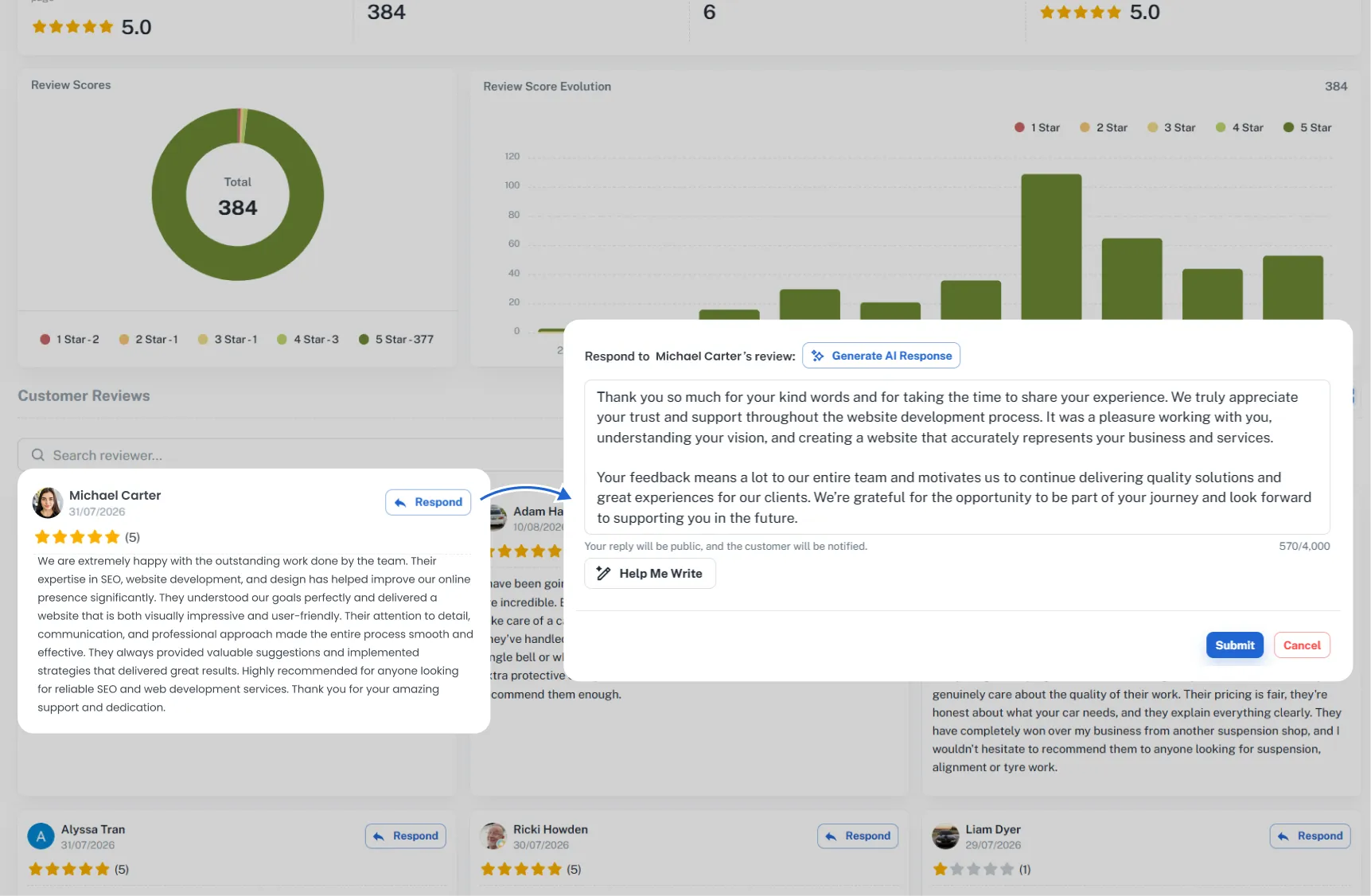
Negative reviews deserve particular care: a thoughtful and professional response often does more to build trust with prospective customers than the absence of negative reviews altogether.
Step 9: Set Up Local Google Maps Grid Tracking
Grid tracking, supported by recent data, offers a clear perspective on local rankings by analyzing visibility across multiple points around a business. Companies relying solely on single-point tracking risk overlooking significant insights, as local rankings often vary based on the user's proximity to the business. Additionally, businesses using grid-based tools can better identify low-visibility zones that might otherwise be missed. This method helps pinpoint specific locations where ranking strength tapers off, enabling more targeted and effective strategies for local SEO campaigns.

Tools like DAXRM's Local Rank Tracker play a critical role in automating grid-based tracking. They provide agencies with detailed visual maps that reveal performance across specified locations. This functionality allows SEO teams to focus on specific areas where visibility drops instead of relying on a single, generalized ranking position. Comprehensive geographic insights help in crafting targeted strategies that accurately address localized challenges.
Step 10: Analyze Local Ranking Gaps
With grid data established, identify areas with weak rankings and analyze competitor density in those zones. Research shows localized content and targeted reviews improve search visibility significantly. If your client underperforms in a specific zip code, examine whether competitors are using well-structured location pages or maintaining a stronger flow of recent reviews. Consistent citation presence can also provide a competitive edge by boosting local SEO rankings.
This gap analysis should directly inform content priorities for the following month. Whether that means creating a new location page, launching a targeted review campaign, or implementing additional local link-building efforts, the actions should be tailored to address identified weaknesses.
Step 11: Monitor Competitors Monthly
Competitive local SEO requires vigilance. Regular checks can reveal strategic shifts, such as changes to GBP categories, which can significantly influence ranking positions. Additionally, businesses that consistently analyze competitor reviews gain insights into trends that impact customer trust and decision-making. By tracking top-ranking competitor pages, you can uncover which content strategies or backlink approaches lead to improvements in organic reach.
Sudden competitor movement, such as a jump of ten positions, often signals a specific tactic worth investigating. This could include a citation cleanup, a review push, or new schema implementation.
Step 12: Monitor GBP Performance Metrics
In addition to rankings, carefully track GBP data like search views, map views, website clicks, direction requests, and phone calls. Ensuring that profiles are complete and maintained significantly improves engagement rates. Active tracking of these metrics helps agencies identify and address potential issues, such as outdated visuals or vague descriptions, that might hinder customer conversions.
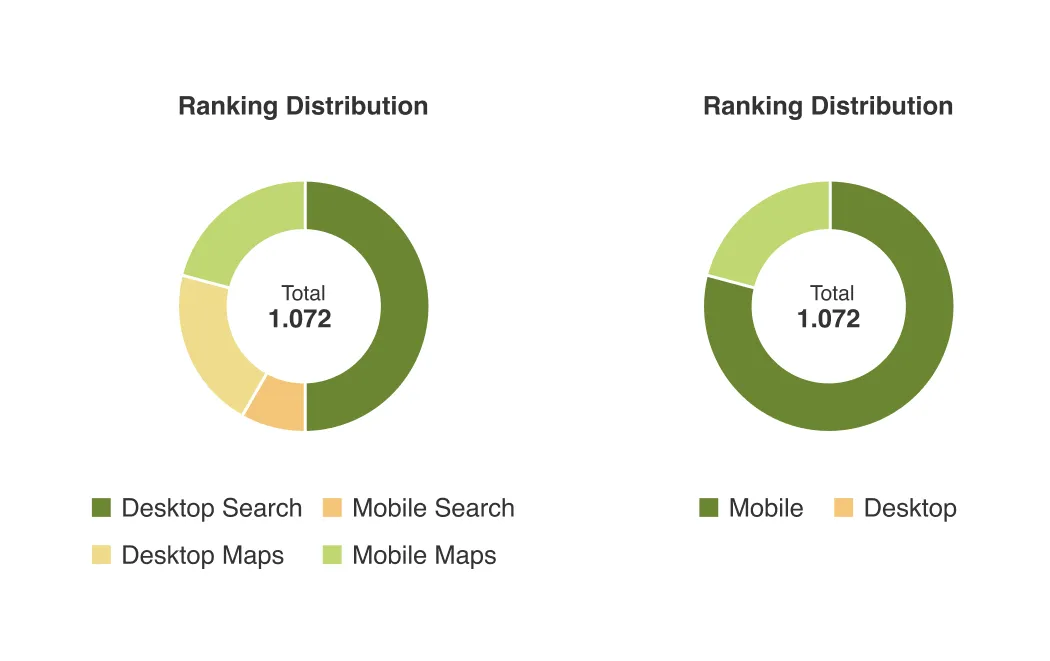
Reviewing these metrics monthly, alongside grid ranking data, gives a fuller picture of listing health than rank position alone.
Step 13: Create a Monthly Local SEO Workflow
To streamline your local SEO efforts and ensure consistency, convert Steps 6 through 12 into a comprehensive monthly workflow supported by valuable insights. Structured workflows significantly enhance efficiency and reduce errors caused by inconsistent task management. Focus on processes such as content creation and scheduling, review monitoring and responses, competitor analysis, ranking evaluation, and performance reviews. Automating recurring tasks in such workflows can save substantial time and resources. Assign clear responsibility for each task and use calendar reminders or automation tools to avoid reliance on memory, helping your team maintain consistency and productivity.
A documented monthly workflow is what distinguishes agencies that scale smoothly from those that risk overburdening account managers during hectic periods.
Step 14: Build a Local SEO Client Report
Effective local SEO client reports present both clear insights and actionable results. Studies indicate that clients prioritize understanding how SEO impacts their business outcomes. Create a reporting structure that combines ranking improvements, preferably visualized using grid-based data, with tangible metrics like customer actions such as calls, direction requests, and form submissions. Include a concise narrative to contextualize these metrics, highlighting the specific actions taken, such as optimized Google Business Profiles or additional reviews, and the observed results. This approach effectively links efforts to measurable improvements in engagement and visibility.
Automating this reporting where possible frees account managers to focus more time on strategy and less on the repetitive task of formatting spreadsheets.
Step 15: Turn Local SEO Into an Agency SOP
After validating your process with several clients, document it as a Standard Operating Procedure (SOP). Doing so allows agencies to improve efficiency, reduce time spent on repetitive tasks, and streamline operations. Include detailed checklists covering onboarding, monthly tasks, and reporting. Pair these with annotated screenshots and tool-specific guidance to ensure clarity. A well-structured SOP fosters faster onboarding of new team members, ensures consistent deliverables, and reduces disruptions, even during staff transitions or high workloads.
AI Search & Modern Local SEO Trends
Local SEO is evolving rapidly with the rise of AI-driven search experiences. Google's AI Overviews and similar features frequently appear in local search queries, offering concise summaries of business information directly in the search results. These summaries often draw data from Google Business Profile (GBP) listings, which significantly influence decisions in local search results. Additionally, structured website content such as schema markup has been shown to improve visibility in these AI-driven features. This emphasizes the importance of maintaining comprehensive, precise GBP profiles and implementing structured schema data to ensure businesses appear prominently in AI-generated summaries.
Agencies that maintain clean, complete, and consistent local data across every channel are best positioned to appear in these AI-generated results, since the underlying signals reward the same fundamentals this guide has outlined.
Conclusion
Local SEO for agency clients isn't about mastering a single tactic. Organizations with standardized processes experience up to 30% higher efficiency in workflows. The key to success lies in developing a repeatable, documented process that integrates research, optimization, content creation, reputation management, and reporting. Structured SOPs can reduce task redundancy by 50% and increase productivity by 20%. Agencies treating local SEO as an ongoing system instead of a one-time project not only retain clients more effectively but also scale operations with improved efficiency.
Ready to systematize your local SEO delivery? Check out how DAXRM's Local Rank Tracker and GBP Scheduler can streamline your agency's monthly workflow, from in-depth research to comprehensive reporting.
FAQ
How long does local SEO take to show results?
Most clients notice significant visibility and ranking improvements in GBP within 60 to 90 days. However, results may take longer in highly competitive markets.
How often should GBP posts be published?
Twice weekly is a reasonable baseline for most local businesses. Consistency matters more than frequency, as regular posting improves visibility and engagement rates over time.
What's the difference between standard rank tracking and grid tracking?
Standard tracking displays a single ranking position; in contrast, grid tracking evaluates rankings across various points around a business location. This approach highlights geographic visibility gaps, offering a clearer understanding of where a business excels or needs improvement.
How many reviews does a local business need to rank well?
There's no fixed number. However, your review count and the frequency of new reviews carry greater importance, particularly when compared to competitors in the same category and geographic area.