
Get all your news in one place.
100’s of premium titles.
One app.
Start reading
Ideal Home
Ideal Home
Jennifer Ebert

27 living room paint ideas that will make your lounge look more interesting, stylish and elevated

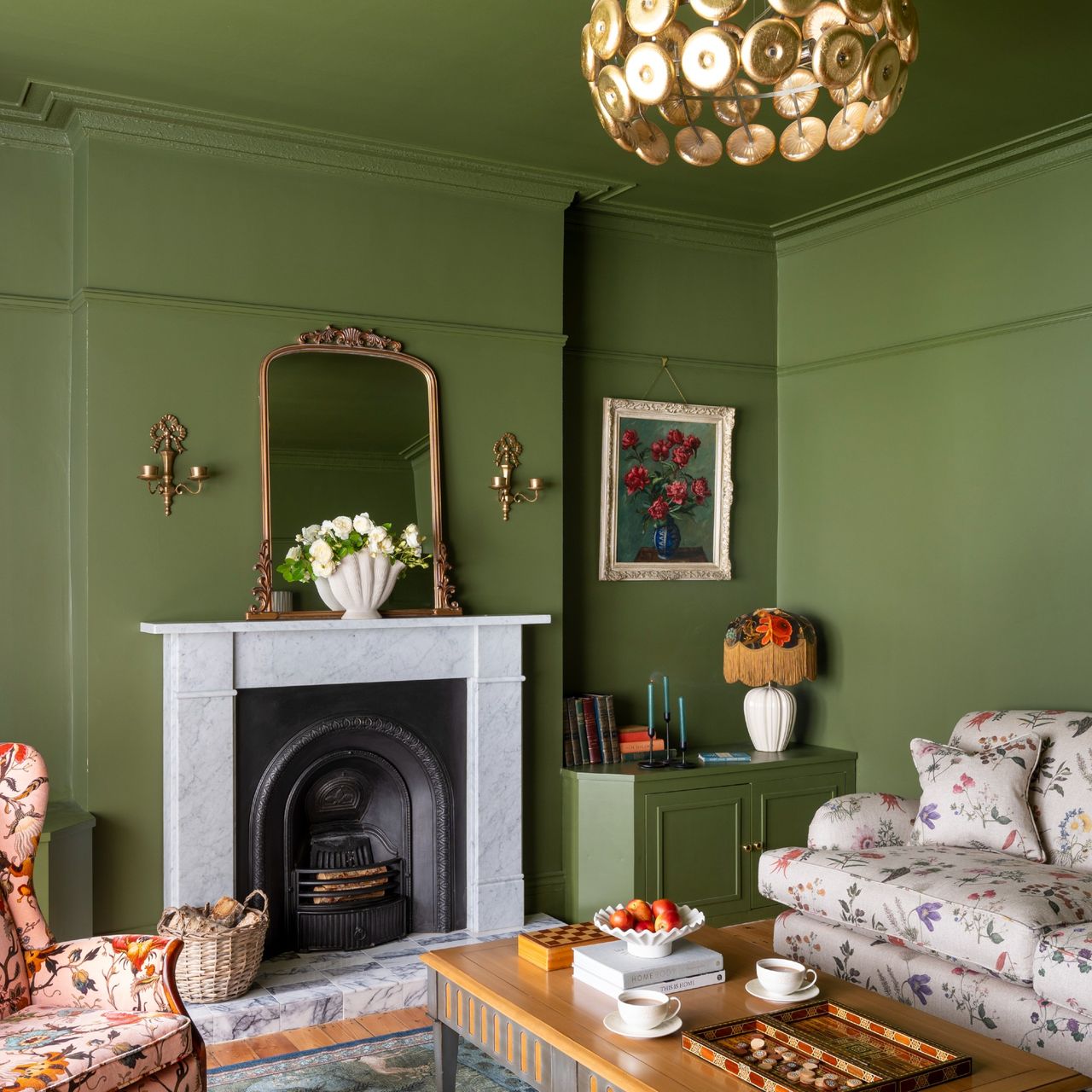
A colour-drenched green living room with a floral-print sofa and chairs.

There are a few different ways in which you can elevate your living room and make it look interesting – and paint is one of the easiest ones, as long as you’re allowed to paint your walls (in case you’re renting). But since painting can seem like a bit of a daunting task, we’ve collated the best pro-recommended living room paint ideas to get you started.

If you’re not sure what living room colour scheme to go for or what paint technique to employ, this guide to painting your living room is the perfect source of inspiration.

‘The question I always ask is: what do you want the room to feel like? Living rooms do a lot of different jobs,’ says Tash Bradley, director of interior design at Lick. ‘They’re spaces where we relax, socialise and sometimes work, so the colour needs to support that atmosphere.’

And this also goes for the paint technique that you choose, since full-on colour drenching will have a very different effect than the peek-a-boo paint theory, for example. So figuring out what you want your living room to look and feel like is the ideal starting point.

Living room paint ideas

Even though it’s fully up to you to decide what kind of living room you want to create for yourself, most experts recommend a cosy, comforting approach.

‘A living room shouldn’t feel overly sharp or high energy, it’s much nicer when the colour helps the space feel settled and welcoming,’ says Rob Abrahams, co-founder of COAT Paints.

1. Expand the room with a warm neutral

(Image credit: Future PLC/Anna Stathaki)

While the best white paints will forever remain timeless, there is an alternative route to take in order to make your living room appear bigger than going for brilliant white.

‘Soft mid-tone neutrals can actually be very effective at making a room feel bigger. People often assume you have to go for bright white, but sometimes a warmer neutral such as COAT’s Humble or Cargo can blur the edges of the space more gently. When the colour has a bit of depth, it reduces harsh contrast between walls, corners and ceilings, which makes the room feel more cohesive. The eye moves around the space more easily, and that often creates the impression of more room,’ Rob at COAT says.

2. Create a light and airy space

(Image credit: Future PLC/Chris Snook)

If you’ve thought about what you’d like your living space to feel like and have decided for a light and airy room, then light, soft blue shades with a warm undertone is your best bet. And many people are currently adopting this paint idea in their homes as blue living room ideas are rising in popularity.

‘If you want the room to feel light and airy, softer tones work beautifully. Warm blues like Blue 03 are a favourite of mine because they’re calming but still have warmth, and something like White 05 gives you that creamy softness without feeling stark,’ Tash at Lick advises.

3. Go for a fun trim

(Image credit: Future PLC/Carolyn Barber)

There’s always room for fun and creativity when decorating and painting your home, your living room included. And adding an artistic-looking trim is the kind of detail that will elevate your space and make it look more considered and thought-out.

Whether that’s a striped border around your door or window frame, or a scalloped trim on a half-painted wall as seen in the image above, just have fun with it.

4. Have fun with the peek-a-boo paint theory

(Image credit: Benjamin Moore)

First coined by paint brand Dulux, the ‘peek-a-boo’ paint theory is perfect for those that don’t want to commit to large areas of colour in their home but still want to make their lounge a little interesting with unexpected flashes of contrasting, bold colour.

‘The ‘peek-a-boo paint theory’ is a decorating trend that focuses on adding small but striking flashes of colour in unexpected places, such as inside cupboards, along skirting boards or on edges of windows or doors,’ explains Helen Shaw, international director of marketing at Benjamin Moore.

5. Go for deep, dark hues

(Image credit: Future PLC/Katie Lee)

Going for a light and bright look has been the leading living room trend for the past few years, partly due to the huge popularity of Scandi living room ideas. But in recent times, dark and cocooning living rooms are increasingly being embraced.

‘Deep, dark hues on all four walls can create a dramatic, intimate, and cocoon-like feel, transforming your space into a cosy haven,' says Ruth Mottershead, creative director at Little Greene. 'Dark living room walls can also add an unexpected contrast in homes filled with light and bright colours. These rich tones evoke a sense of comfort, perfect for intimate evenings, lively conversations, or quiet moments of reflection.'

Lucy Steele, paint and interiors specialist at Valspar Paint, says that black paint specifically can work really well on living room walls as Ideal Home’s Editor-in-Chief, Heather Young has already tested by choosing Farrow & Ball’s Railings for her lounge.

‘Black wall paint might not be the obvious choice for a relaxing living space, but when mixed with animal prints, vintage furniture and green plants, it works really well. A black living room doesn’t feel dramatic or confident like the colour often does - instead it feels charming and serene,’ Lucy says.

6. Opt for a neutral scheme

(Image credit: Future PLC/Chris Snook)

Going for a neutral living room colour scheme might not be the most groundbreaking of ideas but it’s a colour palette that really suits a lounge and just simply works – so why fix something that’s not broken? Having a neutral living room can also feel very soothing and relaxing which is perfect for a space that’s designed for relaxing.

‘Warm neutrals, such as creamy naturals and soft stone shades, offer sophistication and comfort, blending seamlessly with various design styles. We’ve also seen that there is a greater desire to surround ourselves with comforting, nurturing colours that are not only easy to scheme but provide serenity and tranquillity in our homes. This has been reflected in the increasing popularity of neutrals and earthier tones that have an inherent warmth,’ Ruth at Little Greene says.

7. Double drench your lounge

(Image credit: Little Greene)

By this point, you may have heard about colour drenching. But double drenching is the new and evolved take on the look that emerged this year – and it’s perfect for injecting some colour into a living room.

‘Instead of using one colour to paint a space like the colour drenching trend, this twist on the well-known trend involves using two or more similar colours. The technique shows a sophisticated use of colour that gives the space a more dramatic transformation,’ Lucy at Valspar Paint says.

Ruth at Little Greene adds, ‘Double drenching can add unexpected contrast to a living room with minimal architectural detail, highlighting ceilings, walls, and woodwork, or drawing attention to classical features in period properties. This technique envelops the space entirely in colour, leaving no room for white ceilings or skirting. Instead, it involves using two or more complementary colours with varying undertones to create a fully cohesive, immersive interior.’

8. Make the ceiling into a statement

(Image credit: Future PLC/Douglas Gibb)

Despite the prominence of white ceilings, most interior experts would tell you that the ceiling is one of the places that shouldn’t be painted white – or at least not as a default. And we couldn’t agree more, especially as statement ceilings are one of the biggest paint trends.

There’s nothing wrong with a bit of white paint but adding colour creates a sense of luxury and personality. Statement walls or wallpaper have always been a popular choice but now statement ceilings are definitely creeping in too! It’s more common to have the ceiling and wall different colours, for example a neutral or white wall with a bold coloured ceiling.

9. Drench the room in colour

(Image credit: Future PLC/David Giles)

If you want to go for a singular colour for your living room walls, one way to take it to the next level is by matching the paint to skirting boards, architraves and the ceiling – in other words, embrace colour drenching.

This takes what might otherwise be a simple scheme into a curated design mirroring hotel-inspired interiors. Extending the colour to every inch of wall and ceiling space also makes the room feel larger. So whether you're blessed with a period property with high ceilings or want to make a small living room feel more spacious, this clever paint trick delivers both style and function.

'If you want to make an impact, paint the ceiling and skirting in the same darker paint colour and add a mirror. By painting the ceiling in the same colour it will make the ceiling feel higher,' says interior designer, Sonnaz Nooranvary.

Lucy at Valspar adds, 'Colour drenching is a great painting technique if you want to create a unified, immersive effect in a space.'

10. Give limewash a go

(Image credit: Future PLC/James French)

Paint ideas don't always need to be bold - limewash is a creative alternative for those to want to keep to a neutral living room scheme but also want to try something new.

Limewash creates a mottled texture akin to suede, adding dimension to a wall without a statement pattern or colour. It has an organic touch which will suit those attracted to trends like quiet luxury, as it looks perfectly down-to-earth yet premium.

11. Contrast an open-plan space

(Image credit: Future PLC/Siobhan Doran)

Open-plan living rooms are common in many homes, but instead of aiming to create a cohesive scheme with a neutral palette running throughout, why not make a bold contrast?

Not only does this help to zone your home, creating dedicated spaces for dining and lounging, but it also makes for an eclectic interior that is bursting with personality. There are so many colour pairings that are unlikely partners but actually work well together, so finding a combination that works for your home and taste should be simple.

12. Focus on primary colours

(Image credit: Future PLC/ David Giles)

Primary colours aren't a common choice for a living room, as many people look towards neutrals or warmer tones, however, if you're into a maximalist aesthetic then this will be the palette to follow.

Bright red, blue and yellow shades work especially well together for an abstract and modern living room idea. You can either go full statement by painting an entire wall or experiment with layering shapes. It's also a great idea if you can't decide on a singular living room colour scheme idea, as it gives you the opportunity to toy with a few.

13. Add colour to unexpected areas

(Image credit: Future PLC/Mark O'Flaherty)

Looking for unexpected areas to paint in a living room will make a space feel professionally designed. If your home has interesting architectural features such as beams, consider using them as a way to display a pop of colour.

It's a great way to tie in a shade without it dominating the room, offering the opportunity to combine it with accent furnishings and accessories. For example, if you're wanting to give pink living room ideas a go but aren't ready to commit, finding a smaller area to feature the shade acts as a great segue into the trend.

14. Match walls to a sofa

(Image credit: Future PLC/Simon Whitmore)

We've already mentioned matching skirting and architraves to your wall colour, but why not go one step further and match a sofa to it too?

Whether you have a standalone softly furnished sofa that you can match the tone to or a wooden sofa bed where the base can be customised with the same paint, it will create a warm and inviting look.

15. Look to new neutrals

(Image credit: Little Greene)

If you want to stick to a neutral living room scheme but also want to experiment with colour, reach for a new neutral for a twist on an old faithful. Mushroom and khaki shades offer a variation on the grey and beige palettes we see commonly in homes, but they're still easy to style.

Neutrals are popular for their versatility in terms of matching with other colours, and darker taupes will still offer this but with a hint of a bold touch similar to black and navy.

'There are many beautiful warm earthy colours around at the moment, with rich terracotta, cocoa brown and ochres helping to give a room warmth and a flattering glow. Green is still very popular, as it's so easy to live with, but we are seeing a move away from teals, into sludgy olives and khaki and mustard,' says textile designer Clarissa Hulse.

Ruth at Little Greene adds, 'Consider rich, soothing caramels such as Affogato which pair beautifully with the complementary Slaked Lime - Mid on the ceiling, forming a sophisticated, cocooning living room scheme that feels both luxurious and inviting.'

16. Add bold blocks of colour

(Image credit: Future PLC/Carolyn Barber)

For rooms that lack a focal point, living room paint ideas are a clever way of creating one without involving the cost or bother of undertaking structural work. Paint can be used to trick the eye, draw attention to key areas or create faux architectural details that give a plain room extra oomph.

Paint a bold block of colour on one wall to create a living room feature wall idea in a plain living room. A simple panel painted in a contrast shade creates a colourful backdrop for a display area, with open shelving styled up with artwork, greenery and decorative pieces. Opt for an off-centre arrangement to create extra visual interest, then fill in empty wall space with wall-hung plants and artwork.

17. Try a half-painted wall

(Image credit: Future PLC/Georgia Burns)

Give white living room ideas a colour lift by painting walls in a half-and-half paint treatment. Less hassle than painting an entire room, painting just the lower portion of walls gives the added benefit of introducing a warmer, brighter or more dramatic colour into your scheme without overwhelming the space completely.

Painting the lower section of wall in your darker ‘hero’ colour can help to ground the scheme and provides a contrasting backdrop for furniture, such as a sofa or sideboard. While having a lighter colour at the top will help to create a sense of height, which is useful for small living room ideas.

Hang artwork that crosses the paint line, so that the paint effect looks intentional and part of a well-thought-out scheme. Opt for mix-and-match frames to provide visual variety and choose colours that complement furniture and soft furnishings.

18. Get creative with a chalkboard backdrop

(Image credit: Future PLC / Polly Eltes)

In a family den or playroom, have some fun and paint a panel or feature wall with black chalkboard paint. It’ll provide an area where little ones can get creative with drawings and doodles or could be used as an oversized family memo board in a study area or WFH space with notes and reminders easily chalked on.

19. Opt for ombré stripe walls

(Image credit: Benjamin Moore)

Perk up a plain living room by going for chic ombré effect stripes in warm peachy tones. Opting for a graduated wash of colour rather than sharp lines and hard edges creates a softer effect that feels more relaxed and easy on the eye.

Choose a tonal palette of colours with varying depths to achieve this easy ombré effect. For a natural gradation of colour, paint the lower section of walls in the darkest shade, and the midsection in a mid-tone, then use a paler hue towards the top of the walls for an airy feel. Leave the edges soft and ragged rather than clean and crisp for a subtler look.

20. Fake a ‘built-in’ look with paint

(Image credit: Future PLC/Brent Darby)

Use paint to upgrade basic flatpack furniture for various IKEA hacks and create a sleek, built-in look. Match furniture paint with wall colour and paint both to create an uninterrupted swathe of colour that gives the impression of bespoke built-in furniture rather than freestanding pieces. Add clip-on lights and conceal the cables to further the 'bespoke' effect.

21. Use colour blocking to break up walls

(Image credit: Future PLC/ Dominic Blackmore)

Create a colour-block wall of uplifting colour by using a tonal palette separated by a white border. Think vertically to add height to the room, using blocks of pastel blue and green and dividing the area with an off-centre stripe of white.

The use of white for the dividing line mirrors the skirting boards and ceilings to create a frame of colour to make the coloured blocks feel all the more impactful.

Coordinate the look with matching soft furnishings and accessories. Choose a living room colour scheme to suit your own personal tastes to make the look totally unique for your home.

22. Transform an empty fireplace

(Image credit: Future PLC)

If your living room features a fireplace that is purely ornamental, i.e it's not a working fire, why not really show it off with a splash of vibrant colour.

The injection of colour creates the ideal backdrop to display an array of home accessories, from candles to photo frames. In this smart living room the yellow accent colour is used on the walls either side of the chimney breast to coordinate with the painted fireplace.

23. Define the fire surround in an accent colour

(Image credit: Future PLC/ Dominic Blackmore)

Paint your fire surround in a bright, happy shade and top it with colourful accessories to make it the focal point of your living room. To take the colour inject up a level try painting logs in an assortment of complimentary shades, as shown in this bespoke living room fireplace ideas.

24. Frame a knock-through with a painted stripe

(Image credit: Joanna Henderson Styling credit: Charlotte Boyd)

With open-plan living rooms growing in popularity there are often two spaces merged into one that you might like to give a slightly different purpose to.

While it makes sense to paint the two spaces in the same colour, to provide a sense of continuity you could clearly define the two rooms by adding accents on architectural points of interest, such as archways. This simple act subtly zones distinct living ares within the same open-plan space.

Given it's not a huge area of paint coverage you can change the colour seasonally, or when you switch up accent accessories within the room without huge expense.

25. Use accent colours to highlight features

(Image credit: Future PLC/ Jo Henderson)

Celebrate features rather than try to hide them under a uniformed wall colour. An accent colour border will draw attention to lovely period door frames, skirting boards and picture rails. Picking out key architectural details can help to add depth to your living room and create interest.

Even if the space is devoid of features, you could fake a feature with clever paint ideas. No skirting board? Simply paint a two-tone feature on the wall to create the illusion of its presence.

26. Work a whitewash

(Image credit: Future PLC)

Brilliant white paint has a transformative effect on interiors. Use it on walls and ceilings and it will make a star of every non-white piece of furniture and accessory in your living room.

Opting for a neutral backdrop means that your accessories can do the talking, and it forms the perfect foundation for truly relaxing. There are multiple white shades you can opt for too, so make sure you pick the best white paint with the correct undertones for your space.

27. Create an artistic watercolour finish

(Image credit: Future PLC/ David Brittain)

Embrace your inner artist, or better still pay a skilled decorator to take the pressure off. Use brushstroke patterns to add an artistic flourish to any scheme.

Don't be afraid to experiment with innovative paint techniques. Choose your favourite colour and work with shades from the same palette to create a graduated effect along one feature wall. Think about including inky dyed textiles with soft blurry edges and ombre, watercolour washes for a painterly effect.

FAQ

What colours are on trend for living rooms?

'I’d generally steer clear of very cool greys or anything that feels overly stark,' says Rob Abrahams, co-founder of COAT. 'Those tones had a big moment over the last decade, but in a living room they can sometimes feel a bit flat, especially in UK light.'

As grey living room ideas are fading in popularity, nature-inspired hues and earthy neutrals are taking the place of the once most popular living room neutral shade.

'Consumer confidence has grown significantly in recent years, leading to a wider range of colours being embraced in the home,' says Ruth Mottershead, creative director at Little Greene. 'From soothing earthy tones that create cosy, restful environments to greens and blues that evoke nature’s beauty and promote calmness, these colours are becoming more popular.'

Which colour and technique will you be using in your next living room decorating scheme?

Sign up to read this article
Read news from 100’s of titles, curated specifically for you.
Already a member? Sign in here
Related Stories
Top stories on inkl right now
One subscription that gives you access to news from hundreds of sites
Already a member? Sign in here
Our Picks
Fourteen days free
Download the app
One app. One membership.
100+ trusted global sources.