
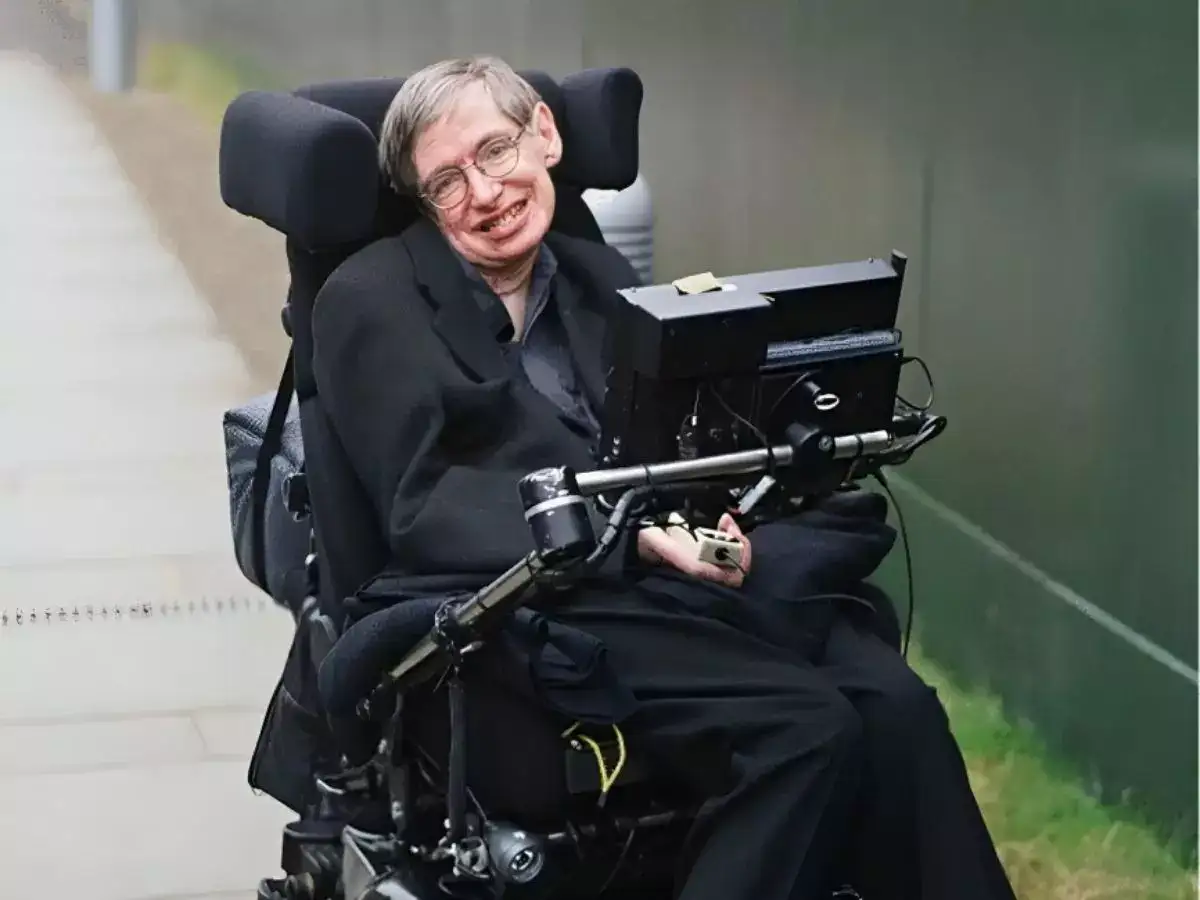
Stephen Hawking’s life lesson, “Intelligence is the ability to adapt to change,” has survived decades because it speaks to a challenge every generation faces. Most people think intelligence is about knowledge, grades, or talent. Hawking believed something different. He believed that the people who thrive are often those who learn, adjust, and keep moving when life refuses to follow their plans.
That belief was not a theory for him. It was his reality. At 21, Hawking was diagnosed with ALS, a disease that gradually took away his ability to walk, write, and speak. Doctors expected him to live only a few more years. Yet the young physics student who was told his future was shrinking went on to transform modern science. He wrote bestselling books, explored the mysteries of black holes, changed how people think about the universe, and became one of the most recognized scientists in history.













