
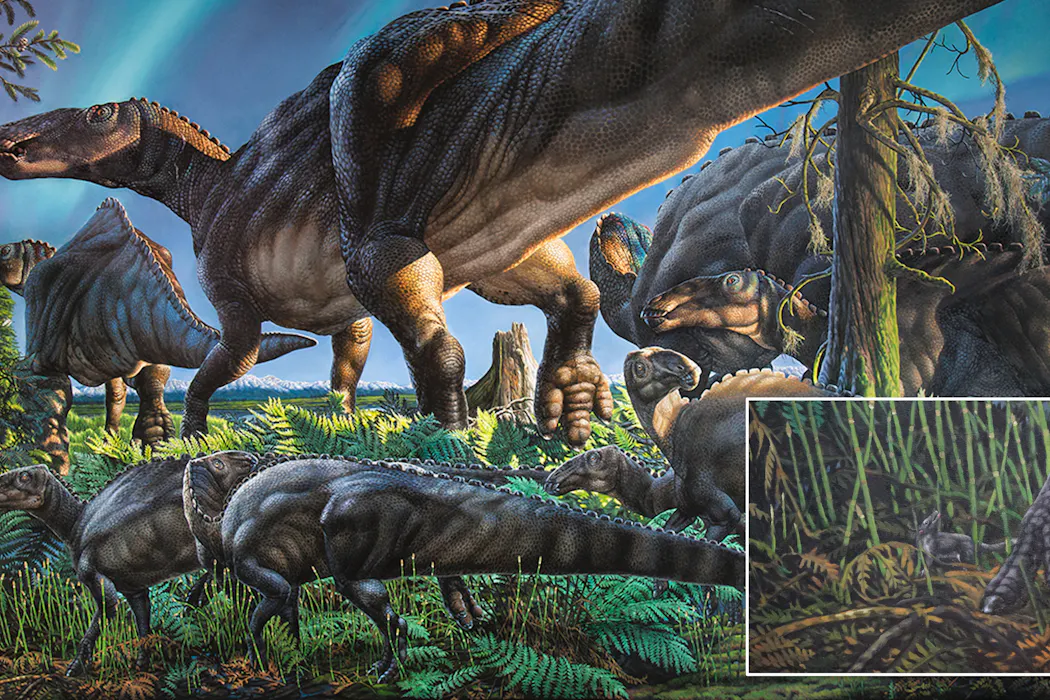
A fossil mammal tooth smaller than a grain of rice does not announce itself loudly. It must be hard won from sediment and stone. Then, under a microscope, it reveals itself – no longer just a speck of blackness but a surface of cusps, ridges and worn edges.
It is a small object, easily missed. Yet five such teeth from northern Alaska, belonging to three newly discovered species of long-extinct rodent-like mammals, hold an unexpectedly large history: of polar environments, shifting continents, winter darkness – and of mammals moving through this world that was colder, stranger and more connected than we once imagined.











