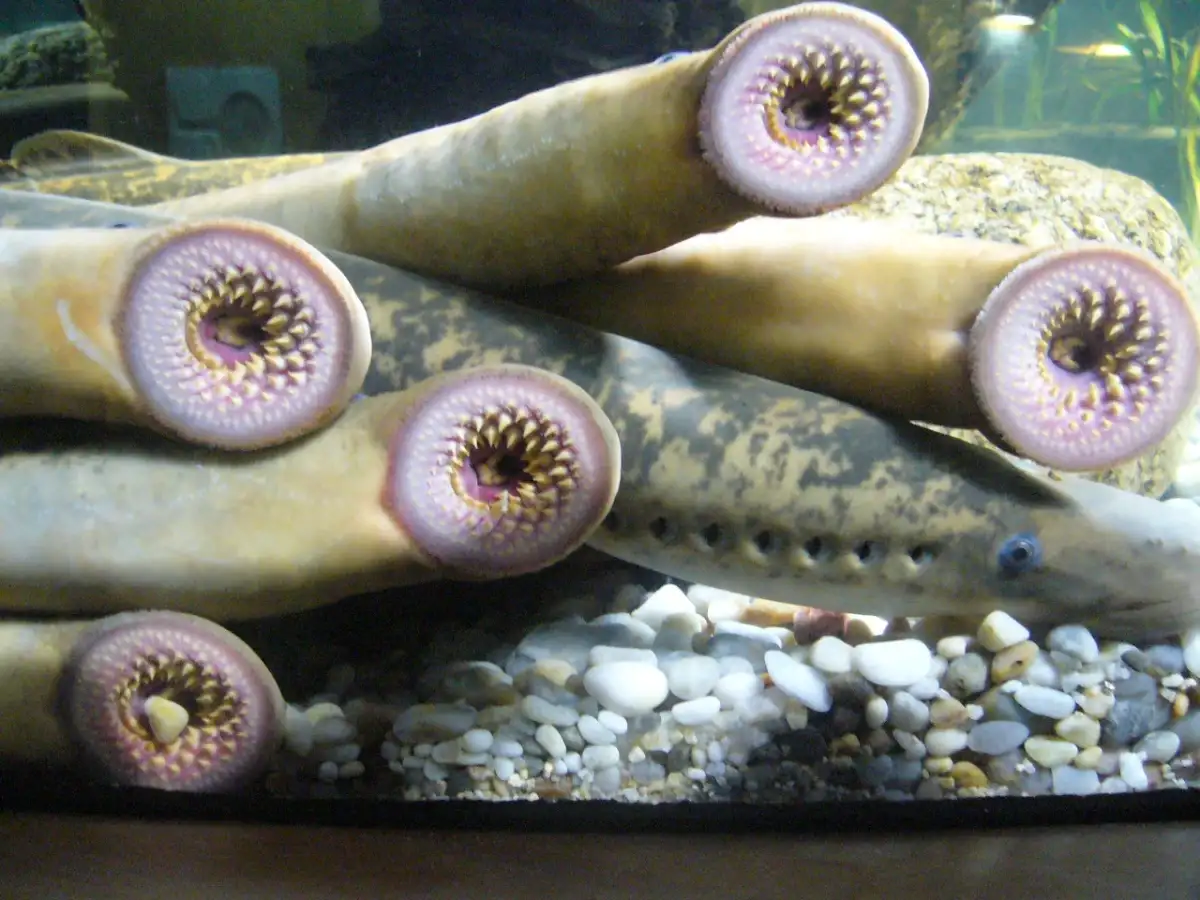
Picture a fish fit to star in a B-grade horror film, a slimy, eel-like creature with a round, tooth-ringed maw that attaches itself to bigger fish like a juice box straw and drains them of their lifeblood. It's the sea lamprey, and for much of the 20th century, the parasitic leech was doing a slow, thorough job of devastating one of America's oldest lakes.
Lake Champlain, the 120-mile-long waterway snaking between Vermont, New York, and Quebec, was once a premier fishing destination, until native lake trout and the anadromous Atlantic salmon were nearly wiped out by lampreys that had invaded the ecosystem from connected waterways, though, as the record shows further down, “invaded” is itself contested. According to a 2003 study titled “Sea Lamprey Control in Lake Champlain,” published in the Journal of Great Lakes Research, this rampant wounding of fish necessitated an aggressive, experimental lake-wide lamprey control program beginning in 1990 that actually worked, and continues to work three decades later.