
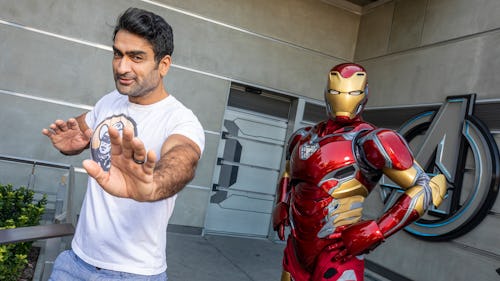
It’s become hard to parse which is more powerful: our own evolutionary self-loathing, or constantly having Hadid sisters shoved in our faces to make us buy things that promise to fix our grotesque inadequacies. But the effect is the same regardless — we all are in a never ending battle with our own bodies. It doesn’t matter how many dressed up, Instagramable infographs are out there reminding you that “you are stardust;” their subsequent messages in media convey that said stardust is more valuable if it has a six-pack. One place that seems to have always had more gray area, though, is these images’ varying impact based on gender. While thankfully we’re in a society that’s (slowly) becoming hip to the fact that gender is a social construct, female versus male body image is a bit antiquated of a concept — but Hollywood itself is an antiquated realm. Kumail Nanjiani vulnerably confessing his triumphs and related struggles within that world seems to have perfectly laid out the nuance of gender bias within body image stereotypes.
All it takes is to witness a slovenly Adam Sandler or a soft Seth Rogan being cast as romantic leads opposite Jennifer Aniston and Katherine Heigl, respectively, to realize body image standards are vastly skewed in entertainment. Lots of work has gone into rebelling against these patriarchal hypocrisies and harmful standards, but it remains a reality no matter how many Women In Hollywood luncheons try to tackle the issue. For everyday women, achieving a more self-loving, body positive society is possible — but when it comes to our modern day gods on the big screen, the insidious standards of fitness are just part of the job. Hollywood stars are impossibly rich, beloved, and seem to have everything we mere mortals lust after; it’s kind of in their job descriptions to play the part of being impossibly hot, because everything else they do and have seems equally impossible.