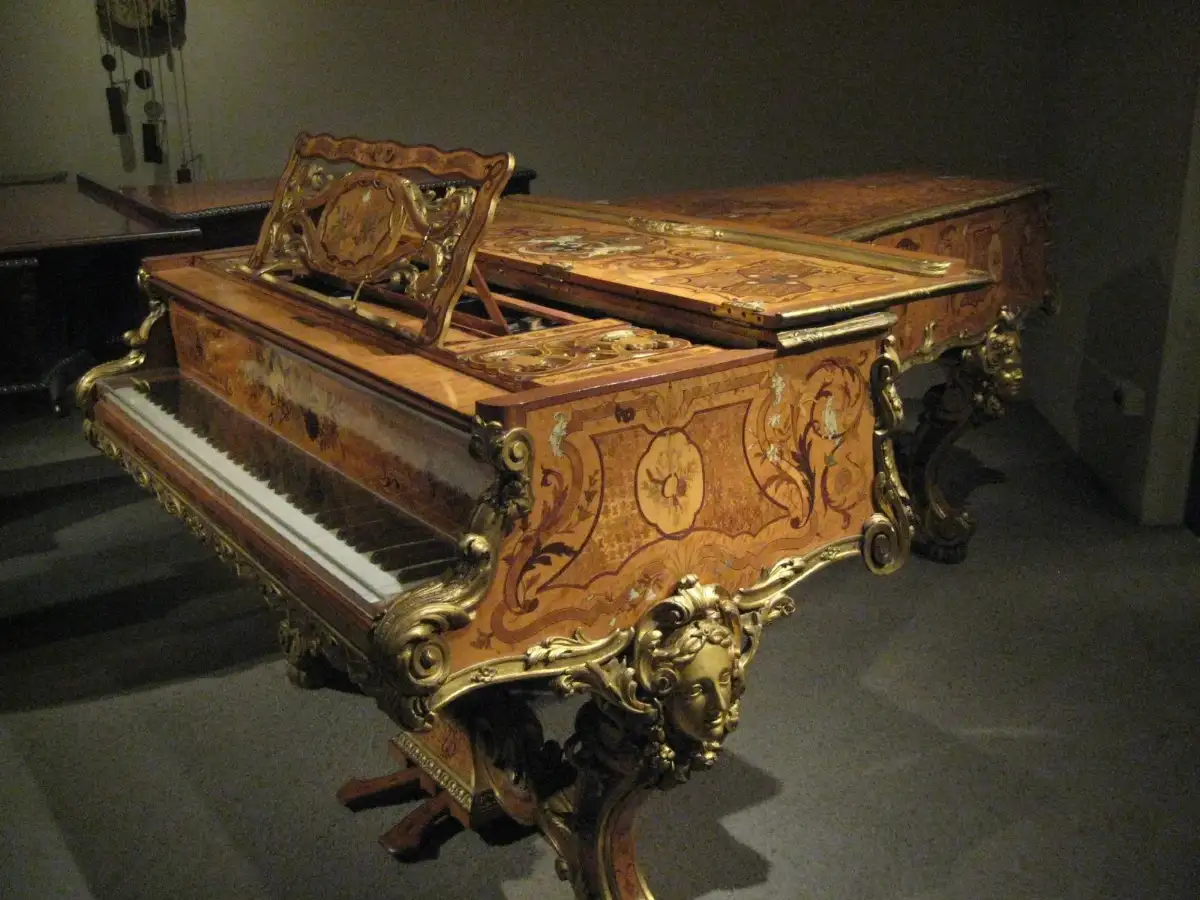
Somewhere in a Louisville dining room, a 1920s baby grand piano was pretending to be a dinner table for five years, its lid doubling as a serving surface long before anyone thought to pull up a stool to it. It took a few years for the musician Brigid Kaelin to realize that the instrument she had inherited from a student, one that the student's grandmother had once owned, and a repair would have cost thousands. Instead of tossing it, Kaelin and her husband gutted it, taking each string out by hand, converting the old piano into a full home bar, complete with stools now tucked beneath the reworked, bar-height frame. According to a 2025 Texas Standard report, Kaelin's project is one local example of a broader, ongoing shift in the country's relationship with the acoustic piano, a shift the outlet frames as a slow but steady cooling of America's decades-long love affair with the instrument.
The piano nobody wanted anymore