
Get all your news in one place.
100's of premium titles.
One app.
Start reading
Space
Space
Science
Sharmila Kuthunur

Jupiter's moon Europa may have signs of life in its buried ocean — but can we get to them?

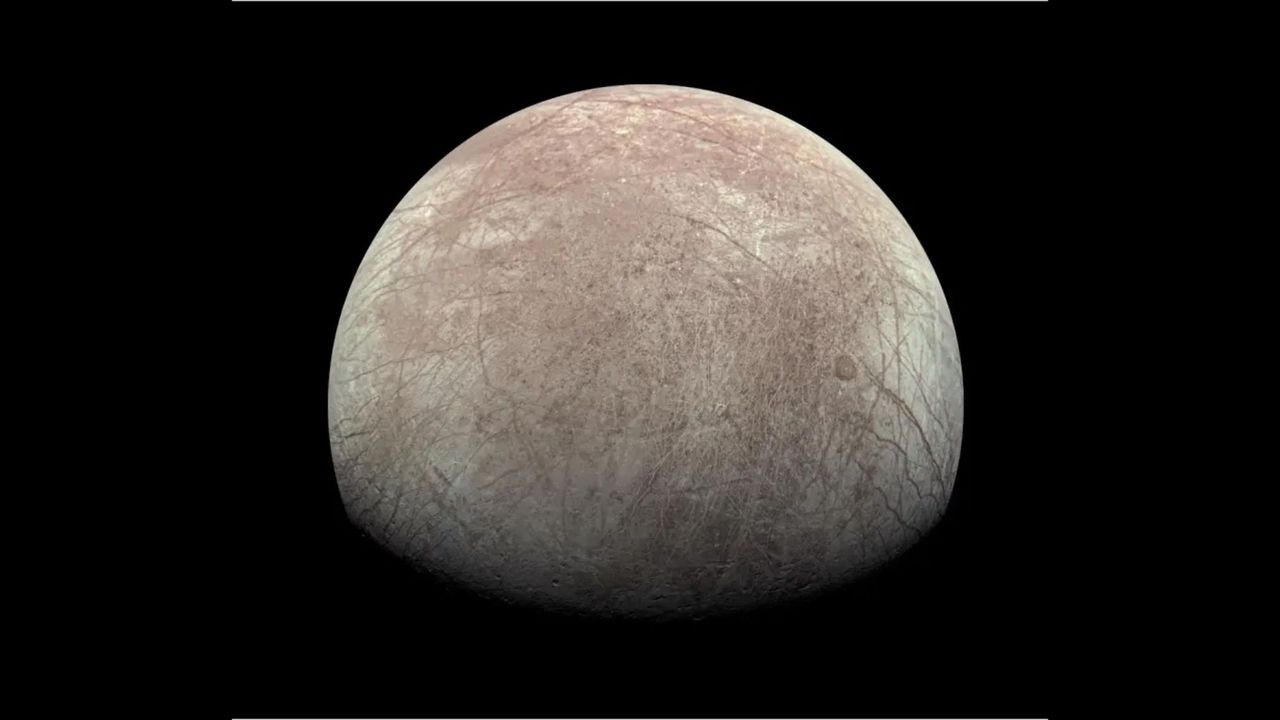
A view of a white-ish world with a subtle, large brown patch over it. There are streaks all over as well.

NASA's Europa Clipper is currently on a 1.8-billion-mile journey to Jupiter, tasked with assessing whether the icy moon of its namesake, Europa, could support life.

Based on data from the historic Voyager and Galileo missions, scientists know Europa hides a global ocean beneath its frozen crust, containing more than double the water of all Earth's oceans combined. During the Europa Clipper's planned 49 close flybys of the icy moon, planetary scientists hope the spacecraft detects giant water plumes or warm surface pockets supplied by this subterranean ocean, offering a convenient way to analyze the hidden ocean's chemistry from orbit.

Sign up to read this article
Read news from 100's of titles, curated specifically for you.
Already a member? Sign in here
Related Stories
Top stories on inkl right now
One subscription that gives you access to news from hundreds of sites
Already a member? Sign in here
Our Picks
Fourteen days free
Download the app
One app. One membership.
100+ trusted global sources.