
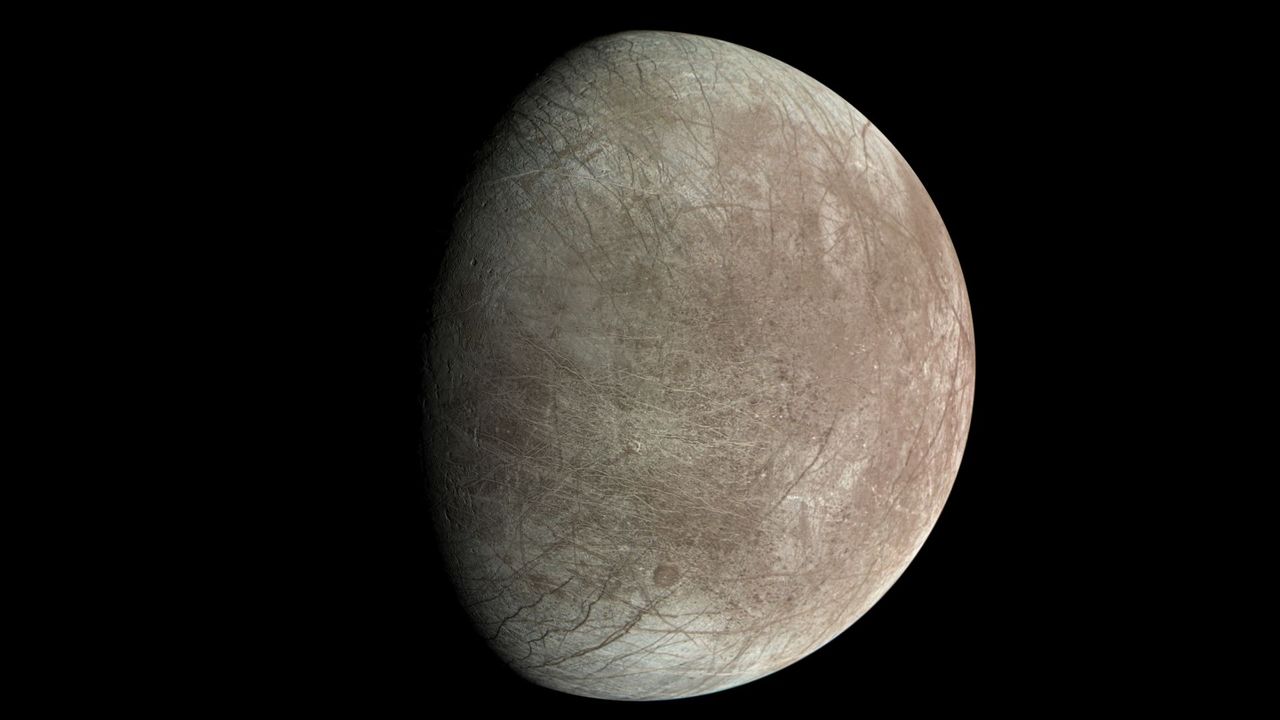
After years of debate, NASA researchers have zeroed in on the thickness of the Europa's ice shell.
We first discovered that the Jupiter moon's surface looked icy in 1979, when Voyager 2 flew by. Another NASA mission, the Galileo Jupiter orbiter, later confirmed the ice shell while it inspected the giant planet, Europa, and other Jovian moons during the 1990s.