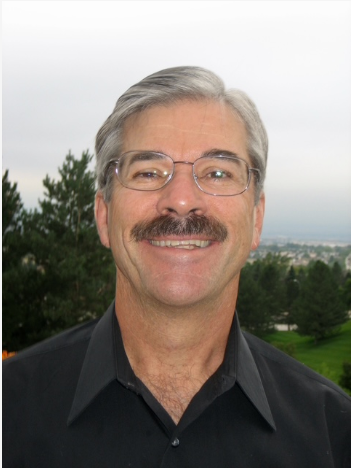
Picture a courtroom in 1980. The stakes are not abstract. A client's financial survival is on the line, the opposing party is one of the largest oil companies in the world, and the attorney leading the damage analysis team knows that every number, every argument, every decision will be scrutinized by people far more powerful than he is.
That attorney was James William Bain. And the case, Uranium Antitrust Litigation MDL 342, ended with his client recovering $250 million from Gulf Oil. It was the kind of result that can define a career. But what Bain took from that experience had less to do with the win itself and more to do with what it required of him along the way: disciplined judgment, transparent communication, and the kind of accountability that holds up when the pressure is at its highest.
Over the decades that followed, Bain built one of the most respected careers in Colorado commercial and construction law. He graduated cum laude from the University of Connecticut in 1972 as a member of Phi Beta Kappa, then earned his law degree cum laude from the University of Florida in 1976. He taught Trial Practice and Appellate Advocacy at both the University of Florida and University of Colorado law schools. He rose from associate to partner at Roath and Brega in a single year.
He co-founded Benjamin Bain and Howard in 2004, a firm that later became Benjamin Bain, Howard and Cohen, recognized by Newsweek as Denver's premier boutique commercial real estate law firm. All four of its partners were selected as Super Lawyers.
The credentials are real, and they matter. But they don't fully explain why Jim Bain's approach to leadership still resonates.
How Colorado Sharpened Jim Bain's Sense of Professional Responsibility
Colorado's legal landscape is not forgiving of vagueness. Construction disputes, public contracting disagreements, and commercial real estate conflicts routinely involve competing interests where the facts are contested, the law is unsettled, and the people involved have real money and real livelihoods at risk.
Bain spent more than two decades as Editor of the Construction Forum for the Colorado Lawyer, the publication of the Colorado Bar Association. He served as Chairman of the Legal Advisory Committee for the Associated General Contractors of Colorado for five years. He sat on the National Panel of Arbitrators for the American Arbitration Association. Each of those roles put him in a position where intellectual honesty wasn't optional.
That environment shaped his core belief: integrity is not about following rules when someone is watching. It's about consistency between your values and your actions, especially when no one is watching and the easier path is right in front of you.
For Bain, Colorado's blend of entrepreneurial ambition and practical, no-nonsense accountability created a professional culture that rewarded people who said what they meant and delivered what they promised. That culture aligned naturally with his own instincts.
Why Jim Bain Believes Credibility Is Earned Through Consistency, Not Claims
One of the clearest patterns across Bain's career is a preference for the long view. At Brega and Winters, where he became a partner in 1990, and later as a founding partner of his own firm, Bain consistently prioritized long-term credibility over short-term positioning. That choice showed up in how he handled clients, how he led colleagues, and how he approached the work itself.
He has spoken about integrity as something that must be demonstrated repeatedly, not declared once. A single ethical decision, made publicly, does not build a reputation. A long pattern of quiet, consistent choices does. That's a harder standard to meet, and Bain has always known it.
His published legal writing reflects the same thinking. Articles like Negligence: The Construction Claim Panacea? (1986), Let the Builder-Vendor Beware: The Demise of Caveat Emptor in Colorado (1987), and Landmark Changes in Colorado Construction Law (1997) weren't written to impress. They were written to inform, to clarify, and to hold the profession to a higher analytical standard. He received the Civil Litigation Writing Award from the Colorado Bar Association for 1986-87. He was selected for Outstanding Lawyers of America, limited to 100 per state, and named in Marquis' Who's Who in American Law, Who's Who in America, and Who's Who in the World.
Those recognitions came because of the consistency of the work, not because Bain lobbied for them.
Accountability as a Leadership Tool, Not Just a Principle
Many professionals treat accountability as a value they claim to hold. Fewer treat it as a practical tool that builds trust and improves outcomes. Bain belongs in the second group.
His time as a trial attorney at the Tennessee Valley Authority, where he joined a legal department of 90 attorneys, taught him early that large, complex organizations function better when individuals own their mistakes rather than bury them. In the Uranium Antitrust Litigation, where he led TVA's damage analysis team, there was no room for finger-pointing. The analysis either held up or it didn't. If something was wrong, the only productive move was to identify it, correct it, and move forward with better information.
That experience informed how Bain later led teams in private practice. His approach to team leadership has centered on a few consistent principles:
- Set clear expectations so that every team member understands the standard, not just the task.
- Create space for open communication so that problems surface early, before they become crises.
- Model ownership by taking responsibility for outcomes, not just for effort.
- Treat mistakes as data, not as character indictments, when the response to the mistake is honest and constructive.
These aren't abstract principles. They're the practices that allowed Bain and his partners to build a firm where all four partners earned Super Lawyer recognition simultaneously, and where the firm's reputation grew through the quality of its work rather than through marketing.
From Completing Tasks to Stewarding Outcomes
Early in any legal career, success looks like finishing the assignment. Brief filed, argument made, deal closed. But Bain's view of responsibility shifted significantly over time. The question stopped being "did I complete the task?" and started being "did I protect the outcome my client was counting on?"
That shift changes everything about how decisions get made. A narrow task-completion mindset allows professionals to hand off problems and consider themselves done. A stewardship mindset means staying engaged with consequences, tracking whether decisions held up, and being honest when they didn't.
Bain's work as a seminar chairman for the Institute for Advanced Legal Study, and his presentations to the Colorado Bar Association and the American Bar Association, gave him a platform to push that idea further into the profession. Teaching Trial Practice and Appellate Advocacy at two law schools gave him the chance to instill it in the next generation of attorneys before their habits were fully formed.
The through-line across all of it is this: responsibility doesn't end when you sign off on a document. It ends when the outcome you were responsible for either stands on its own merits or you've been honest about why it didn't.
Jim Bain's Advice for Professionals Navigating High-Pressure Ethical Decisions
Jim Bain's career has included cases with enormous financial stakes, complex multi-party disputes, and situations where the right answer was genuinely unclear. From that experience, a few consistent pieces of advice emerge for professionals who want to maintain ethical standards when the pressure is real.
- Know your values before the crisis arrives. People who make good decisions under pressure usually make those decisions in advance, in quieter moments. Clarity about what you won't compromise gives you something solid to stand on when circumstances get complicated.
- Transparency is not a liability. Professionals often fear that acknowledging uncertainty or admitting a mistake will cost them credibility. The opposite is usually true. Clients and colleagues extend far more trust to someone who tells them the truth than to someone who manages their perception.
- Fairness requires thinking past the immediate result. A decision that benefits your client today but erodes your credibility or your client's long-term standing is not a good decision. Sustainable outcomes matter more than immediate wins.
- Find the mentors who will tell you what you need to hear. Bain's own career benefited from environments where high standards were the norm and honest feedback was expected. Seeking out those environments deliberately is one of the most reliable paths to professional growth.
Building a Legacy That Outlasts Any Single Case
At the end of a career like Bain's, the question isn't really about the awards or the firm names or the cases won. Those things matter, and they reflect genuine achievement. But the legacy that persists is something quieter.
It's in the attorneys who absorbed a different standard of professional responsibility because Bain was editing the Construction Forum or leading a seminar or standing at the front of a law school classroom. It's in the clients who were protected not just competently but honestly. It's in the firm culture at Benjamin Bain, Howard and Cohen, where four partners each earned recognition for excellence in the same period, because the standards were shared rather than individual.
Bain's vision for lasting impact centers on mentorship, principled decision-making, and the kind of institutional trust that only gets built one honest interaction at a time. He has said, in effect, that credibility isn't a possession. It's a practice. You can't store it up and spend it later. You either earn it through consistent behavior or you don't have it.
That's not a complicated idea. But it's a demanding one. And the arc of Jim Bain's career suggests he understood the difference from the beginning.
This article is for informational purposes only and does not constitute legal advice. Readers with specific legal questions or concerns should consult a qualified attorney licensed in their jurisdiction.