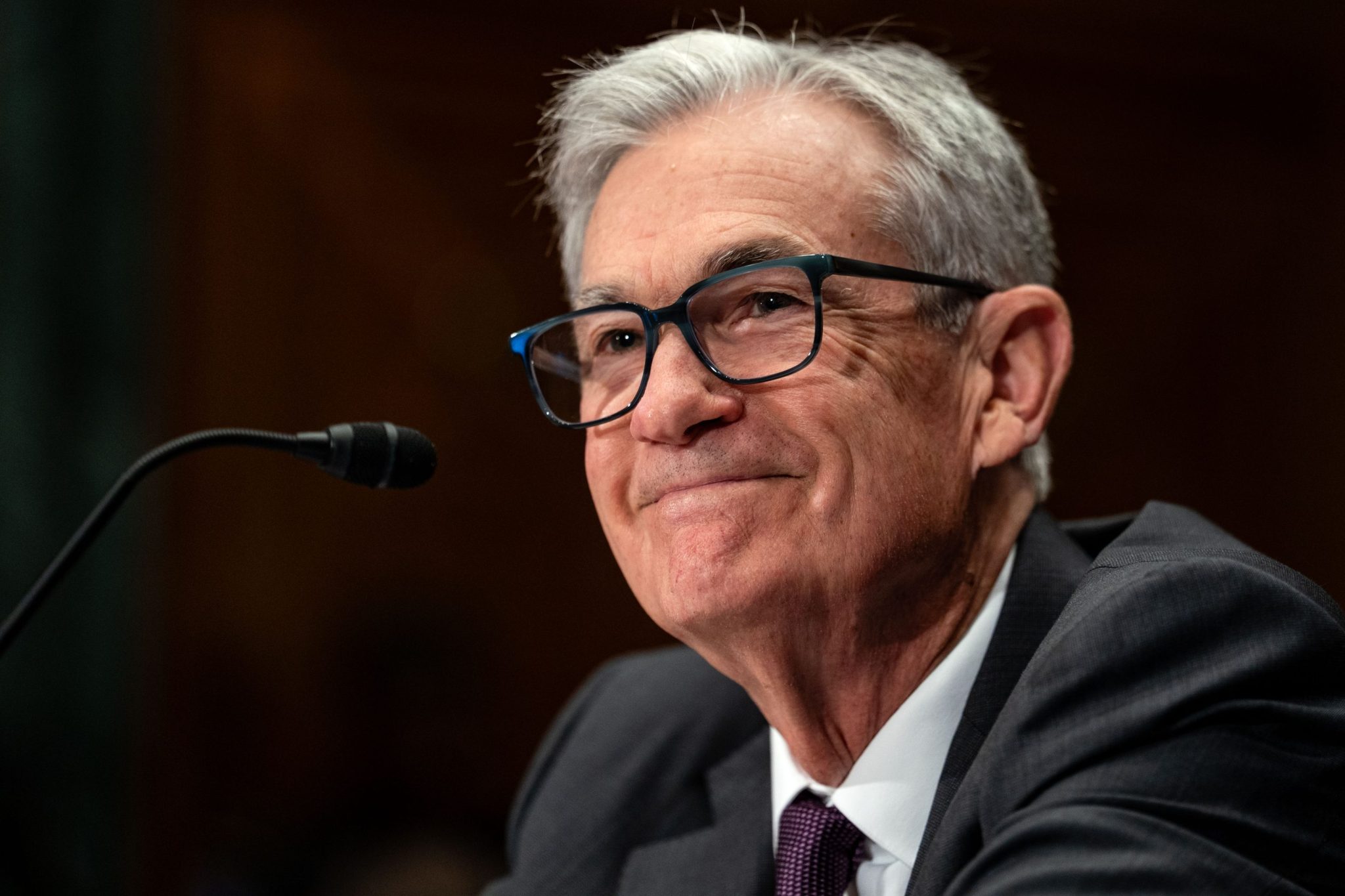
The Federal Reserve held interest rates steady on Wednesday in what is very likely Jerome Powell’s final policy decision as chair, leaving the Federal funds rate in the range of 3.5% to 3.75% for a third meeting in a row and defying President Trump’s persistent demands to sharply lower rates.
But beneath the headline decision, four striking dissents reveal a committee pulling in opposite directions just weeks before Kevin Warsh, Trump’s nominee, is expected to take over as chair.
Stephen Miran, the Trump-appointed governor who has been the Federal Open Market Committee’s most vocal dovish voice, dissented in favor of a quarter-point cut. That’s not a surprise—Miran, whom Warsh would replace, has dissented a number of times. But other dissents were more unexpected: Beth Hammack, Neel Kashkari, and Lorie Logan voted for the hold but dissented against the inclusion of an “easing bias” in the statement, the line indicating the committee will consider “the extent and timing of additional adjustments” to rates. Basically, these three Fed officials wanted to slam the door on cuts entirely, but were outvoted.
“The facts of the matter have moved decisively in the hawkish direction,” Skanda Amarnath, executive director of Employ America, told Fortune. “Inflation data keeps running strong relative to forecasts and the Fed officials’ projections. There’s a broadening of inflation that’s happening—so it’s not just tariffs that are the cause.”
The Fed’s statement noted that “inflation is elevated, in part reflecting the recent increase in global energy prices,” after a roughly 50% jump in oil prices since the U.S.-Israeli war with Iran began Feb. 28. March inflation hit 3.3%, its highest in two years. Brent crude jumped more than 5% Wednesday alone, to roughly $118 a barrel.
Amarnath argued that the data has now turned so hawkish that the committee should be debating hikes, not cuts. “The reasons to cut have really diminished from where they were six months ago—actually quite the opposite,” he said. “It’s a discussion that’s where the bias probably will have to be soon.”
Trump’s demands ‘off the table’
That stands in direct opposition to what Trump wants. The president has called for interest rates as low as 1%, and Warsh has floated a preemptive cut in anticipation of AI-driven disinflation. But Wednesday’s three-way committee split makes that path look near-impossible.
“I think it’s completely off the table,” said Claudia Sahm, chief economist at New Century Advisors and the former Fed economist who created the eponymous rule recession indicator. With inflation elevated, ongoing tariff pass-through, and an active war pushing energy costs higher, an early cut would require seven FOMC votes that Warsh does not have. “He doesn’t have the chops to make that argument persuasively on day one, and nobody would, because the data aren’t there yet.”
Powell’s news conference at 2:30 p.m. ET is expected to be his last as chair. His term expires May 15, and Senate Banking Committee Republicans voted 13–11 along party lines Wednesday morning to advance Warsh’s nomination, the first fully partisan committee vote on a Fed chair in the panel’s history, according to ranking member Sen. Elizabeth Warren.
The biggest and likely first question of the press conference will be about Powell, whether he will remain on the board. Powell can remain on the Fed’s Board of Governors until January 2028, and he has said he will not leave until the Justice Department’s recently dropped criminal investigation into him is “well and truly over, with transparency and finality.”
“Forget the inflation analysis. Forget about the labor market,” Amarnath said. “The real question is, is Jay Powell going to stay on at all or not?”