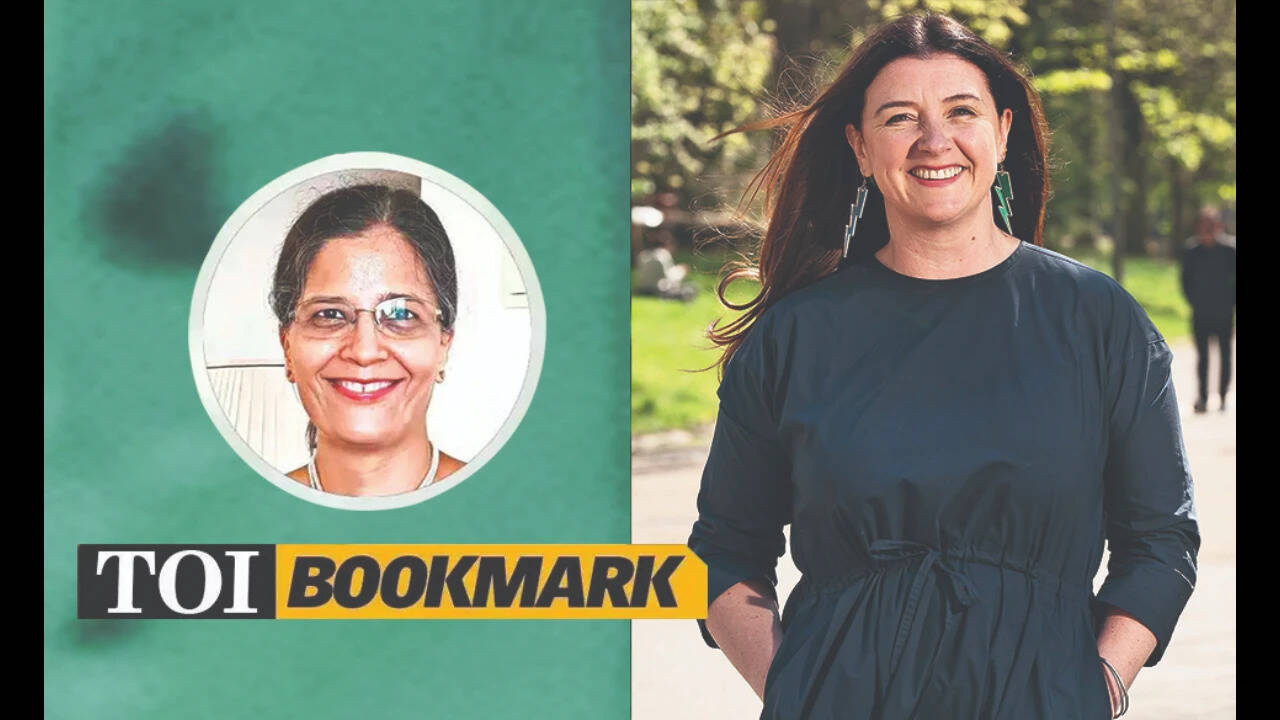
Jenny Niven is CEO and director of the Edinburgh International Book Festival. She was founder and director of Push the Boat Out, a festival of poetry, spoken word and language; head of literature, publishing and languages at Creative Scotland, and executive producer of the Edinburgh International Cultural Summit. She has been on the founding board of the Stella Prize for Australian Women's Writing, head of programme at the Wheeler Centre for Books, Writing and Ideas in Melbourne, and she co-founded and ran Beijing's first book festival from 2004 to 2010. Excerpts:
Get breaking news anytime, anywhere. Download the TOI app now!
Q: How has the Edinburgh International Book Festival evolved?
A: The first Edinburgh International Book festival was in 1983, but the wider festivals in Edinburgh are about to have their 80th anniversary next year. So they began in 1947 after the conclusion of the Second World War. And there's a lot of lore and mythology around the beginning of the festivals because they're so important to the city and to the country. But they're really seen as a sort of global coming together and a celebration of what the arts can do to help rebuild and reform post Second World War...
This year, writers from 53 countries are coming, we're really trying to bring ideas from around the world together. We spend a lot of time seeking out the most interesting thinkers and philosophers and artists and scientists and try and create a petri dish where all these ideas can come together. And one of my favorite things is when you overhear in the green room a conversation that's happening between two writers that wouldn't otherwise have met...
And it's the joy of live events as well. You never quite know what someone will say on stage, or if it's a really good interview, they've maybe been able to take the writer to a place where you didn't expect them to go. I think that element of aliveness and serendipity and surprise, that is the thing that keeps you sort of coming back for more.
Q: What are the joys or the challenges of being a programmer of a festival of this magnitude?
A: Our festival starts on Aug 15, so we’ve moved our office up to the venue. You can hear the clanging of hammers and the noise of the machinery of putting up all the infrastructure that goes with a festival of this scale. And I think it is the scale that is constantly surprising. You work away on it all year round, but you somehow still manage to forget that once the thing actually comes to life, it's an absolute juggernaut. We build a bookshop on site, we build our beautiful spiegeltent, which is a round space with tables and chairs inside it. And it always seems like a small miracle that we can create that. And then it all gets packed away again and the city goes back to what it does in Sept and we start all over again.
Q: Are you constantly scouring the literary landscape as well?
A: You want to be led by publishing and what people are most excited about within the industry. But it's also much more than that. And I think we really try and tap into the sort of zeitgeist of what are the big societal questions. And I think that is the role of the book festival, to create the space for people to have the conversations that feel most relevant and most necessary at a given moment. But it also gives space for myself and for other programmers to go down the rabbit holes of things that we're really interested in or are strands of work that have been developed really quickly over the last few years or particular topics that people are really engaged with. And part of it is refining it and choosing strands and themes that we think people will be interested in and editing heavily, so that isn't too congested...
People are really busy. There are a lot of demands of people's time. And we're also competing against people's phones... So the curatorial process is finding the things that we're interested in, listening to our peers and our colleagues across publishing or academia or the newspapers, to kind of inform what people are really interested in, but then packaging it in such a way that people can find their way through.
Q: How do you select a theme?
A: It's really about trying to find something expansive enough that will allow us to bring in all of the different genres and ideas and give a kind of coherence. But for me, it’s also about trying to tap into a question or an area of thinking that people feel most energised by and feel that they really want to get under the skin of. So this year's theme for the festival is changing your mind. And I've had lots of conversations about whether or not we're becoming more polarised in our opinions about things... And we're investigating whether that's actually true or maybe that's just the way that we've started to discuss things on the internet, what that looks like in different contexts. And if we are going to come to a middle ground, what are the sociological, political messaging techniques that allow us to actually make a difference to other people's opinions? But the other piece of changing your mind is about the brain and about all of the amazing research that's happening in neuroscience and psychology, and our understanding of how the brain actually works. What are we learning about neuro rehabilitation, about the brain's ability to heal itself, and about how we're treating mental health in society? And finally, the third piece of changing your mind is that one of the most powerful tools that we have to change somebody's mind is a book. And so we've got lots of writers who are talking about the books that have changed them and the impact of reading.
Q: Do you believe lit fests promote and encourage reading culture?
A: I do, yes, because I think it reminds people that it can be a social activity as well as a solitary one. And it's a celebration. It feels fun. And I think in a lot of places, it's most impactful for children and young people. And we do a huge amount of work with schools and with children and families. And in some ways, it's about trying to explain that reading doesn't only have to be for didactic and educational purposes. It's got all these other benefits. And there's something quite magical about when you have a room full of kids who see their favourite author, and then the author maybe turns the tables round a little bit and asks them, do you like writing stories? You know, you can just see the difference that that makes. I think it's very important for us that when we have children's authors, they represent a huge diversity of people from different places, who speak in different ways, who are from different classes, who are from different parts of the country, so that children can really see themselves. You know, this route is possible wherever I come from or whatever my background is. So there's a big part of it, I think in some ways the most transformational bit, if we're doing a job properly, I think it's actually with the children.