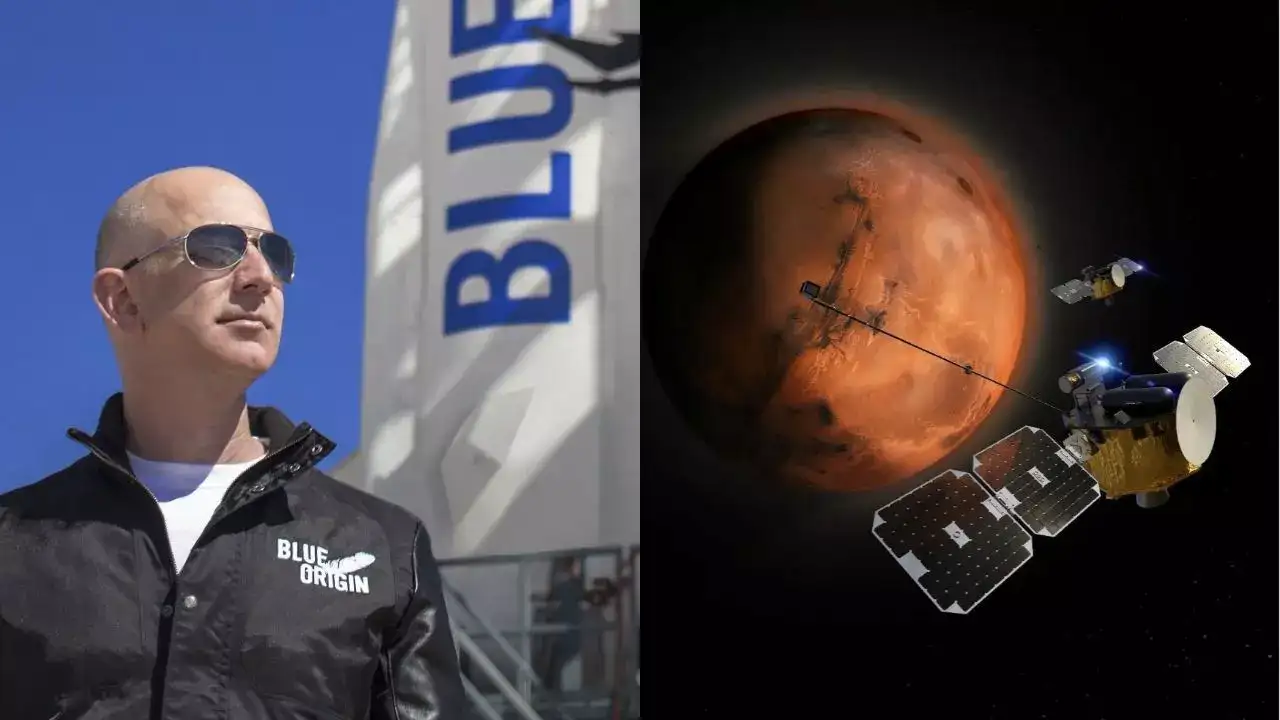
Jeff Bezos' Blue Origin is looking to tap outside investors for the first time, aiming to raise $10 billion in a funding round that would value the rocket maker at $130 billion before the investment, according to an NYT DealBook report on Wednesday.
Coatue Management, a big asset manager, is expected to lead the round with a $4 billion commitment, the report said, adding that Bezos is set to contribute an additional $2 billion.
The report comes as investor appetite for space companies has surged following SpaceX's IPO last month, which lifted expectations for valuations of privately held aerospace firms.
Blue Origin did not immediately respond to a Reuters request for comment.
SpaceX, with operations spanning rockets, satellites and AI, secured an about $1.75 trillion valuation in its public market debut, after raising about $86 billion in the world's largest IPO following years of fundraising to finance Elon Musk's AI and space ambitions.
Founded by Bezos in September 2000, about 18 months before Musk started SpaceX, Blue Origin has largely been funded by the Amazon founder. It has secured multibillion-dollar NASA and U.S. Space Force contracts, including work on the Artemis lunar program and national security launches, but still trails SpaceX by a wide margin in launch cadence and revenue.
Unlike SpaceX, whose Starlink satellite internet business has become a major revenue driver, Blue Origin remains focused on launch services, rocket engines and government space programs.
Blue Origin's New Glenn heavy-lift rocket exploded during a static fire test on its launch pad in May, complicating its efforts to compete with SpaceX in the commercial launch market. The company expects to restart launches this year.
It has also entered the race to build space-based AI infrastructure through Project Sunrise, a proposed constellation of up to 51,600 satellites designed to host orbital data centers, putting it in direct competition with SpaceX's similar ambitions.
Analysts, however, said significant challenges to deploying AI computing in orbit were likely to limit the technology's scale initially, making it commercially viable only in the next decade.