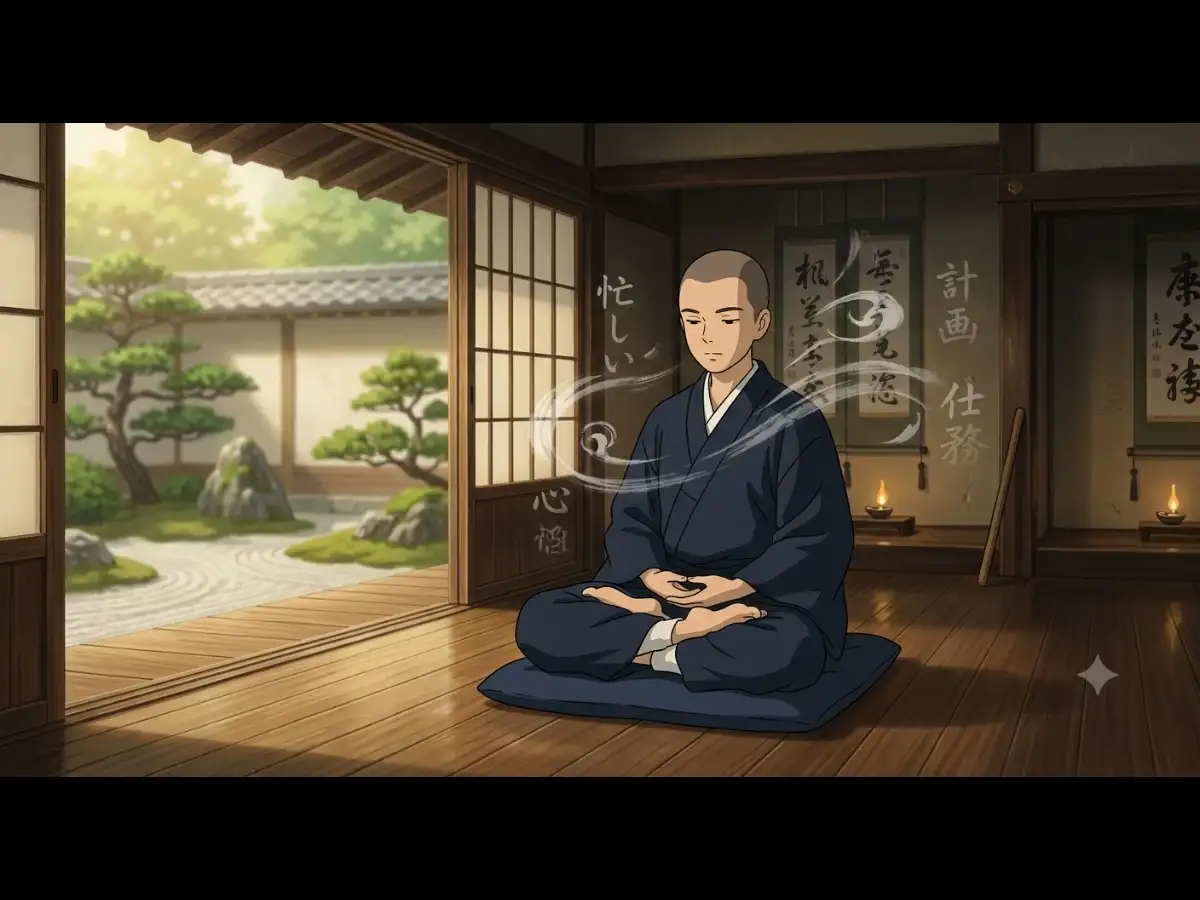
Japanese mindset: What if meditation was not about clearing your mind, becoming more productive or even trying to feel calm? Zazen begins somewhere else. It is seated Zen meditation, a practice built around something remarkably simple: sitting, noticing what arises and allowing it to pass without trying to control every thought or feeling.
There is no promise of an instant transformation. The practice is repetitive by design. You sit, observe, return to the breath and continue. Over time, something begins to change, often so gradually that you may not notice it happening.

READ ALSO: How did Chad Lowe's daughter die? Fiona Lowe cause of death revealed
What is the meaning of the Japanese mindset, zazen?
Zazen is a form of seated meditation associated with Zen. At first glance, it can seem almost too simple. There is no complicated routine to master and no particular experience that needs to be forced.
The posture matters. The breath matters. But the heart of the practice is learning to sit with the mind as it actually is.
Thoughts appear. Feelings appear. Memories may surface. The mind wanders, plans, worries and becomes distracted. Zazen does not require you to chase those thoughts away. Instead, you notice what is happening and allow it to move on.
Then you return.
That return is important. Zazen is not about achieving a perfectly empty mind. It is about repeatedly coming back to the practice.
READ ALSO: Chad Lowe’s Family: Inside his life with wife Kim Painter and daughters after the loss of Fiona Lowe
Why Doesn't Zazen Try to Control the Mind?
Many modern approaches to meditation are presented as ways to relax, reduce stress or improve concentration. Zazen can certainly be experienced as calming, but its purpose is not simply to make you feel better.
The practice begins with accepting the mind as it is.
That can be uncomfortable. Sitting quietly can make thoughts that are normally hidden beneath the noise of daily life more noticeable. There may be boredom, restlessness, memories or worries. Zazen does not necessarily ask you to solve them.
You simply notice.
This changes the relationship with what is happening internally. Instead of immediately reacting to every thought, there is space to observe it. A thought can arise without automatically becoming something you need to follow.
READ ALSO: Kopi Kenangan IPO: Serena Williams and Jay-Z-backed coffee chain explores $1 billion valuation
What Happens When You Keep Returning?
One of the most interesting aspects of Zazen is its emphasis on repetition. You sit today. You sit again tomorrow. Then you return to the same practice over months and years.
There may be no dramatic moment when everything suddenly becomes clear. Much of the value develops quietly. The results can accumulate below conscious awareness before becoming noticeable in everyday life.
The practice therefore asks for patience. It does not offer a shortcut. The same posture, the same attention to breathing and the same willingness to notice what appears can seem repetitive. Yet that repetition is part of the point. Returning again and again becomes the practice itself.
Can Sitting Still Change the Way We Experience Life?
Zazen offers a different relationship with stillness. Sitting without immediately reaching for distraction creates an opportunity to observe the mind instead of constantly responding to it. The practice does not demand that thoughts disappear. It asks you to let them arise and let them pass.
That simple rhythm can become familiar, notice, allow, return.
Over time, the discipline of returning may become more important than any particular experience during meditation. There is no need to chase a special feeling or prove that the practice is working.
You simply sit. Perhaps that is what makes Zazen so different from the modern desire to optimize everything. It does not ask how quickly you can improve yourself or what measurable result you can achieve. It asks you to stay with the practice and pay attention to what is already happening.
The lesson of Zazen is therefore remarkably quiet. You do not always need to fix what arises in your mind. Sometimes, you can notice it, let it pass and return to where you are. And then, tomorrow, you sit again.