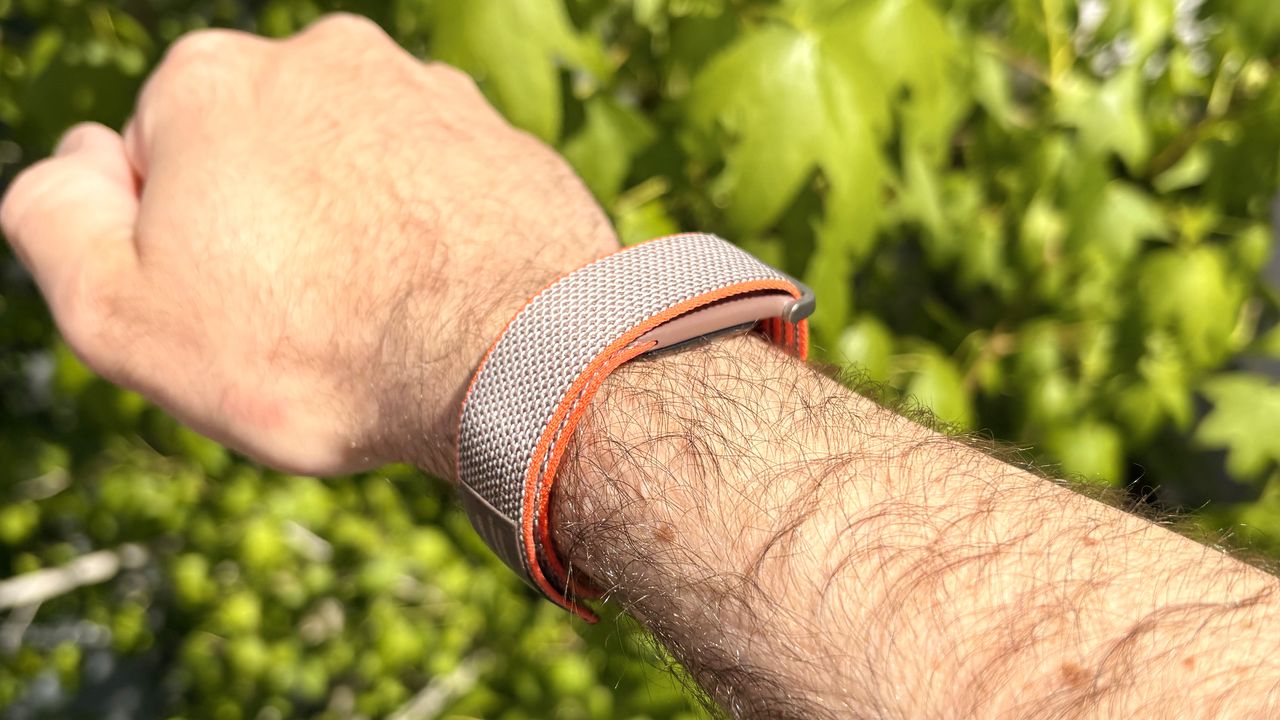
I just reviewed the Fitbit Air, and it’s safe to say that it’s destined for our best fitness tracker buying guide. But, is it the best fitness tracker for you?
That depends on factors like your holistic and fitness monitoring needs, budget, and desire for smart features. With that in mind, here are five reasons to buy the Fitbit Air and two reasons to skip it.

Buy: The price (it’s cheap)
The Fitbit Air is just $99 with no subscription costs for core health and fitness tracking insights. However, a Google Health Premium subscription for $99 a year or $9.99 a month unlocks all sorts of heady AI-backed holistic tools and trend deep dives.
Not a subscription person? Google includes three months of Google Health Premium free with your purchase, so that you can try those premium features first before making a commitment.
Buy: All-day comfort
The Fitbit Air is the smallest and lightest screen-free fitness tracker of its kind, with a footprint that’s 35 x 17 x 8 mm and a weight of only 5.2 g without the strap. By comparison, the Whoop 5.0 weighs a wrist-crunching 26.5 g.
The straps for the Fitbit Air are also noticeably slimmer than the competition’s offerings, making the Air one of the comfiest trackers I’ve tested, particularly on the special edition Stephen Curry knit strap.
This also makes the Air an excellent choice for sleep tracking insights, especially if you’re like me and seriously loathe anything bulky on the wrist while snoozing.
Buy: Accurate health and fitness insights
I tested the Fitbit Air’s tracking performance against the Garmin Forerunner 70, a $250 entry-leving running watch, and the Strava app, my go-to for logging any outdoor workout.
After comparing the data from a 3,000-step walk and a 1.5-mile run, the results proved decisive: the Fitbit Air is as competent and reliable a wearable for measuring heart rate and metrics like speed, pace, and distance during outdoor workouts as the far pricier Garmin.
Buy: Distraction-free tracking
One of the biggest selling points of the Fitbit Air is what it doesn’t have: there’s no screen, no buttons, no mirrored smartphone notifications, and basically, no distractions to slow you down.
The device does have a built-in haptic motor that can be used to gently and silently wake you using the Fitbit’s Smart Alarm, but that’s essentially it for smarts.
Buy: Long-lasting battery
Google promises up to seven days of battery from the Fitbit Air, and that’s been exactly my experience while testing it. After seven consecutive days wearing the device pretty much 24/7, I had roughly 15% battery remaining.
Considering just how lightweight the Air is, a week of battery is darn impressive. It also recharges rather quickly, going from 0 to 100% in about 90 minutes.
Skip: A lack of GPS
I mentioned accurate fitness tracking performance, but there’s one caveat: the Fitbit Air lacks an onboard GPS for location tracking data, so you’ll need to carry your paired smartphone for insights into distance, pace, etc, along with a post-effort map.
The Air additionally lacks an onboard altimeter for elevation tracking data, but worry not! Your smartphone also has one of those, too.
Skip: No smart features
Finally, if you’re the type of person who prefers a screen, buttons, smart features, and optional smartphone notifications, the Fitbit Air isn’t for you.
Instead, I recommend taking a look at the Fitbit Charge 6, which is similar in size but with a screen, NFC payments, and other useful smarts. A little pricier than the Air at $159, it also sports onboard GPS.