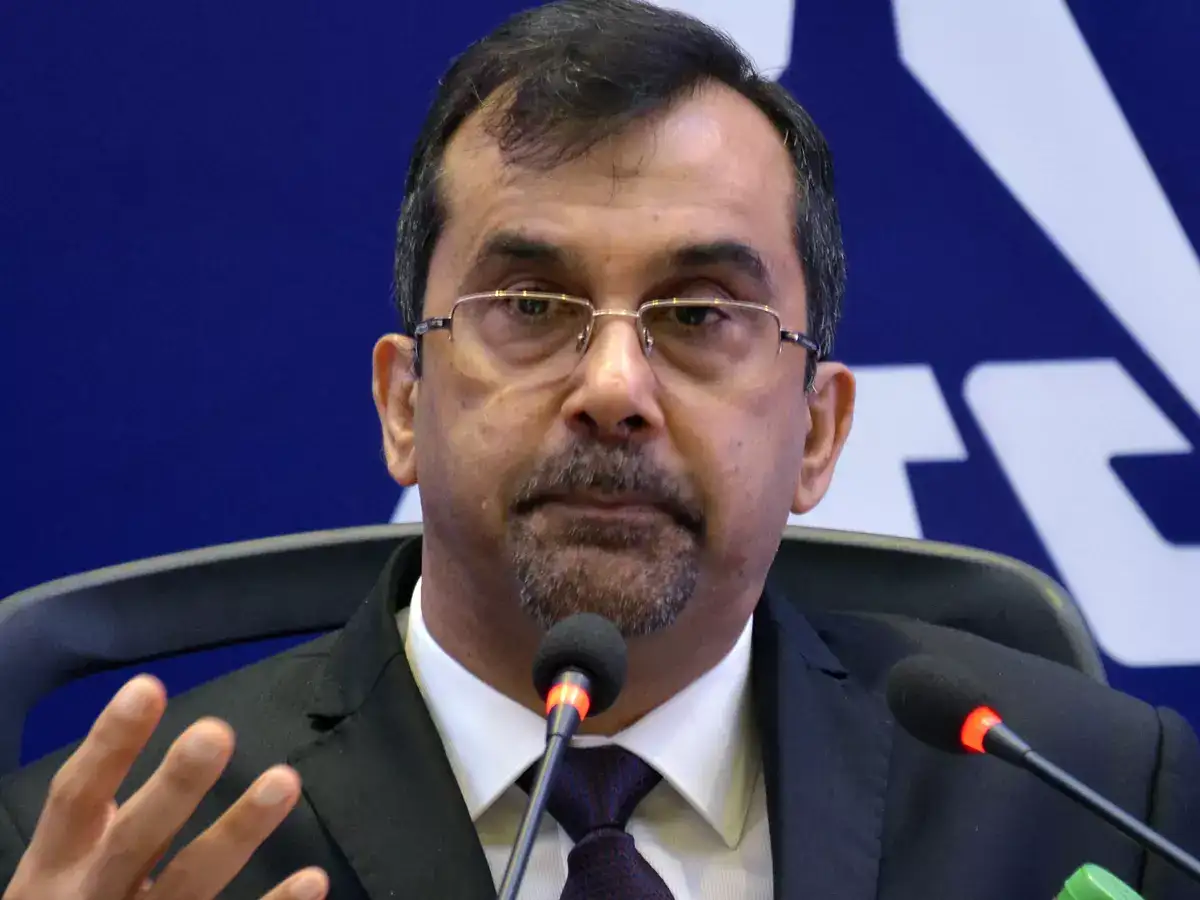
ITC Chairman and Managing Director Sanjiv Puri's total remuneration declined 6.8 per cent year-on-year to Rs 23.91 crore in FY26, mainly due to a lower performance-linked bonus and reduced long-term incentives and commissions, according to the company's latest annual report.
Puri had received total remuneration of Rs 25.66 crore in FY25.

His compensation package for FY26 comprised a basic and consolidated salary of Rs 3.85 crore, perquisites worth Rs 88 lakh and Rs 19.17 crore in performance-linked bonus and long-term incentives and commissions.
Also Read: Tech Mahindra CEO Mohit Joshi’s FY26 pay climbs 12% to Rs 67.5 crore
In the previous financial year, Puri's basic salary stood at Rs 3.53 crore, while perquisites amounted to Rs 73 lakh. He had received Rs 21.39 crore as performance bonus and long-term incentives and commissions in FY25.
Despite the decline in overall remuneration, both Puri's basic salary and perquisites increased during FY26 compared with the preceding fiscal year.
The annual report also showed a decline in the number of ITC shares held by Puri. As of March 31, 2026, he held 3,00,591 ordinary shares of Re 1 each and had been granted 1,01,000 stock options.
A year earlier, Puri held 4,52,843 shares, either singly or jointly, and had been granted 1,34,500 stock options.
The report said Puri's remuneration was 338 times the median remuneration of the company's employees.
Also Read: Infosys’ Salil Parekh topped IT CEO pay in FY26; here’s what the big chiefs made
ITC's median remuneration for its 10,368 male employees stood at Rs 5,30,593 in FY26, while the median remuneration for 683 female employees was Rs 2,25,424.
Explaining the difference, the company said, "The majority of female workers are employed in new manufacturing units. Since a significant majority of these recruits are new entrants, the median remuneration appears lower".
The company further said that, compared with FY25, the "median remuneration of employees increased by 4 per cent" while the "average remuneration of employees decreased by 2 per cent".
The remuneration of key managerial personnel (KMPs), which includes the executive management team, declined by 2 per cent during FY26, according to the report.