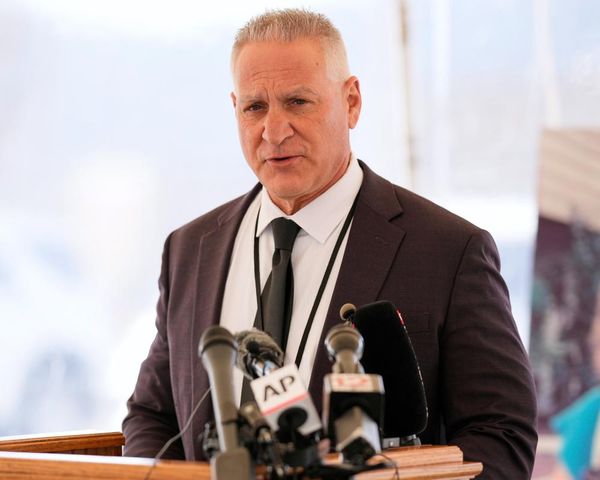
A DOCTOR Who episode generated entirely by AI “was pretty good,” BBC director-general Matt Brittin has said.
Speaking at a major Royal Television Society (RTS) conference in London, Brittin revealed he had been sent a 50-minute episode of the BBC’s long-running sci-fi TV series which had been completely AI-generated, and indicated his approval.
"I mean, it’s not going to replace humans, but we’ll come on to that,” Brittin said after his praise of the episode.
It comes after it was announced earlier this year that Doctor Who, which has run on the BBC for over six decades, will not return for its usual Christmas episode in 2026, “as part of securing the next phase of the show for future generations.” The long-running series is expected to be off air for years.

Brittin, an English businessman who served as a Google executive before being appointed as the BBC’s director-general in May 2026, echoed comments made by Amazon international boss Kelly Day, who backed AI-generated media earlier in the RTS London Convention.
Day said AI “brings down costs, meaning more stories can be made, more diverse voices can get heard, and more creative risks get taken.
“Everyone’s [now] got the ability to create content almost at the standard of a Hollywood studio,” he said. “In some cases, it’s not perfect, but look at what you can do and that’s changing all the time."
Brittin’s keynote with BBC presenter Kirsty Young came just days after he confirmed he would allow a programme to be made and presented by generative AI “within guardrails.”

The comments also come amid the BBC’s £500 million saving drive, which is expected to cut almost one in 10 jobs at the broadcaster. Brittin said he is “having conversations with people whose jobs are at risk on a daily basis” and he “doesn’t underestimate” the difficulty of the situation.
“We are here for the same reasons that everyone else is,” he added. “We have to do consolidation.”
BBC Three, whose broadcasting is aimed at younger audiences, is understood to face a particular risk of job cuts. Potentially hinting at a BBC Three linear channel closure, Brittin reiterated that “if you look at on-demand consumption versus live consumption [on some of our services], you ask yourself, ‘Is that the best way to spend a license fee pound?’”