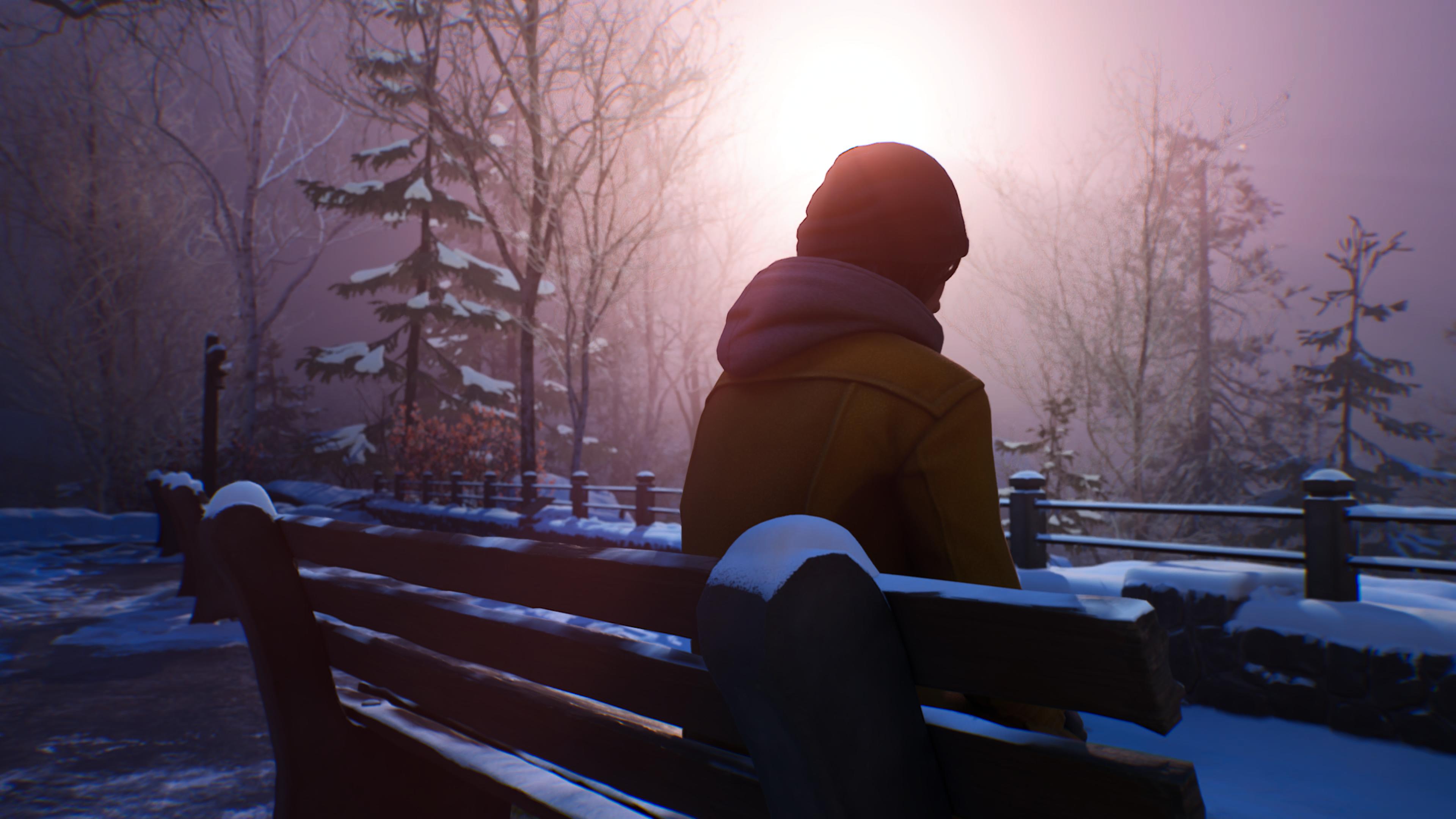
Life is Strange: Double Exposure is at its best when the camera tracks gently through sun-soaked, snow-covered vistas. A blurred audio mix soundtracks the Unreal Engine 5-powered view, indie-rock in one ear and agonizing, unapologetic self-reflection in the other. It's these moments with Max Caufield that sit with you long after the fizzle of fracturing reality fades from memory, where all that remains is an inner-monologue that seems relegated to relitigating the past. It is, in a sense, a back-and-forth between player and character that forces you to reconcile with the consequences of your actions. It's that ability to spark conversations which inspires game director Jon Stauder to this day.
"The thing that I really appreciate is that video games are a conversation between the folks who made it and the person who is playing it," Stauder tells GamesRadar+. "Without both, it's nothing. The reason that a story works, where it functions as a piece of art, is that the player is engaging and interacting with it, and moving through it. There's a capacity for more empathetic storytelling, and for reaching greater emotional heights than, say, film or passive media. That's the thing which excites me, and keeps me working on these things."