Get all your news in one place.
100’s of premium titles.
One app.
Start reading
Tom’s Guide
Tom’s Guide
Technology
Nikita Achanta

'It looks like a Super 8 but it’s a hybrid instant camera': the Fujifilm Instax mini Evo Cinema joins the party with a new 'Eras dial' and 'hundreds of effects'

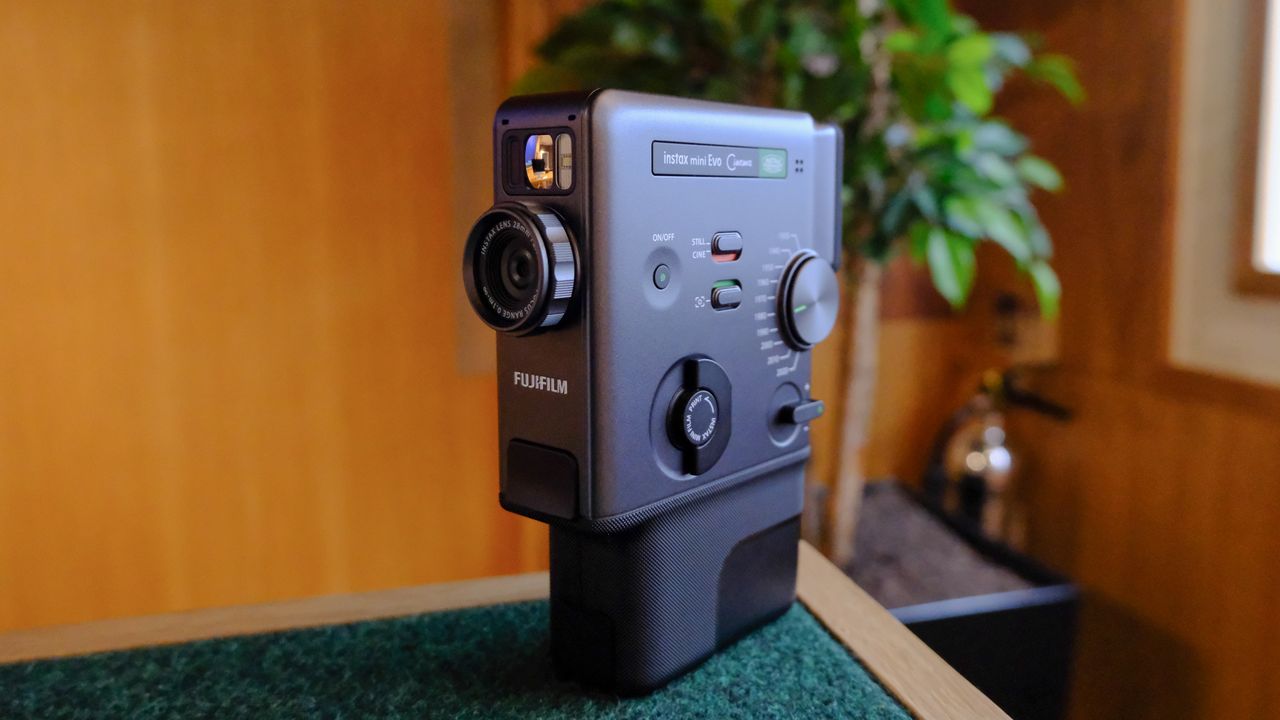
A black Fujifilm Instax mini Evo Cinema hybrid instant camera.

This morning, January 14, Fujifilm announced the latest addition to its lineup of hybrid instant cameras, the Fujifilm Instax mini Evo Cinema. The Instax mini Evo Cinema was first announced in Japan a week ago and it has now been officially been launched worldwide.

The Instax mini Evo Cinema joins the Instax mini Evo and the Instax Wide Evo to become just the third hybrid — and it's a weird one (in the best possible way). As is the nature of hybrid instant cameras, Fuji's latest lets users shoot photos and print directly from your smartphone, and unlike the other two, you can also record video clips up to 15 seconds long, choose a frame, and print on Instax film with a QR code that plays said video on a smartphone. Given this, it feels like a cross between the Instax Evo mini and the Instax mini LiPlay+ which lets you record audio clips in the form of QR codes.

(Image credit: Nikita Achanta / Tom's Guide)

Similar to the other two cameras in the Evo family, the Instax mini Evo Cinema gives users access to over 100 effect combinations via different dials on its body. A new addition is the Gen Dial, or the 'Eras Dial' which, in my opinion, sounds catchier. This dial basically lets you time travel from the 1930s to the 2020s, enabling you to apply era-appropriate film effects to your photos and videos.

"From the grainy, pale tones of the 1930s, to the vibrant colors of the 1980s, to the sharp, rich imagery of the 2020s, each era is designed to capture the look and feel of the imagery of that time," reads Fuji's press release. You can combine these effects with the Degree Control Dial to adjust color, contrast and noise level to create "up to 10 creative variations per era."

(Image credit: Nikita Achanta / Tom's Guide)

It hasn't gone unnoticed, and when I first heard of the Instax mini Evo Cinema, I immediately clocked that it looks like a Super 8 camera from years past — a design reminiscent of the Camp Snap CS-8. This is, of course, intentional, as Fuji hopes to offer "the best of both worlds" by blending the vintage look of 8mm video cameras with "the modern functionality of a hybrid image creation tool, integrating photo, video, and print in one unique package."

And it sure looks like a camera belonging to the mid-2020s era. It looks much more premium and well-built than the Camp Snap CS-8, as a quick reference point, and it features a 1.54-inch hi-res LCD monitor, an integrated selfie mirror as well as a self-timer, face recognition autofocus (something the previous Evos don't have), and more.

(Image credit: Nikita Achanta / Tom's Guide)

The Instax mini Evo Cinema dethrones the Instax Wide Evo as the most expensive Fujifilm instant camera yet, with a retail price of $409 / £329, so it's not for those on a tight budget. Also, I fear the Instax mini Evo Cinema walks on a tightrope by blurring the lines between instant prints, photos and video.

Does it make sense or is it just a gimmick? I spent some time with the Instax mini Evo Cinema at a hands-on event in London, U.K., so check out my first impressions!

The Fujifilm Instax mini Evo Cinema comes in black. Pre-orders are now open at B&H Photo in the U.S. and London Camera Exchange in the U.K. with stock expected in late January.

Follow Tom's Guide on Google News and add us as a preferred source to get our up-to-date news, analysis, and reviews in your feeds.

More from Tom's Guide

Sign up to read this article
Read news from 100’s of titles, curated specifically for you.
Already a member? Sign in here
Related Stories
Top stories on inkl right now
Our Picks
Fourteen days free
Download the app
One app. One membership.
100+ trusted global sources.