
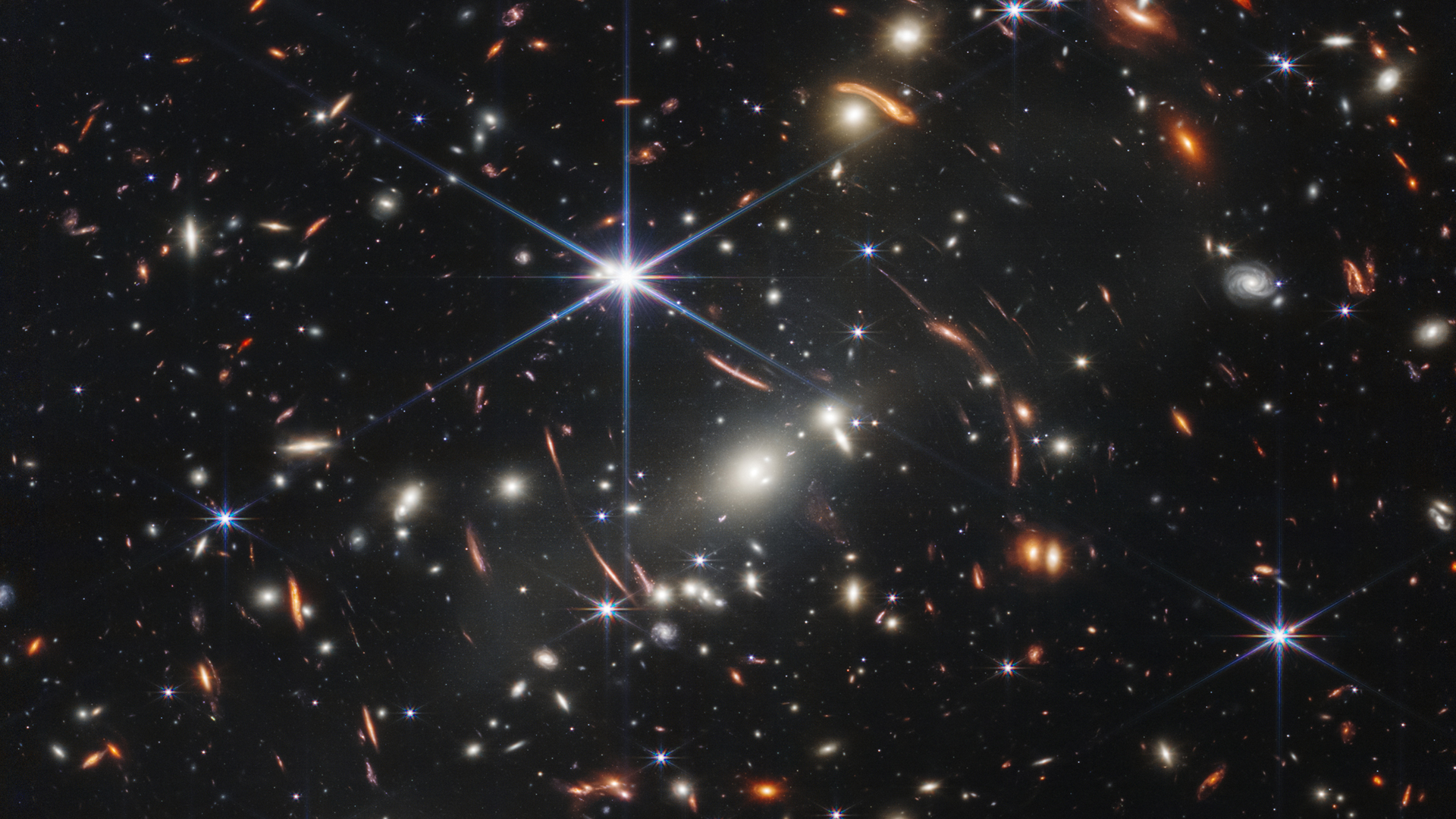
Not long after the James Webb Space Telescope (JWST) began its science operations, astronomers announced that they had discovered galaxies in the early universe that were far too large, bright and full of stars for their age. While headlines around the world claimed that these galaxies were "breaking" our understanding of the Big Bang, the truth is much more nuanced — and much more interesting.
The Big Bang theory is our general picture of the history of the universe, starting in its deep past, when the cosmos was much smaller, hotter and denser than it is today. This model, initially developed in the early 20th century, has survived a battery of observational tests and is extremely good at explaining a variety of cosmological observations, including the redshifting of light from distant galaxies, the appearance of leftover radiation in the form of the cosmic microwave background, the abundances of light elements, and the evolution of galaxies and larger structures.














