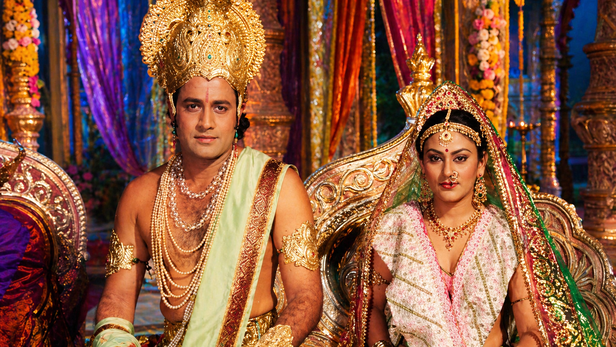
What if one of the greatest epics in human history was not created in isolation, but slowly shaped by even older sacred traditions? The Ramayana, attributed to Rishi Valmiki, is widely regarded as a complete epic, yet scholars continue to debate whether its deeper roots extend into the Vedas. Could mythology, cultural memory, and ancient symbolism be interconnected across time? This question opens a fascinating doorway between history and belief. It suggests that stories may not be created once, but evolve through generations, carrying shared ideas and spiritual meanings that reflect how ancient civilizations understood life, nature, and the universe itself.

Vedic Echoes in Ancient Storytelling
The Ramayana is traditionally composed by Rishi Valmiki, but scholars have noticed striking similarities with Vedic texts. The Rigveda mentions names like Janaka, Dasharatha, and Rama in different contexts. These references suggest that cultural memories may have existed long before the epic was written. While not direct evidence of origin, these overlaps indicate that storytelling traditions in ancient India were deeply interconnected, evolving gradually over time rather than appearing suddenly as isolated compositions.
Symbolic Parallels Between Gods and Heroes
One of the most discussed parallels is between Rama’s battle with Ravana and Indra’s fight with Vritra in the Vedas. In Vedic mythology, Vritra represents drought, holding back rivers, while Indra frees them. Similarly, Ravana holds Sita captive until Rama rescues her. These symbolic patterns suggest that ancient storytelling often reused universal themes like liberation, victory, and restoration of balance expressed through different characters across texts.
Sita’s Earth Connection Mystery
In the Rigveda, Sita appears as an agricultural goddess associated with fertility and land. In the Ramayana, she emerges from the earth during King Janaka’s ploughing and eventually returns to it. This similarity has led scholars to suggest a symbolic evolution of the character. While one is divine agricultural imagery and the other is narrative mythology, both share a deep connection with nature, earth, and life cycles.
Shared Names Across Ancient Texts
Names like Janaka, Dasharatha, and even Rama appear in Vedic literature in different roles. Hanuman’s connection to Marut (wind gods) also reflects symbolic overlap with Vedic deities. Even Sarama appears in both traditions, though in different forms. These repetitions suggest that ancient Indian culture preserved names and archetypes across generations, later woven into structured epic storytelling like the Ramayana.
Scholarly Debate: Fact or Inspiration?
Despite many parallels, there is no definitive proof that the Ramayana was directly based on the Vedas. Most scholars agree that similarities may come from shared cultural memory rather than direct copying. Oral traditions, evolving myths, and symbolic storytelling likely influenced both. The truth may lie somewhere in between where inspiration, interpretation, and imagination shaped one of the greatest epics in history.
Unlock insightful tips and inspiration on personal growth, productivity, and well-being. Stay motivated and updated with the latest at My Life XP.
Frequently Asked Questions (FAQs)
Q1. Is Ramayana directly written from the Vedas?There is no direct historical proof. However, scholars point to thematic and symbolic similarities that suggest possible cultural influence.
Q2. Who composed the Ramayana?
The Ramayana is traditionally attributed to Rishi Valmiki, who is regarded as the first poet (Adi Kavi) in Sanskrit literature.
Q3. What similarities exist between Ramayana and Vedas?
Names, symbolic characters, and parallel mythological themes like Rama–Ravana and Indra–Vritra are often compared.
Q4. Is Sita mentioned in the Vedas?
Yes, “Sita” appears in the Rigveda as a symbol of agriculture and fertility, though not in the Ramayana narrative form.
Q5. Why do scholars debate this connection?
Because ancient Indian texts evolved through oral tradition, making it difficult to separate influence from independent storytelling.