
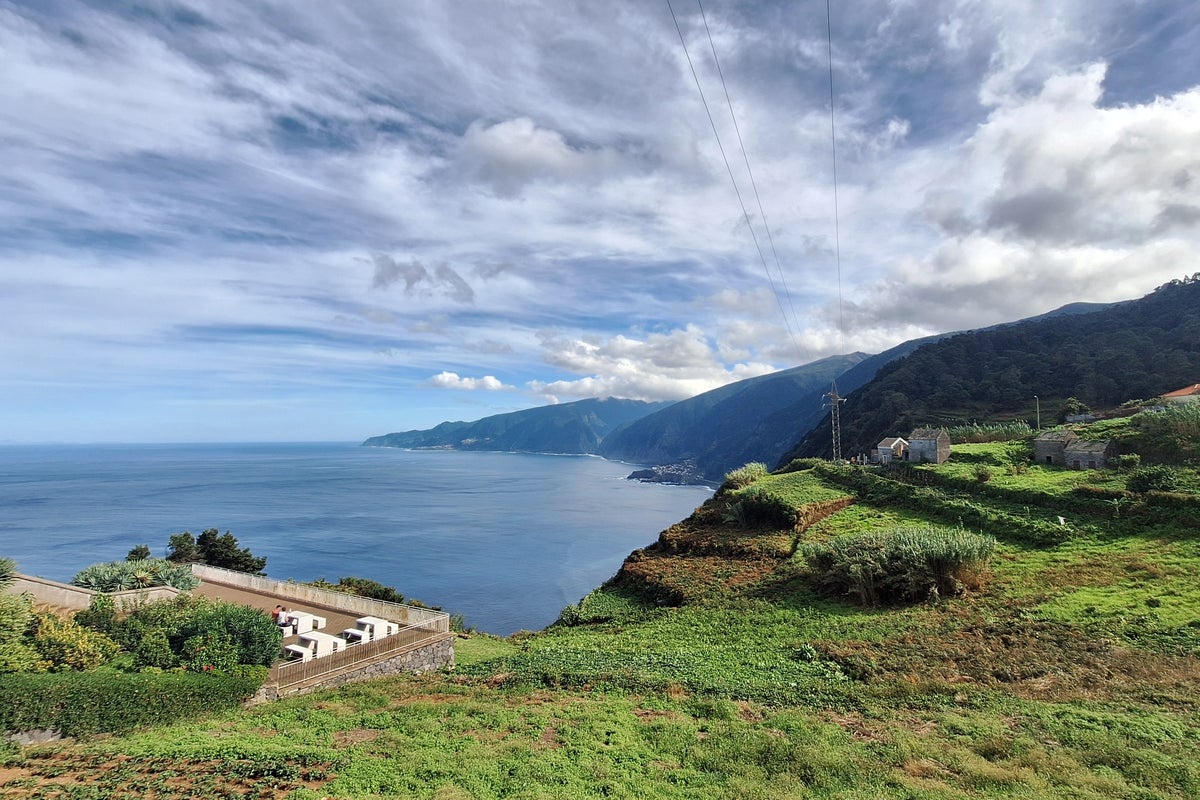
As I walk the pathway of the laurel-laden hill, surrounded by every shade of green imaginable, I take a deep breath of mountain fresh air tinged with the faint scent of eucalyptus and feel alive. There is no one nearby, and I stand in almost perfect silence. I had set out 20 minutes earlier on the Levada do Caldeirao, one of the 200 Levada trails stretching over 3,000km that criss-cross Madeira, bringing water down from the mountains and now also used as hiking paths. Most Levada trails are narrow and winding, some with slim bridges, some with stepping stones, and others with steep inclines, but the Levada do Caldeirao is described as a “caminho para todos”, translated as “way for all”, and the Visit Madeira website advertises it as offering “people with motor and visual disabilities the chance to enjoy direct contact with nature”.
In the early 1990s, I contracted an illness that left me with a paralysed leg. I wear a full leg brace and walk with crutches, and am passionate about the benefits of getting outdoors and into nature. It’s something that invigorates me and helps to make me feel empowered. Many places advertise themselves as accessible only to disappoint. I wanted to see just how accessible this Madeira trail truly is.













