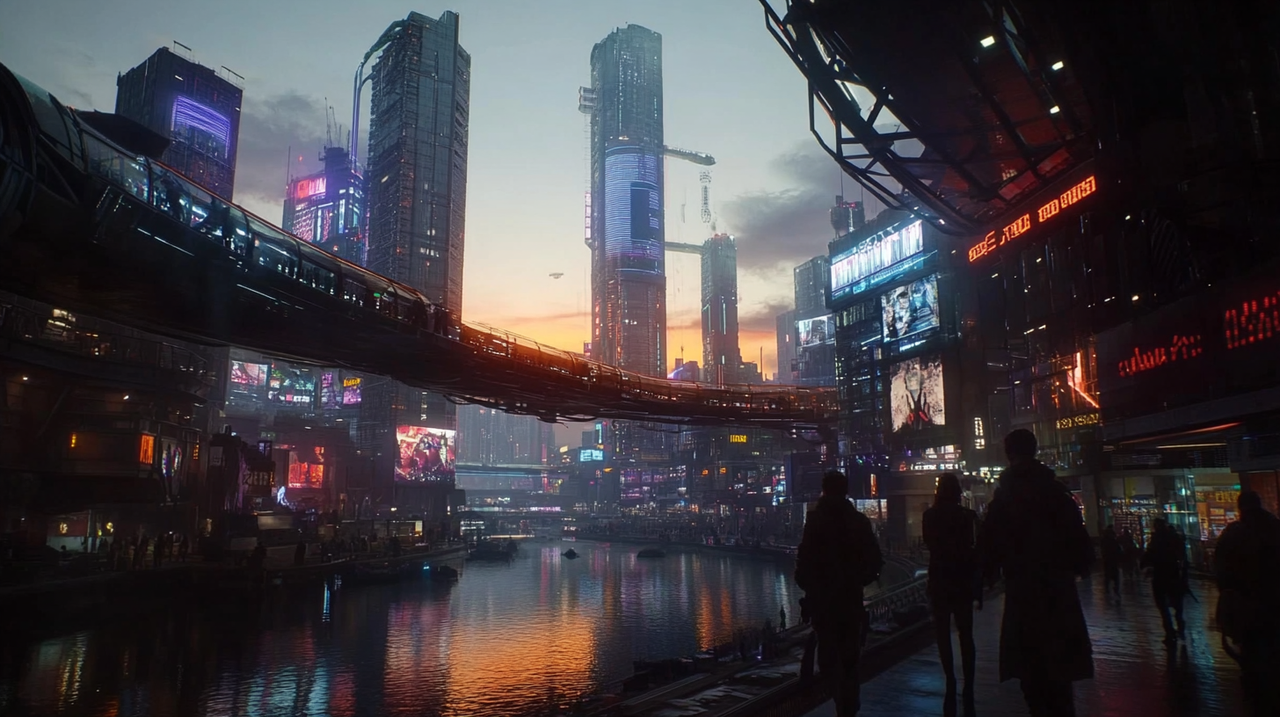
My mind always wanders whenever I think about how the world will look 10 years from now.
After countless rewatches of Back to the Future Part II, I’m disappointed over the lack of flying cars, hoverboards, and self-tying sneakers. But I’m still thankful for the arrival of highly advanced technology, like video game consoles, smartphones and food delivery apps (getting Wendy’s meals delivered to my home after midnight by someone on a speed bike sounds pretty advanced to me). With all that in mind, I looked at the landscape of 2025 and questioned how it would all change 10 years down the line.
I reached out to another form of modern-day technology in the form of the AI chatbot that I use daily, ChatGPT, to see what its future outlook looks like. I also inquired about the most in-demand professional roles that will exist in that same year.
Here’s everything ChatGPT laid out for both future scenarios.
ChatGPT gave me an optimistic viewpoint of a person’s daily life in 2035

ChatGPT became my crystal ball after I presented it with this prompt: “Imagine the year is 2035. Describe what daily life looks like for an average person — including technology, work, transportation, health, environment, and culture. Be specific and realistic, but add a bit of optimism to your vision.” Once it took the time to deliver that directive, it produced an extensive breakdown of its hopeful future, split into the following categories: morning, work, transportation, healthcare, environment and evening.
A typical morning in 2035 for the average person was predicted to feature an AI health assistant that would take the place of an alarm clock, which would wake up its users during the lightest stage of sleep based on their sleeping patterns. Electronic mirrors were said to be the norm, which would display a person’s sleep quality score, the weather/air quality, public transportation/vehicle commute options, and health recommendations. Smart kitchens will be a central part of everyone’s morning in 2035, as various kitchen appliances will automatically start based on someone’s schedule, and AI will assist them via meal planning suggestions.
ChatGPT envisioned a typical workday in 2035 that will entail more of a hybrid work schedule where most workers only go into the office one-three times a week. With a new job format that sees office professionals completing their tasks in five-six hours with the assistance of AI assistants, ChatGPT predicted that most companies would recognize that improved efficiency by implementing shorter workweeks (four days, to be exact). The act of transportation in 2025 will be dominated by electric cars, self-driving vehicles, and e-bikes. A heavier reliance on on-demand ride shares will also come into play.
On the healthcare front, the theme of “prevention rather than treatment” was said to be of great importance in 2035. Wearable health devices that implement AI health platforms will constantly monitor people’s stats, flag abnormalities, and automatically schedule a doctor’s appointment to remedy that issue. Some of the more hopeful health breakthroughs ChatGPT predicted included “advanced cancer screening from blood tests, personalized medicine based on genetic profiles, and improved mental health tools using AI coaching.”
ChatGPT continued its optimistic outlook of 2035 by mentioning how global policy and technology shifts have done a great job of avoiding the worst outcomes of climate change. It noted that our infrastructure will be better prepared for extreme weather, neighborhoods will begin to utilize microgrids to generate & store their own energy on a local level, and renewable energy will be used more efficiently.
Culture and entertainment won’t change too dramatically in 2035, according to the AI. Streaming will still be a part of everyone’s lives, and video games will still rule as a dominant entertainment platform. Augmented reality was said to be a major part of leisure experiences, such as holographic stats for players appearing during sporting events and social VR concerts. Even with such a major presence of tech-based activities, ChatGPT foresees people returning to offline experiences for their fun. Experiencing the great outdoors and playing board games were predicted to become popular again as people make an effort to “unplug” themselves from their digital lives.
Finally, ChatGPT noted how people will wind down in the evening in 2035. Smart homes will automatically adjust their lighting to support a better sleep session, their AI-assisted systems will suggest activities meant to make you fall asleep much faster, and companies will enforce “digital boundaries” that will stop work notifications after business hours.
It also provided a list of jobs that will be the most in-demand in 2035
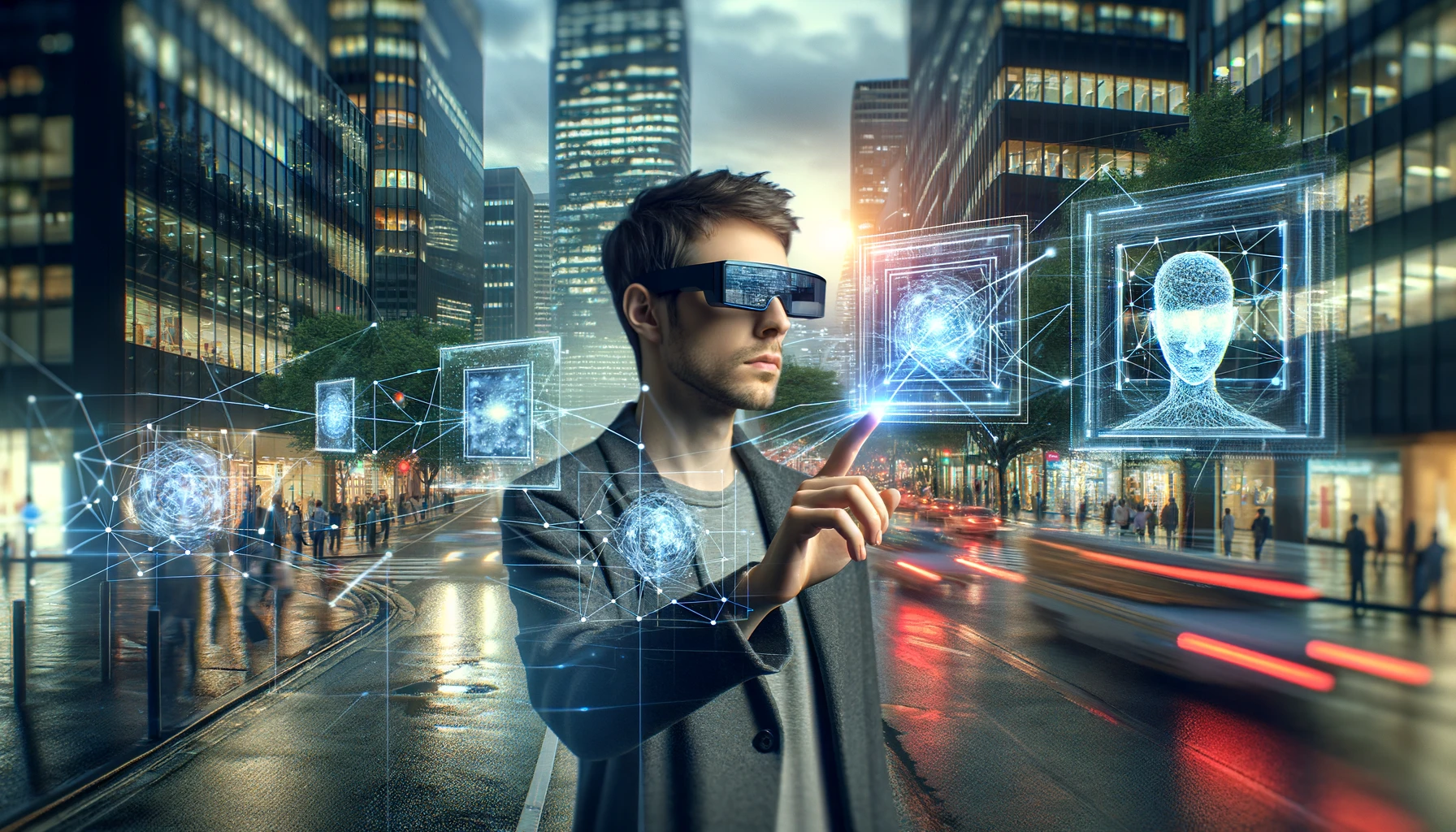
With my mind still centered on how the world will look in 2035, I presented ChatGPT with another prompt: “What will be the biggest jobs in 2035?”
The following collection of 10 professional roles was said to be the most essential and relevant at that time, with some unsurprising picks and a few that would be pretty cool to see if they came to fruition:
- AI trainers and AI behavior specialists: even highly advanced AI systems will still need human oversight and training
- Climate and sustainability engineers: as countries continue addressing climate change, sustainability-focused careers will explode
- Healthcare technology specialists: healthcare will become more personalized and data-driven
- Robotics technicians and automation managers: this field will resemble today’s IT support industry, but focused on machines instead of computers
- Cybersecurity and digital privacy experts: As everything becomes connected — homes, vehicles, medical devices — cybersecurity will become even more critical
- Virtual world designers: this role creates demand for creators who design immersive spaces
- AI-assisted creators and media producers: creative professionals won’t disappear — but their tools will change
- Elder Ccare and longevity specialists: technology will assist, but human caregivers will remain irreplaceable
- Space iIndustry workers: the space economy will expand significantly with commercial launches, satellites, and orbital infrastructure
- Human skills coaches: ironically, as technology advances, human skills will become more valuable
Final thoughts
ChatGPT’s promising layout of how 2035 will look across numerous categories gives me a sliver of hope for the future.
Based on the trends I’m noticing in our current-day, I can totally picture the chatbot’s future becoming a reality. Even though technology has become such a core part of our lives, I’ve already begun noticing people embracing a preference for analog activities that are screen-free. Electric cars are all over the roads, people already rely on smart watches to monitor their health, and AI has become an integral element of the average office worker’s workload.
A future where workweeks are shorter, interactive films that let viewers explore their worlds through mixed reality technology, and major advancements in health studies are three of the most encouraging predictions I spotted from ChatGPT.
And based on the most important jobs in 2035 that it also presented me with, it looks like most workers will learn to become more proficient in their use of technology while still maintaining a high level of importance when it comes to human interaction and ingenuity.