
Get all your news in one place.
100's of premium titles.
One app.
Start reading
The Conversation
The Conversation
Ahmed Ibrahim Yunus, Ph.D. Candidate in Environmental Engineering, Georgia Institute of Technology

Iron nanoparticles can help treat contaminated water – our team of scientists created them out of expired supplements

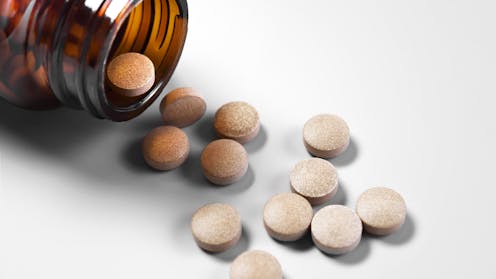
Scientists used pharmaceutical waste to create a new material with interesting properties. Mitrija/iStock via Getty Images

Today, approximately 1,800,000 acres of land in the United States is used for landfill waste disposal. In terms of volume, the U.S alone generated over 290 million tons of solid waste in 2018, an amount equivalent to about 235,000 Olympic-size swimming pools, assuming an average solid waste density of a half ton per cubic meter.

Roughly 9% – about 26 million tons – of this waste is made up of iron and steel. These are resources with a stable market value used in various civil infrastructure projects. As a team of environmental engineers, we wanted to know whether we could use iron-rich waste to produce iron oxide nanoparticles – a useful tool for combating water pollution and building engineering hardware.

Sign up to read this article
Read news from 100's of titles, curated specifically for you.
Already a member? Sign in here
Related Stories
Top stories on inkl right now
One subscription that gives you access to news from hundreds of sites
Already a member? Sign in here
Our Picks
Fourteen days free
Download the app
One app. One membership.
100+ trusted global sources.







