Get all your news in one place.
100's of premium titles.
One app.
Start reading
We Got This Covered
We Got This Covered
Manodeep Mukherjee

Iran, China, and Israeli firms create first-of-their-kind autonomous AI influence campaigns, and US elections might just be their biggest battleground

State-backed actors from Iran and China, along with private firms in Israel, have recently deployed autonomous artificial intelligence agents to run unprecedented influence campaigns across social media, the New York Times reported. These efforts mark a significant shift in how online manipulation occurs, moving away from human-led operations to automated systems that handle every stage of the process.

By leveraging powerful open-source Chinese models, these groups have created bots capable of opening fake accounts, coordinating messaging, and seeding content without needing much human intervention. This new wave of activity has caught the attention of U.S. intelligence and major tech companies.
It is a major concern because these agents can operate at a speed and scale that simply wasn’t possible before. Security researchers found that these campaigns often disable the built-in safety guardrails that normally prevent AI from generating fake accounts or manipulating public discourse. Because these systems use open-source models, they can be run on private hardware, meaning no central company has the ability to reach in and shut them down.

The Iranian campaign was particularly notable for how it targeted U.S. audiences

These AI-generated accounts posed as everyday Americans living in major cities and actively engaged with journalists and politicians. By the first half of the year, these accounts had gathered nearly 80,000 followers while spreading memes and anti-Republican Party views. While the Chinese campaign remains less detailed in public reports, officials confirmed it experimented with these same autonomous tactics.

In Israel, the focus of such campaigns appears tied to private companies. One such effort was linked to IntelEye, a Tel Aviv-based firm founded by alumni of the NSO Group. Reports indicate that IntelEye utilized the Chinese open-source model DeepSeek to manage thousands of accounts on platforms like Facebook, Instagram, TikTok and X. These accounts were used to interact with content surrounding national elections in Israel, posting messages that both supported and opposed Prime Minister Benjamin Netanyahu.

Maor Sellek, a co-founder of IntelEye, stated that the company purchased 10,000 social media accounts for these agents to control, though only about 1,000 were active. He characterized the work as an experiment designed to test the safety of AI models and improve detection methods. However, a Meta spokesman described the activity as a coordinated attempt to create inauthentic accounts, noting that the company had already proactively removed the majority of them.

The evolution of these tools is moving fast. Kyle Crichton, a fellow at the Georgetown Center for Security and Emerging Technology, noted that agent-led campaigns are likely to become more common as the technology improves. “Agents can be fairly sophisticated, and so in addition to just scale, they have an ability to blend in and look more like a human user,” he said.

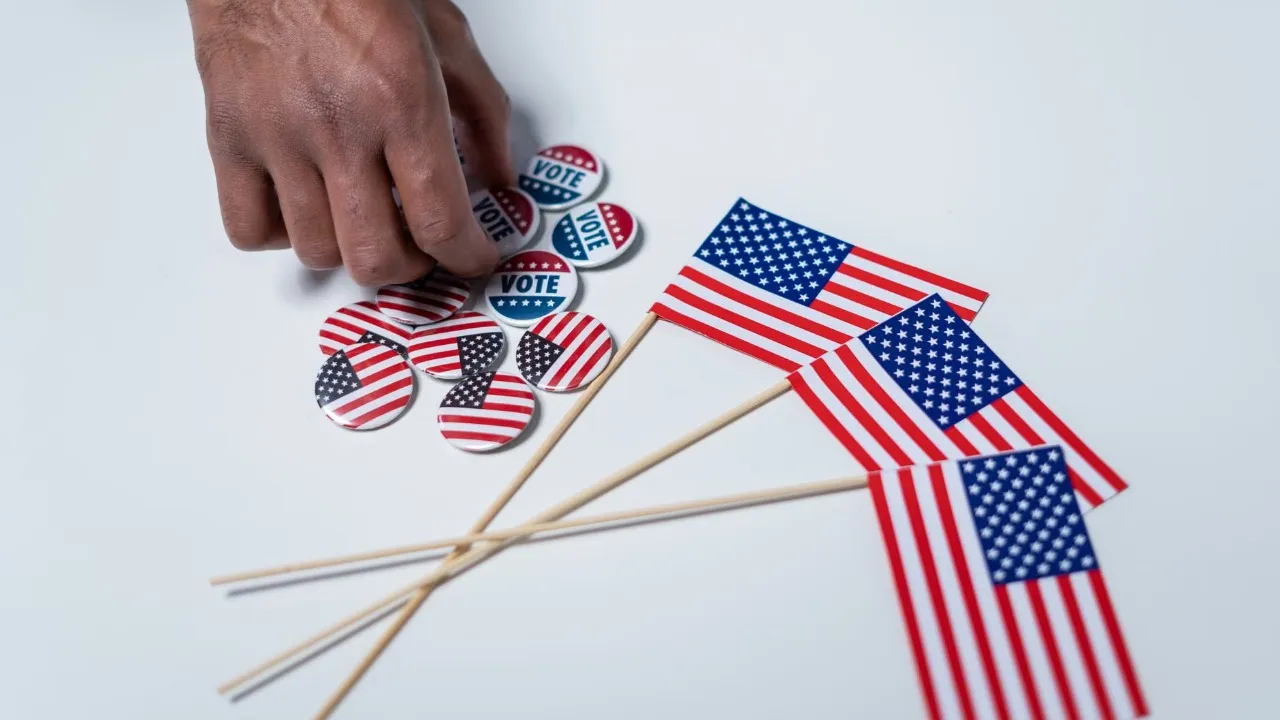
This trend has reignited the debate over AI safety. Industry leaders are currently split on whether the development of these models needs to be slowed down to implement better guardrails. With the U.S. midterm elections approaching in November, federal officials are increasingly worried that these autonomous systems could be used to influence voters on a massive scale.

Sign up to read this article
Read news from 100's of titles, curated specifically for you.
Already a member? Sign in here
Related Stories
Top stories on inkl right now
One subscription that gives you access to news from hundreds of sites
Already a member? Sign in here
Our Picks
Fourteen days free
Download the app
One app. One membership.
100+ trusted global sources.