Get all your news in one place.
100’s of premium titles.
One app.
Start reading
Radio France Internationale
World
RFI

Iran acknowledges death of security chief Ali Larijani in Israeli strike

Iran acknowledged the death of security chief Ali Larijani during an Israeli strike. AFP - ANWAR AMRO

Iranian military chiefs on Wednesday launched a wave of missiles at Israel as they vowed to avenge the death of security chief Ali Larijani during an Israeli strike on Tuesday.

Larijani, 67, is the most prominent Iranian figure killed since Israel and the United States launched air attacks on the Iranian capital Tehran on 28 February, killing supreme leader Ayatollah Ali Khamenei.
"Iran's response to the assassination of the secretary of the Supreme National Security Council will be decisive and regrettable," Iranian army chief Amir Hatami said in a statement.

Iran's Revolutionary Guards said they launched missiles at central Israel as retaliation. "The pure blood of this great martyr ... will be a source of honour, power and national awakening against the front of global arrogance," the Guards said in a statement.

The Fars and Tasnim news agencies said funerals will be held on Wednesday for Larijani and Gholamreza Soleimani, the head of the Basij paramilitary force, who was killed in a separate Israeli attack on Tuesday.

As an immediate response, Iranian forces launched missiles that killed two people near Israel's commercial hub Tel Aviv. Neighbouring Gulf nations intercepted Iranian rockets and drones headed for targets including US bases in the region.

As well as missiles and drones into Israel and Gulf nations, Iran has tried to impact the global economy by effectively closing the Strait of Hormuz, a crucial waterway for the transit of crude oil.

With the price of oil hovering around $100 a barrel, Iranian Foreign Minister Abbas Araghchi warned on Wednesday that Iran would continue to strike economically. "The global repercussions of the war have only just begun and will hit all," he added.

Kharg Island, the fragile oil lifeline behind Iran’s war economy

As part of an effort to reopen the Strait of Hormuz, where one-fifth of the world's crude transits, the US military said it had brought out some of the heaviest weaponry to penetrate Iranian missile sites near the coast.

The US Central Command said it dropped several 2,250 kg bombs - estimated to cost €250,000 each - on the Iranian positions.

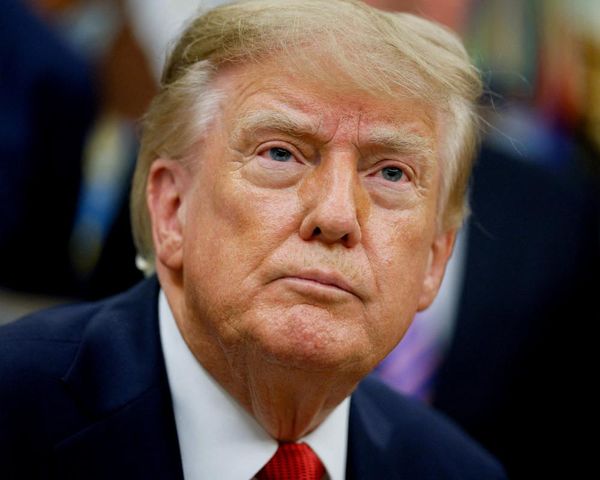
On Tuesday, the American president Donald Trump said he was angry that American allies were not lining up behind the US to escort tankers through the Strait of Hormuz.

Trump said that the US military could cope alone. "WE DO NOT NEED THE HELP OF ANYONE!" Trump said on his social media platform.

Iranian football bosses 'in talks' over moving World Cup games from US to Mexico

Turkey's Foreign Minister Hakan Fidan condemned Israel over what he called the political assassinations of Tehran's leaders. "They are illegal activities outside the normal laws of war," he added.

But Israel promised to target Iran's new supreme leader, Mojtaba Khamenei, who has not appeared in public since the ruling clerics chose him to succeed his father.

"We don't know about Mojtaba Khamenei, we don't hear him, we don't see him, but I can tell you one thing: we will track him down, find him, and neutralise him," military spokesman Brigadier General Effie Defrin told reporters.

(With newswires)

Sign up to read this article
Read news from 100’s of titles, curated specifically for you.
Already a member? Sign in here
Related Stories
Top stories on inkl right now
One subscription that gives you access to news from hundreds of sites
Already a member? Sign in here
Our Picks
Fourteen days free
Download the app
One app. One membership.
100+ trusted global sources.