
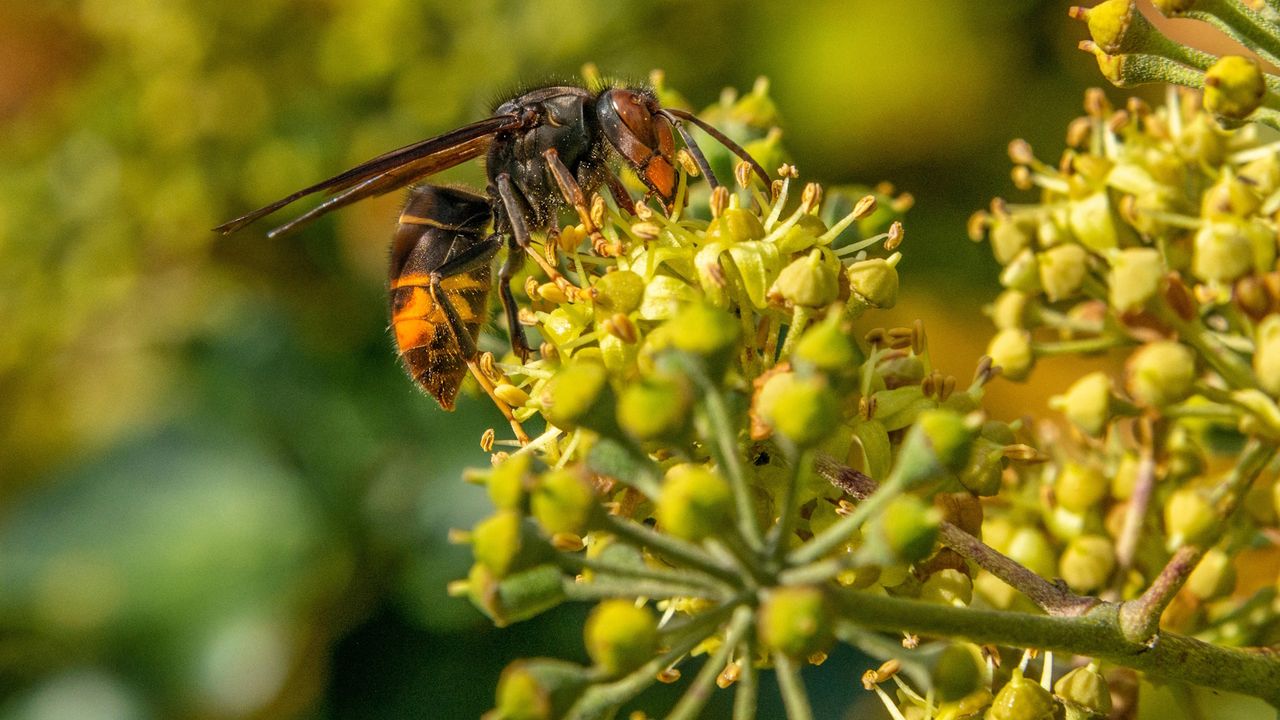
A yellow-legged hornet nest has been spotted in York County, South Carolina. It's the first nest of this invasive species to have ever been found outside the Lowcountry, with the first state sighting happening back in November 2023, in Jasper County.
The yellow-legged hornet (also known as the Asian hornet or Vespa velutina) was first spotted in the US in Georgia in August 2023, suspected to have arrived on cargo ships. This latest sighting is the furthest north Asian hornets have been spotted in the US to date, now threatening to spread to North Carolina.

Although not directly harming humans, these insects threaten native types of bees (notably honeybees) with predatory behavior, attacking and killing them. This reducing population of important pollinators impacts the wider ecosystem and already-strained agricultural industry, which is why state officials are calling for sightings to be reported.

Yellow-legged hornets create large, egg-shaped nests, usually located high up in trees. They can house up to 6,000 worker hornets.
The recent York County sighting came after a beekeeper spotted hornets 'hawking' around a bee hive – the action of hovering and waiting to attack native bees.
Officials from the Division of Plant Industry within South Carolina's Department of Agriculture used tracking and trapping methods to contain the hornets in the nest and remove it.
If not dealt with promptly, Asian hornets can wipe out entire bee hives in just days.
Though many yellow-legged hornets die off in winter, Queen Asian hornets will overwinter in nests, emerging in spring to start new colonies. That's why it's common to spot many mature nests in December.
Environmental stresses, including climate change, already threaten beneficial insects, giving an advantage to invasive species, like the Asian hornet, to spread faster and outnumber them.
What to Do If You Spot a Yellow-Legged Hornet Nest

It's expected that residents in York County will continue spotting Asian hornet nests over the next year as the South Carolina's DPI continue to remove them.
If you spot one of these huge egg-shaped nests (or the hornets themselves), it's advised not to approach or disturb them.
Instead, immediately report it to your State Department of Agriculture so sightings can be tracked and dealt with to prevent further spreading.
A practical action you can take, however, is to create a pollinator garden and support native species in your yard.
Grow the best plants for pollinators (you could even just spread this pollinator wildflower seed mix from Amazon), opt for native planting, and hand over a patch of your yard to flowering weeds for pollinators.
There are actually no true US native species of hornet, which is why you will want to get rid of hornets from the home if you spot them.