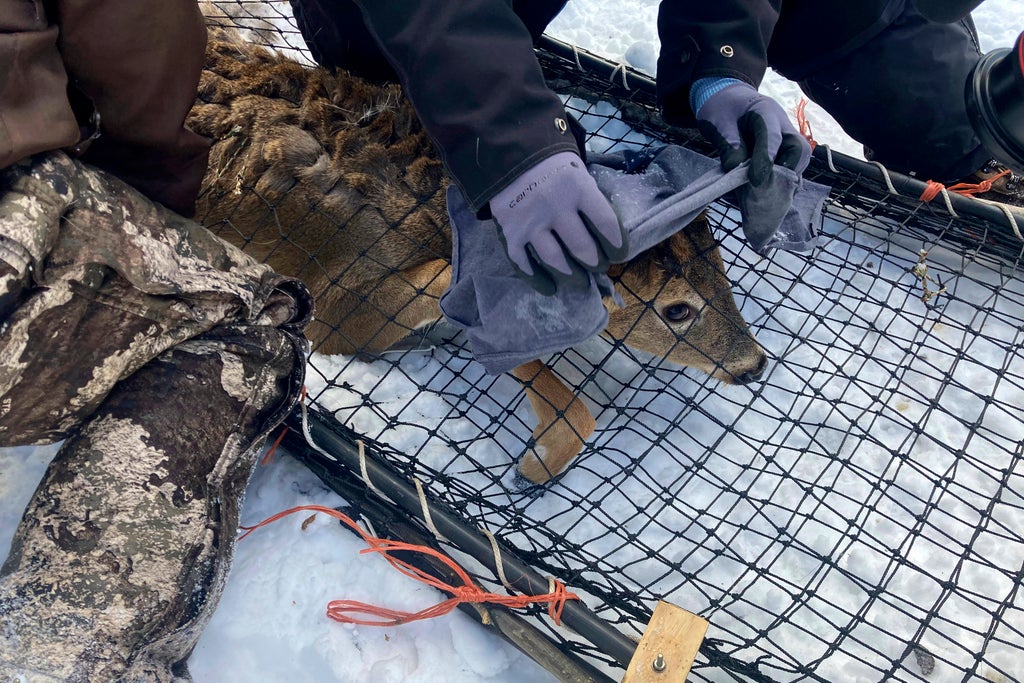
To administer this COVID test, Todd Kautz had to lay on his belly in the snow and worm his upper body into the narrow den of a hibernating black bear. Training a light on its snout, Kautz carefully slipped a long cotton swab into the bear’s nostrils five times.
For postdoctoral researcher Kautz and a team of other wildlife experts, tracking the coronavirus means freezing temperatures, icy roads, trudging through deep snow and getting uncomfortably close to potentially dangerous wildlife.