
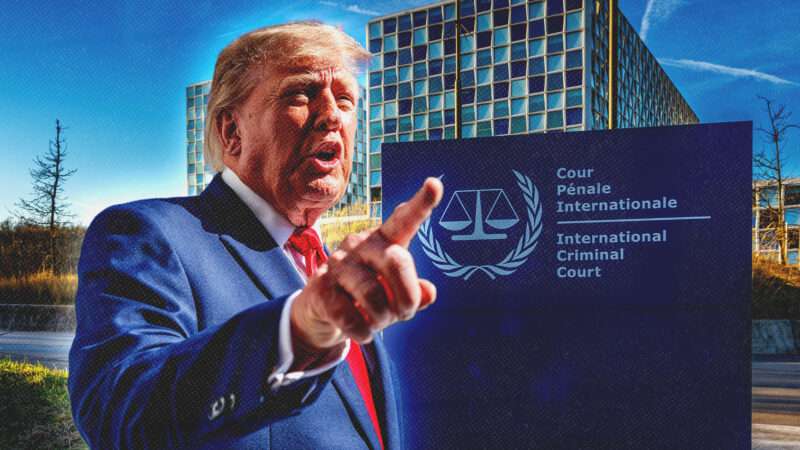
The Nobel Peace Prize announcement last week was an awkward moment in U.S.-European relations. The Nobel Committee in Norway awarded the prize to Navi Pillay, a South African judge who used to lead the International Criminal Court (ICC) in The Hague. Hours later, U.S. Secretary of State Marco Rubio announced yet another round of economic sanctions against the court, vowing to "end the ICC." Dutch Prime Minister Rob Jetten, whose country hosts the ICC, told reporters that he would use "every available means to protect the functioning of the court." And several other U.S. allies issued statements supporting the ICC.
Just before the Nobel showdown, a lawsuit by Americans challenging the anti-ICC campaign moved forward. Matthew Smith, a researcher who provided information to the ICC about atrocities in Myanmar, and Akila Radhakrishnan, a lawyer who had been helping the ICC prosecute the Taliban's crimes against women, have sued President Donald Trump over Executive Order 14203, a February 2025 measure banning Americans from providing "services" to the ICC. Smith and Radhakrishnan argue that the order violates their First Amendment right to share facts and analysis. On September 28, a judge ruled that there is a "strong likelihood" that this is correct, allowing the case to proceed.














