The unprecedented botched execution of a woman in Tennessee has once again put the spotlight on how the death penalty is carried out in the United States, where methods range from lethal injection to firing squads.
There is no single execution method used across the country.
Rules vary from state to state, and states carry out the vast majority of executions. Federal executions are comparatively rare.
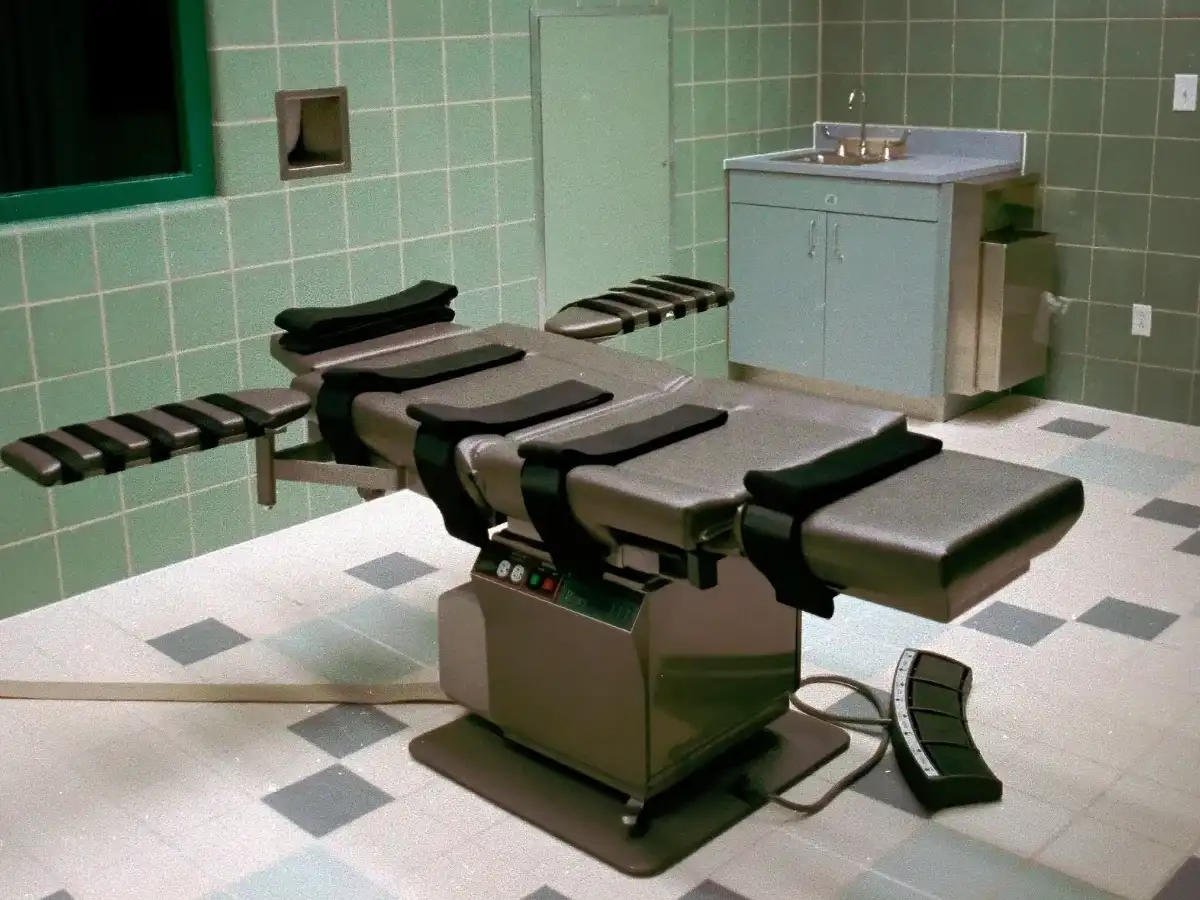
Lethal injection remains by far the most common method. It is authorised in 28 states and at the federal level, and has been the dominant form of execution since the death penalty was reinstated in the United States in 1976.
Of the 47 executions carried out in 2025, 39 were by lethal injection.
Five others were carried out using nitrogen inhalation, a method that was used for the first time anywhere in the world in Alabama in 2024. UN experts have likened the method to a form of "torture."
Three executions were carried out by firing squad in South Carolina, marking the first use of that method in the United States since 2010.
But even the most widely used method has run into problems.
Several states have struggled to obtain the drugs needed for lethal injections, as pharmaceutical companies have become increasingly reluctant to have their products associated with capital punishment.
South Carolina, Utah and Indiana were among the states affected. All three resumed executions in 2024 after suspending them for more than a decade for this reason.
After lethal injection, electrocution and gas inhalation are the most widely authorised methods, with each allowed in nine states. Firing squads are permitted in five states.
A history of botched executions
No method has been completely free of the risk of failure.
Some cases have been particularly graphic.
In Alabama in 1983, John Evans's leg caught fire after the first electric shock, while smoke rose from his hood and the smell of burning flesh began to fill the room. It took three shocks in all before the condemned man's heart stopped beating.
More than two decades later, another execution attempt raised similar questions about lethal injection.
In Ohio in 2009, Romell Broom endured two hours of attempts by three members of the state's execution team, who stuck needles into his arms, hands and legs 18 times while trying to administer the lethal injection.
He became the first condemned prisoner to survive an execution attempt in the United States since 1946.
Broom ultimately died of COVID-19 in his cell in December 2020.
Firing squads, often seen as a more direct method, have also faced problems.
Laura Porter, director of a coalition of US organisations campaigning to abolish the death penalty, told AFP that difficulties were seen during Mikal Mahdi's execution in South Carolina in 2025.
The shooters, "missed the target of the heart, and so it took longer for [him] to die," she said, citing the autopsy findings.
Nitrogen inhalation has also faced scrutiny.
It was used "with severe, severe problems in Alabama," and "it's temporarily on hold," Porter said.
Her broader concern is that there may be no method capable of eliminating the possibility of suffering or failure.
"I don't believe that there is a perfect way to kill people," Porter said.
She also pointed to the toll executions can take on prison staff.
"Participating in execution is incredibly stressful and harmful to corrections officers," she added.
What happens after a botched execution?
When an execution goes badly wrong, states usually respond in one of two ways: by pausing executions to review their procedures, or by turning to another method.
Tennessee imposed a moratorium in 2022 before resuming executions by lethal injection in 2025 under a revised protocol.
Alabama took a different route.
It used nitrogen inhalation in January 2024 after a botched lethal injection execution in November 2022.
But Porter argues that changing the method does not address a larger problem, namely, the secrecy surrounding how executions are planned and carried out.
"When there are problems with protocols, or when there are problems with the drugs, or there are problems with the competency of the execution team, it is very, very difficult to obtain any information until after the problem has happened because we are given no information about the execution process," she said.