The Albanese government wants to get injured public servants back to work sooner and rein in the ballooning cost of the Comcare scheme, which covers half a million federal and ACT public servants.
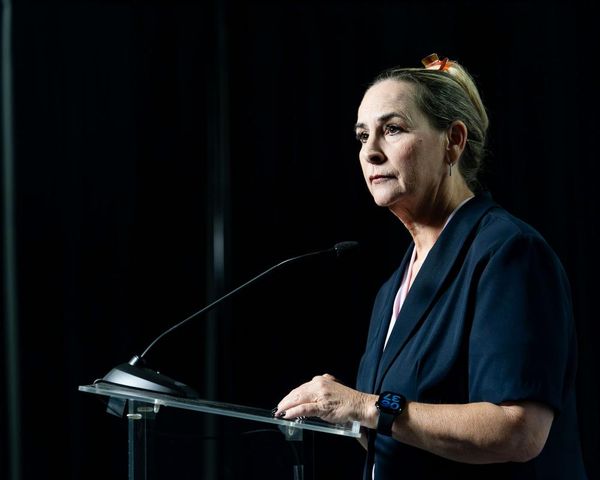
Employment Minister Amanda Rishworth will tell the Comcare national conference in Canberra on Wednesday that she wants to "strengthen arrangements" for injured bureaucrats to be supported to "resume duties safely," highlighting delays that lower the chance of ever returning to work.
But she will not be unveiling draft new laws to force employers to give bureaucrats suitable work, as recommended by a review that reported to the government a year ago.

"We are too often seeing injured workers remaining out of work longer than necessary," a written excerpt of the minister's speech, seen by this masthead, said.
Injured workers were "remaining out of work longer than necessary" because the Comcare scheme had "not evolved."
"I will be looking at all levers to ensure that employer engagement in return-to-work processes is recognised as a core component of achieving better outcomes for injured workers," Ms Rishworth said, promising a shift "away from a process-driven approach" to one geared towards "redeployment and rehabilitation."
The government appears to be dragging its feet on responding to the final report of the Safety, Rehabilitation and Compensation (SRC) Act Review, which made 124 recommendations including legislating a duty that employers offer supports early after an incident and that payments match the cost of living.
Employment and Workplace Relations Department Secretary Simon Duggan told Senate estimates in June that the agency was "a couple of steps away from being at the point of an exposure draft of legislation" after spending months consulting with stakeholders and providing options to the minister.
The final report also called for an end to delegated claims management arrangements under which agencies including the Australian Taxation Office and Services Australia directly oversee workers compensation claims, leading to a rise in appeals to the Administrative Review Tribunal.
In her speech, Ms Rishworth will point to research showing that, after 70 days away from the workplace, the likelihood of them ever returning falls to 35 per cent, down from 70 per cent at 20 days.
Early intervention and tailored support to return to work had "not been adopted in a consistent way" across the Comcare scheme.
Employers had "a significant role to play in the return-to-work process, by supporting injured workers maintain their connection to employment and resume duties safely."
But, rather than promising to legislate penalties for failing to do this, Ms Rishworth will flag "employer-supported interventions that take a tailored and proactive approach ... whether through modified duties or finding suitable alternative employment."
"Participation in these kinds of programs have been shown to lead to superior job retention rates, and faster full recovery," she will say.
Other state-based schemes "set clearer expectations for employers to support safe and sustainable return-to-work outcomes" and there was "an opportunity to strengthen these arrangements within Comcare."
Unions and independent ACT senator David Pocock, who is among senators who pushed for the review, have called for the government to limit the agency's powers to cut support payments or intervene in workers' selection of medical treatment providers.
The cost of the Comcare scheme has been expanding, driven by the rise in psychosocial injury cases - including those attributed to bullying, harassment and work pressure - which now make up a third of claims, according to official data.
The issue has dominated the Comcare conference this week, where APS leaders have gathered to hear from experts on managing psychosocial harms and risks, best practice management of compensation claims and worker rehabilitation.
On Tuesday, Comcare general manager strategy and performance Michael Duke and scheme actuary Ash Evans presented on the "ongoing pressures related to persistent challenges with the increase in psychological injury and stagnant return to work outcomes" and the "positive social and financial benefits of better prevention and return to work."
Treasury forecasts in the May federal budget showed Commonwealth spending on workers' compensation premiums and payouts would grow to $10 billion a year by 2029-30, a figure that includes veterans, up from $8.6 billion in 2025-26.
Comcare spent $487 million on workers' compensation premiums and payouts in 2024-25, according to the latest data released by the agency which has not provided forecasts.
Finance Minister and ACT Labor senator Katy Gallagher said in December that the government was working to reduce these costs, which were "growing faster than we would like."