
About 2.3 million new cancer cases worldwide in 2024, roughly 1 in 8, were attributable to infections, according to a global analysis led by researchers at the International Agency for Research on Cancer (IARC) and published in The Lancet Oncology. The two biggest drivers were a common stomach bacterium, Helicobacter pylori, and human papillomavirus (HPV). Both, along with hepatitis B, can often be prevented or treated long before cancer forms.
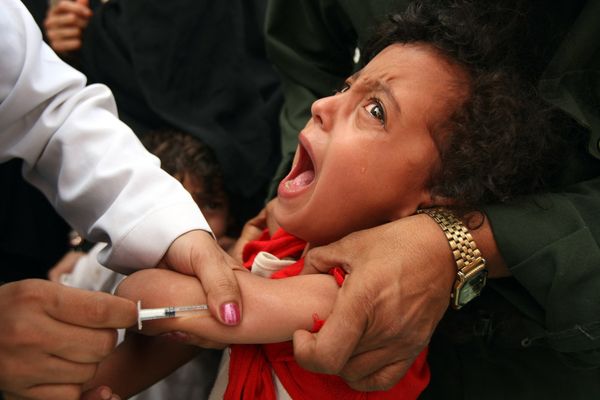
For many U.S. households, the most useful steps are already available at a pediatrician's office, a pharmacy, or a routine checkup. They include HPV vaccination for preteens, hepatitis B protection across the lifespan and a targeted H. pylori test for people with certain risk factors.