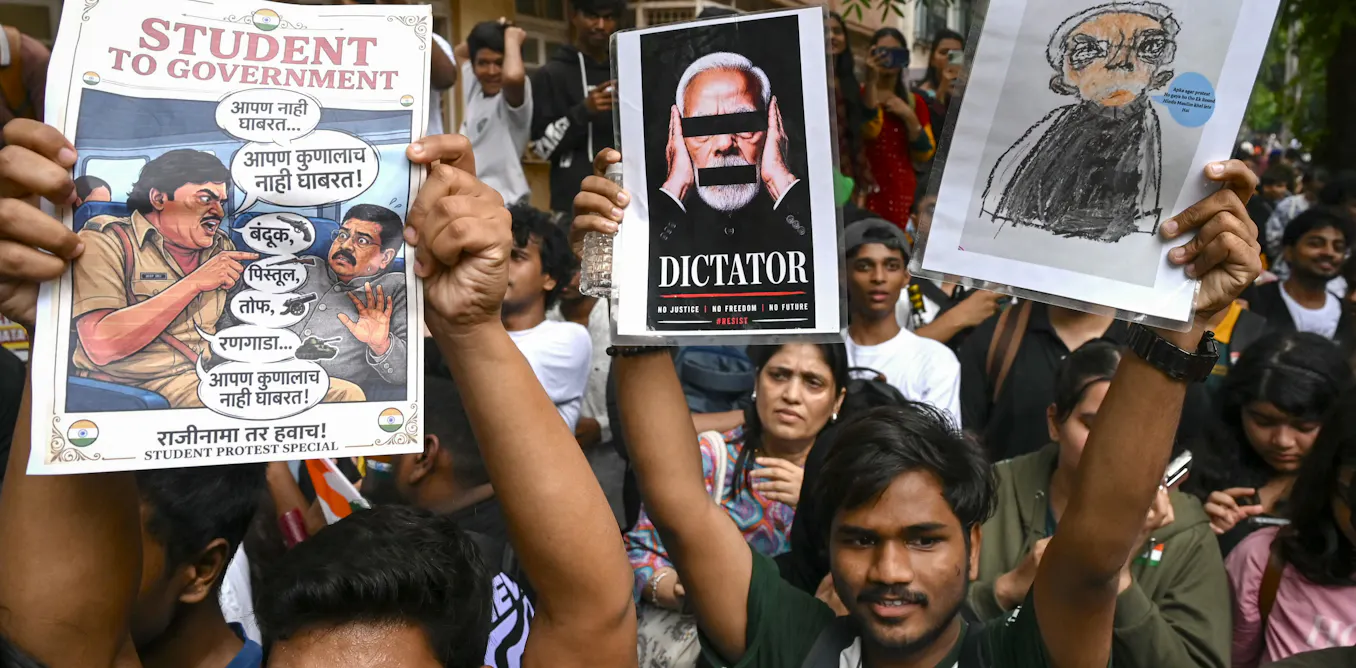
The student protests we have been witnessing in India can be explained in large part by the crisis facing the Indian middle class, marked in particular by graduate unemployment and a decline in average purchasing power. This is because the upper middle class has grown wealthier, while the lower-middle class has become poorer.
Until the mid-2010s, the idea that India’s middle class was destined to expand continuously seemed self-evident. India had enjoyed double-digit growth during the decade from 2004 to 2014 under Prime Minister Manmohan Singh, the architect of the economic liberalisation of the 1990s driven by the IT sector and foreign investment. The middle class was expanding at that time thanks to the growth of new skilled jobs. This momentum led to the emergence of a social group comprising corporate executives, engineers, IT professionals and entrepreneurs. This middle class defined itself by its income, its consumption capacity, and a social ethos often associated with the higher castes – particularly evident in its opposition to affirmative action policies.