Get all your news in one place.
100's of premium titles.
One app.
Start reading
AAP
AAP
Business
Jacob Shteyman

India trade deal reignites Australia's uranium wars

Australia's deal to sell uranium to India has reignited intense debate over nuclear proliferation. (Lukas Coch/AAP PHOTOS)

A lucrative trade deal struck by Prime Minister Anthony Albanese with his Indian counterpart has turned up the heat on a state ally and fired up uranium advocates and anti-nuclear campaigners alike.

The agreement, signed with Indian Prime Minister Narendra Modi on Thursday, will allow Australian companies to sell uranium ore to the rapidly expanding Indian market.

As India tries to decarbonise and massively increase power supply to fuel its bid to become an artificial intelligence powerhouse, Australians miners are champing at the bit to meet soaring uranium demand and prices.

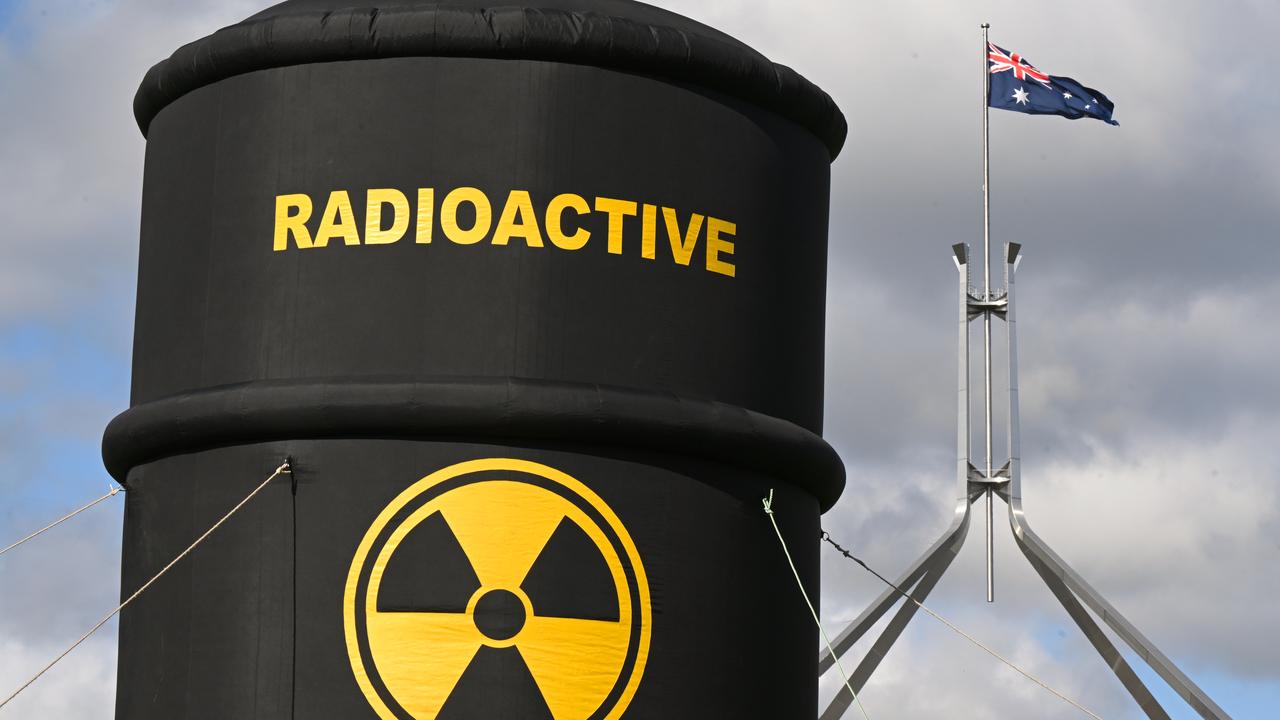
Uranium graphic
Australia is the world's fourth-largest producer of uranium. (Susie Dodds/AAP PHOTOS)

But despite hosting the world's largest uranium reserves, Australia is only the fourth-largest producer of the radioactive ore.

That's because uranium mines currently only operate in South Australia and the Northern Territory. In every other state, new uranium mines are banned.

Western Australia's traditionally mining-friendly Labor government has banned development of new uranium mines since 2017 but the resources industry and the Liberal-National opposition have stepped up their campaign to overturn the moratorium.

Minerals Council chief executive Tania Constable says the opportunity to supply a potentially immense Indian nuclear generation program adds further impetus to overturn "outdated and ideologically driven bans on uranium mining".

"This includes state mining bans in NSW, Queensland and WA and archaic federal laws which are not based on sound science," she says.

Modelling by RMIT professor Sinclair Davidson, commissioned by the Minerals Council in 2024, found uranium could contribute $2.1 billion to WA's economy by 2050 and create more than 1000 direct jobs, assuming Australia's global market share remained relatively stable.

Narendra Modi and Anthony Albanese
Narendra Modi and Anthony Albanese sealed a deal to unlock Australian uranium exports to India. (Christopher Hopkins/AAP PHOTOS)

Moreover, each gigawatt of coal-fired energy India replaced with nuclear power would prevent an estimated 9.6 million tonnes of CO2 from entering the atmosphere each year, according to the Minerals Council.

Jonathan Fisher, chief executive of WA-based uranium explorer Cauldron Energy, says the benefits of lifting the ban would extend beyond the economic.

Western nations aligned with Australia face a uranium supply crunch in the 2030s and will need a significant production uplift to meet energy needs.

"You cannot underestimate how strategic the uranium supply is for our partners like the US and the UK and Japan," Mr Fisher tells AAP.

"I call it a Trump card, right? If you go to the US and say, 'Look, we will export uranium to you but you're going to take off those ridiculous tariffs because getting that uranium and energy security is so much more important', it's the biggest lever we can apply."

Australia's three working uranium mines are all based in South Australia: Boss Energy's Honeymoon mine; Heathgate's Four Mile mine; and BHP's mammoth Olympic Dam mine, which contains just under a third of the world's total uranium deposit.

Minerals Council of Australia chief Tania Constable
Minerals Council of Australia chief Tania Constable says bans on uranium mining are "outdated". (Mick Tsikas/AAP PHOTOS)

Federal Resources Minister Madeleine King says Olympic Dam alone will be able to supply the exports India needs.

"The bans in different states are definitely a matter for the states," she told ABC Radio National on Friday.

But Mr Fisher says Australian producers are already maxed out.

"Australia must increase its production if we now want to help out India because we're not about to stop supplying the US and Japan and the UK," he explains.

While more supply could be achieved by running existing mines harder, the biggest opportunity is to overturn bans in WA, Queensland and NSW to broaden the scope of mining, Mr Fisher says.

It is only a matter of time before the WA government lifts the ban, he says.

WA Premier Roger Cook says the government is not shifting from its 2025 election commitment of no new uranium mines.

Uranium mine
BHP's mammoth Olympic Dam site is one of Australia's three working uranium mines. (David Mariuz/AAP PHOTOS)

"There are companies in Western Australia who have a permit to mine uranium and still haven't found the commercial circumstances in which that's to happen," he told reporters, referring to four existing mining licences grandfathered in 2017.

Of those projects, only one is still current: Deep Yellow's Mulga Rock project.

But to get it up and running, Deep Yellow would need to substantially alter its approvals and its main focus is its Tumas project in Namibia, where the government is much more accommodating, Mr Fisher says.

"The premier's made this comment before, (that) it's not yet economic to mine uranium in WA," Mr Fisher says.

"That's absolute BS, frankly.

"When the ban was put in place in 2017, the price was $US20 a pound. Yes, it wasn't economic then. It's closing in on $US100 today and let me tell you, it is economic to mine in WA."

RBC Capital Markets analyst Alistair Rankin is forecasting the price to climb to $US110 a pound in the long term.

The global uranium market is facing a structural tightening, as AI hyperscalers and new large-scale nuclear reactors ratchet up demand, he wrote in a research note.

WA Premier Roger Cook
WA Premier Roger Cook says his government is not shifting from its no-new-uranium-mines commitment. (Richard Wainwright/AAP PHOTOS)

WA Opposition Leader Basil Zempilas is vowing to lift the ban if elected.

Meanwhile, the LNP government in Queensland remains opposed to lifting its uranium ban.

Queensland is working to take advantage of the state's critical minerals reserves but uranium mining is not part of that plan, Mining Minister Dale Last says.

Any decision to open up uranium mining would be politically fraught and fought hard on Labor's left flank.

Steve McCartney, WA branch secretary of the Australian Manufacturing Workers Union, supports co-operation with India that creates secure, skilled jobs "but not at the expense of worker safety, communities or the environment".

"Uranium mining carries serious long-term risks and any proposal must face the highest level of scrutiny, consultation and transparency," he says.

"We should be adding value to our resources and creating jobs here, not simply digging more holes and exporting raw materials."

Madeleine King
Madeleine King says there are strict administrative arrangements regarding the export of uranium. (Lukas Coch/AAP PHOTOS)

Mr Albanese's turn from anti-nuclear advocate to uranium exporter has rankled nuclear disarmament activists just in time for the ALP national conference.

Before becoming Labor leader, the prime minister campaigned to prevent the sale of uranium to countries that were not signatories to the Nuclear Non-Proliferation Treaty, influenced by his mentor and strident anti-nuclear activist Tom Uren.

Nuclear disarmament campaigner John Hallam says the decision to sell uranium to India, a nuclear-armed non-signatory, should be viewed with "absolute disbelief".

"For decades, there has been powerful resistance in Australia to the sale of uranium to anyone whatsoever but most especially to governments that might engage in nuclear warfare," he says.

Ms King says there are strict administrative arrangements regarding the export of uranium and India, like all importers of Australian uranium, could only use it for peaceful purposes, as overseen by the International Atomic Energy Agency.

Sign up to read this article
Read news from 100's of titles, curated specifically for you.
Already a member? Sign in here
Related Stories
Top stories on inkl right now
One subscription that gives you access to news from hundreds of sites
Already a member? Sign in here
Our Picks
Fourteen days free
Download the app
One app. One membership.
100+ trusted global sources.