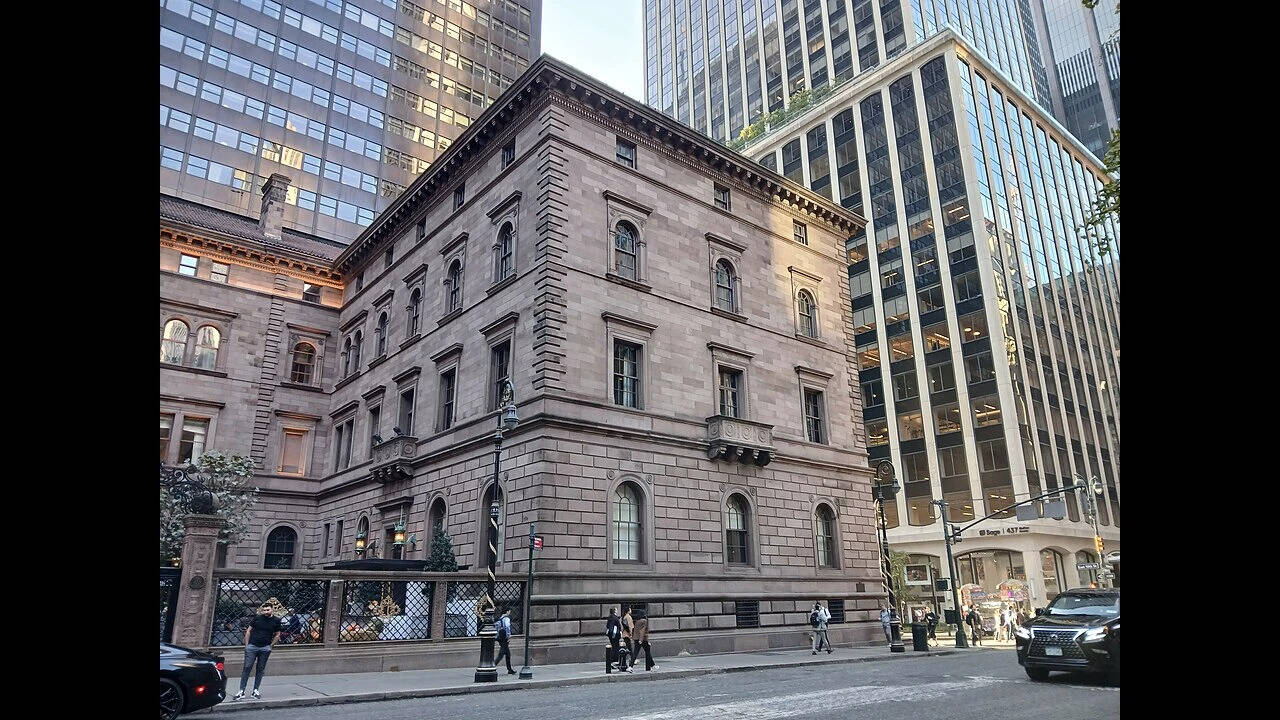
In the 1970s, six grand mansions in the heart of Manhattan faced an uncertain future. Built during New York’s Gilded Age, the Villard Houses had once been among the city’s most prestigious residences. But by the middle of the decade, a proposal for a 51-storey hotel threatened to alter or destroy parts of the historic complex. The result was an unusual architectural contrast: a modern skyscraper rising behind preserved 19th-century mansions that now serve as its entrance.
Get breaking news anytime, anywhere. Download the TOI app now!
According to The New-York Historical , railroad financier Henry Villard commissioned McKim, Mead & White in 1882 to design a unified complex of six mansions on Madison Avenue. Inspired by Rome's Palazzo della Cancelleria, the architects created an Italian Renaissance-style complex around a central courtyard, with all six residences completed in 1884. After Villard lost his fortune, the houses continued as grand residences before gradually passing into business and corporate hands. The Landmarks Preservation Commission designated the complex a New York City landmark in 1968. By the early 1970s, the Archdiocese of New York had acquired the remaining houses and, after consolidating its operations elsewhere, was looking to lease or develop the property to generate income.
A hotel plan puts the landmark at risk
According to the Society of Architectural Historians’ SAH Archipedia , developer Harry Helmsley proposed a 51-storey hotel behind the Villard Houses in 1974. His original plan called for the demolition of the rear façade and the gutting of the mansions’ interiors, prompting strong opposition from preservationists. The project was subsequently revised, with Emery Roth & Sons brought in to design the tower and integrate it with the historic houses.
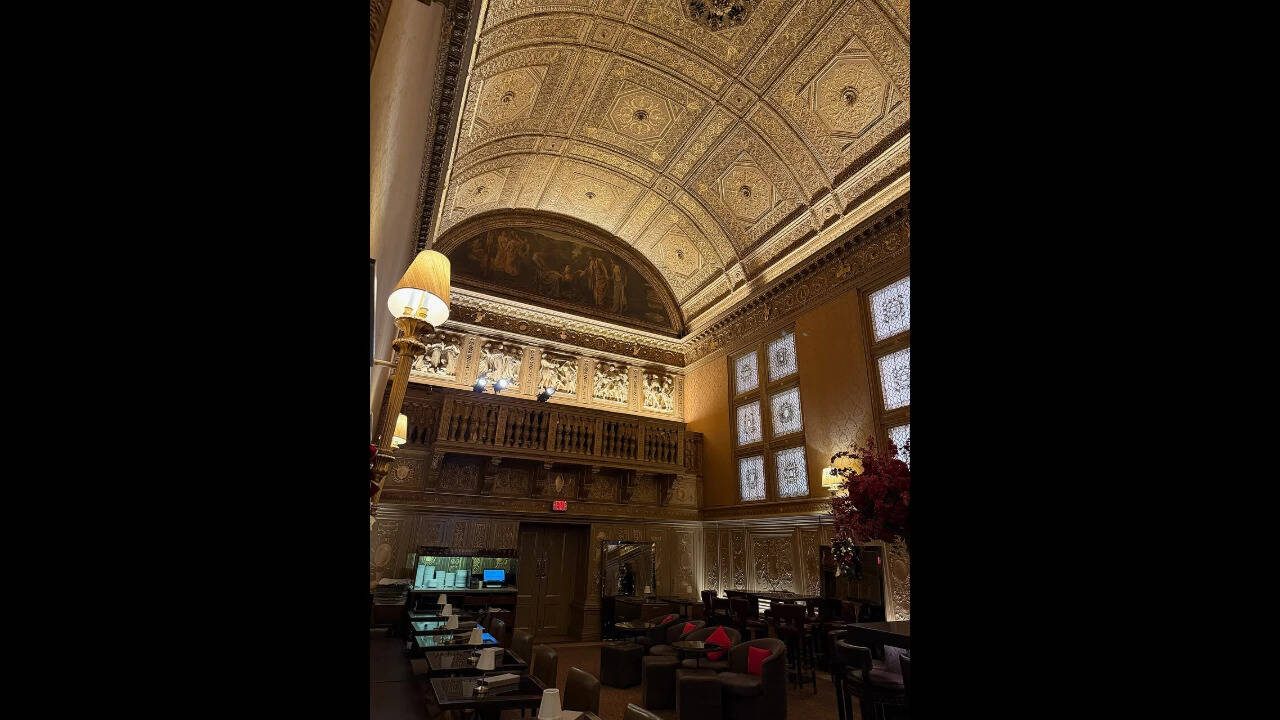
That distinction became central to the preservation battle. Keeping the façades while stripping away important interiors would have left the buildings standing but significantly diminished their historic character. Preservationists argued that rooms such as the elaborate Gold Room were an essential part of what made the Villard Houses significant. The proposal drew criticism from prominent preservation advocates, including architectural critic Ada Louise Huxtable. The dispute came at a particularly important moment for New York. The city was under severe economic pressure, while the preservation movement had gained momentum following the demolition of Pennsylvania Station in the 1960s.
The Villard Houses therefore became part of a wider debate over whether historic buildings could coexist with large-scale redevelopment. Negotiations eventually produced changes to the project. Important interior spaces, including the Gold Room, were retained, while portions of the original complex were allowed to be altered or removed. Rather than preventing the hotel from being built, preservationists pushed for a design that would incorporate the historic buildings into the new development.
A skyscraper rises behind Gilded Age mansions
Construction began in 1977, creating a striking contrast between the preserved 19th-century mansions and the modern hotel that rose behind them. The tower rose far above the four-storey Villard Houses, but the historic façades remained visible from Madison Avenue and around the courtyard. The most distinctive feature was the way the old buildings were incorporated into the hotel itself. The central portion of the Villard Houses became the principal entrance, while surviving historic rooms were adapted for new uses. The Gold Room, for example, became part of the hotel's public spaces.
What survived, and what was lost
The preservation was not complete. Parts of the original Villard Houses were demolished or substantially changed during construction, and not all of their historic interiors survived. Yet the campaign prevented the entire complex from being swept away by the hotel project.
The hotel opened in 1980 as The Helmsley Palace, with the Villard Houses incorporated into its public spaces and historic courtyard serving as the main approach to the hotel. Over the following decades, the property changed ownership and underwent several renovations before being acquired by Lotte Hotels & Resorts in 2015 and renamed Lotte New York Palace. By 2026, the Villard Houses remain an active part of the hotel, with the courtyard and surviving historic rooms still used for hotel functions. The result is an unusual combination of Gilded Age architecture and modern development, with the preserved mansions at street level and the 55-storey hotel tower rising behind them.
What makes the Villard Houses unusual is not just that they survived, but how they survived. Rather than surviving as standalone buildings, the Villard Houses survived through adaptive reuse. In other words, a collection of homes once owned by one of New York’s richest families became the entrance to a modern hotel tower.