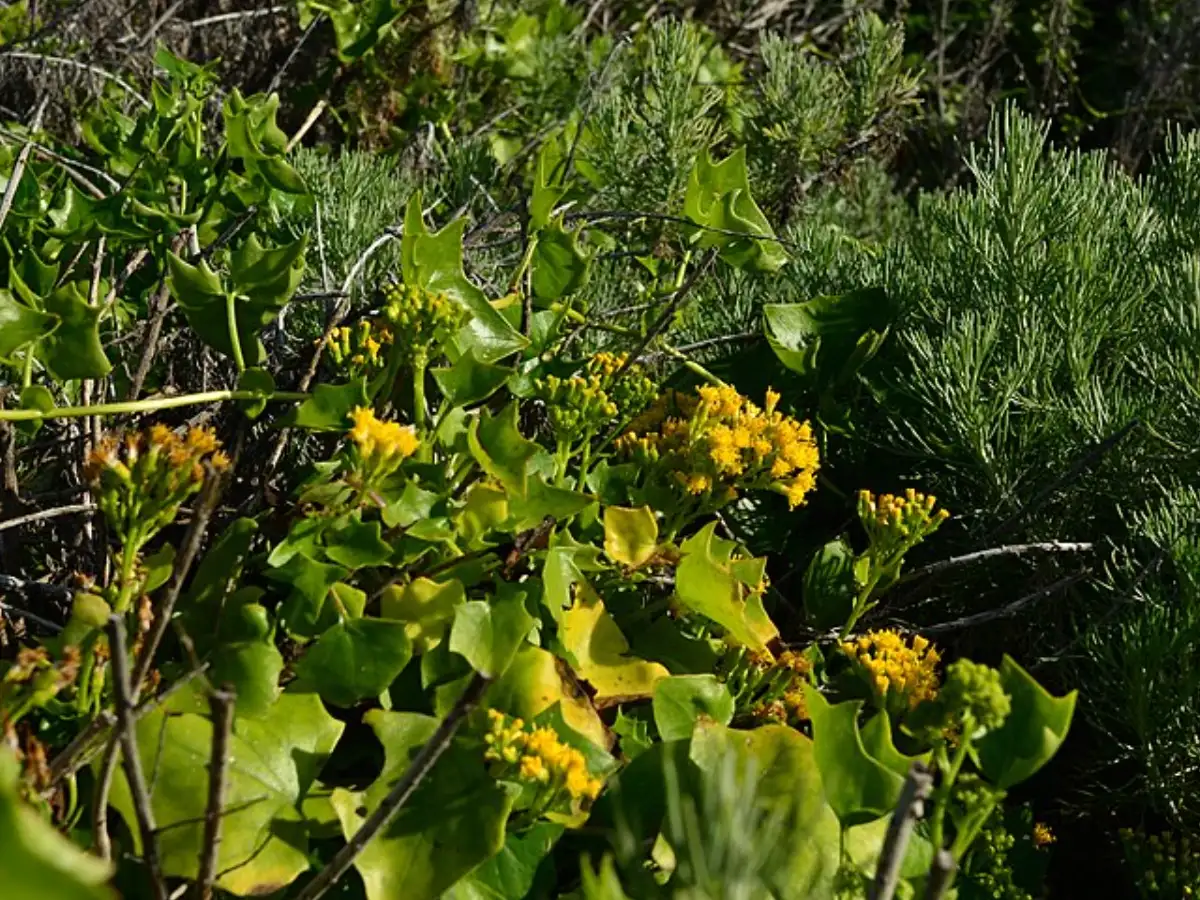
Cape ivy was introduced to California for its ornamental value, but the fast-growing vine eventually became a threat to the state’s coastal forests and streamside habitats. Its dense foliage can cover shrubs and trees, block sunlight and prevent native plants from regenerating. Once established, it can be difficult to remove because even small fragments of its stems may grow into new plants.
According to the California Invasive Plant Council (Cal-IPC), Cape ivy ( Delairea odorata ) was introduced to Marin County and Golden Gate Park in the 1950s for landscaping and became naturalised within about a decade. The council’s assessment reported that the plant occupied more than 500,000 acres in California. Its spread has raised concerns because research has documented substantial reductions in native plant diversity and seedling abundance in invaded habitats.