Get all your news in one place.
100's of premium titles.
One app.
Start reading
The Economic Times
The Economic Times
Team Global

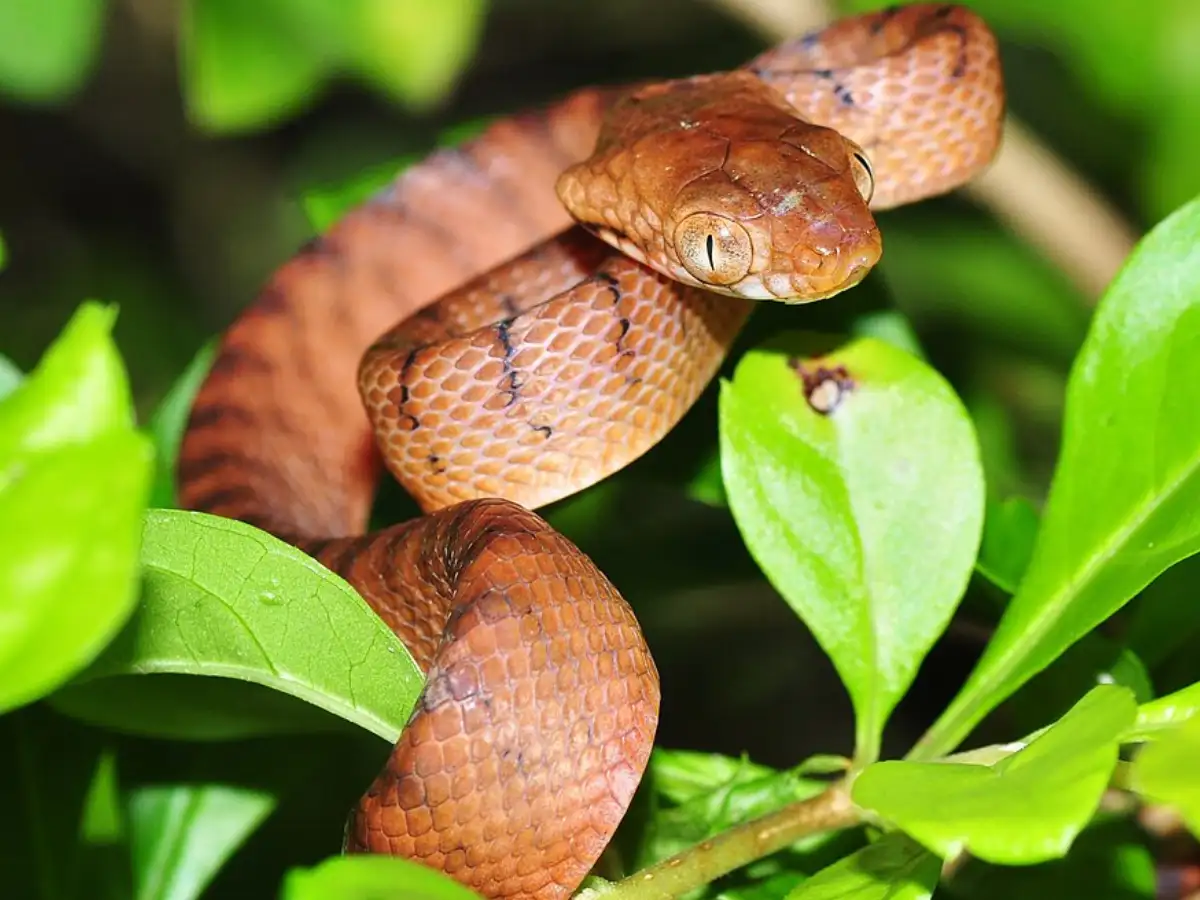
In the 1940s, the brown tree snake reached Guam hidden in post-WWII cargo and set off a chain reaction that scientists are still measuring today; birds gone, tree seedlings down by up to 92%, and spiders multiplying up to 40-fold on an island that once had neither

When people think about the damage an invasive predator can do, they mostly think about the animals it directly kills. What they rarely consider is what becomes of the trees.

A study titled ‘Effects of an invasive predator cascade to plants via mutualism disruption’ by researcher Haldre S. Rogers and colleagues at Iowa State University and the University of Washington, published in Nature Communications, shows that one invasive snake on a tiny Pacific island has started a cascade so devastating that the forest itself may be losing its ability to regenerate. The brown treesnake is to blame. The victim, ultimately, is the island of Guam.

The snake that silenced a forest

The brown treesnake (Boiga irregularis) was accidentally introduced to Guam in the mid-1940s, probably as a stowaway in military cargo after World War II. The snake contributed to the extinction of ten of the twelve native forest bird species on the island, and the other two were also functionally extirpated, leading to what researchers call a 'silent forest,' according to Rogers and colleagues.

That loss of birds was a familiar disaster. The new research shows that the damage is much greater than anyone thought.

Why birds are important to trees

This is what most people miss: birds are not just residents of a forest; they help to build it. Around 70% of Guam's tree species have fleshy fruits, whose seeds depend on birds to disperse them from the parent tree. When a bird eats a fruit, two important things occur. First, the seed passes through the bird's digestive system, which helps the seed germinate: the process removes compounds that inhibit sprouting and can scarify the seed coat in ways that boost germination rates. Second, the bird deposits the seed in a new, safer location away from the dangers that congregate under adult trees.

Seeds eaten by birds were two to four times more likely to germinate than whole fruits left intact. But taking the fruit flesh off by hand didn’t have the same effect; there’s something about passing through the gut that matters.

Sign up to read this article
Read news from 100's of titles, curated specifically for you.
Already a member? Sign in here
Related Stories
Top stories on inkl right now
One subscription that gives you access to news from hundreds of sites
Already a member? Sign in here
Our Picks
Fourteen days free
Download the app
One app. One membership.
100+ trusted global sources.