Get all your news in one place.
100's of premium titles.
One app.
Start reading
The Economic Times
The Economic Times
Team Global

In the 1910s, engineers proposed cutting a canal from the Mediterranean into Egypt's Qattara Depression to flood a below-sea-level desert basin and generate endless hydropower

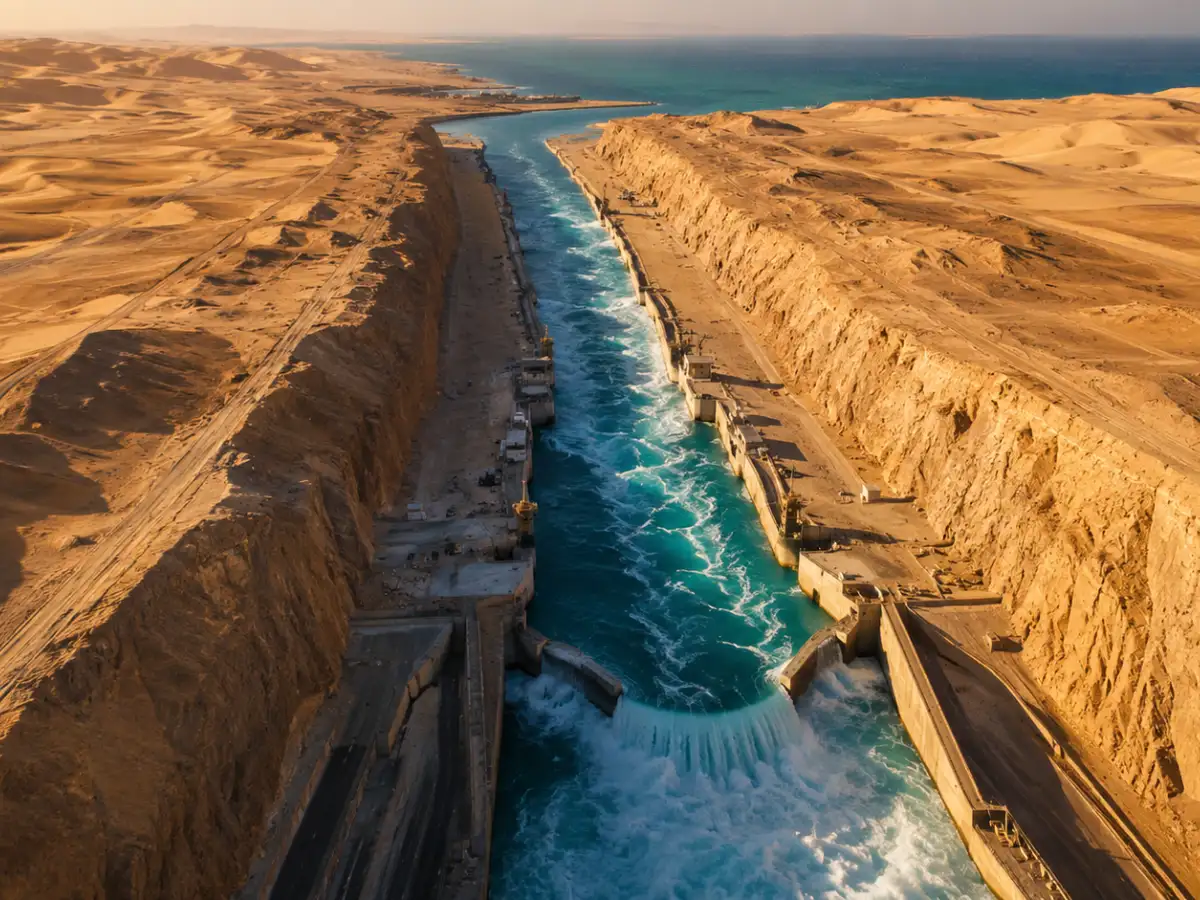
In the 1910s, engineers proposed digging a canal from the Mediterranean Sea to the Qattara Depression in northwestern Egypt, flooding the below-sea-level basin to generate hydroelectric power. The plan was studied intermittently for more than a century before Egypt scrapped it this year.

According to a 1933 summary in Nature of surveyor John Ball's work, the Qattara Depression has an average floor depth of about 60 meters (200 feet) below sea level, with a maximum depth of roughly 133 meters. The basin spans an estimated 20,000 square kilometers (about 7,700 square miles). Since no rivers flow into it, the basin remains dry.

How the plan was supposed to work

Seawater would travel from the coast through a tunnel or canal, dropping down into the depression and spinning turbines as it went. Once inside the hot desert basin, the water would likely evaporate quickly, drawing in more seawater behind it. That was the part that made the idea attractive: it could generate power almost continuously. But keeping the water level steady meant constantly balancing incoming seawater against evaporation, and over time, the basin would slowly fill with the salt left behind.

Sign up to read this article
Read news from 100's of titles, curated specifically for you.
Already a member? Sign in here
Related Stories
Top stories on inkl right now
One subscription that gives you access to news from hundreds of sites
Already a member? Sign in here
Our Picks
Fourteen days free
Download the app
One app. One membership.
100+ trusted global sources.