Get all your news in one place.
100's of premium titles.
One app.
Start reading
The Economic Times
The Economic Times
Team Global

In Massachusetts, Bar-Way Farm digests 36,500 tons of food waste and 9,125 tons of manure every year, producing enough electricity for 900 homes

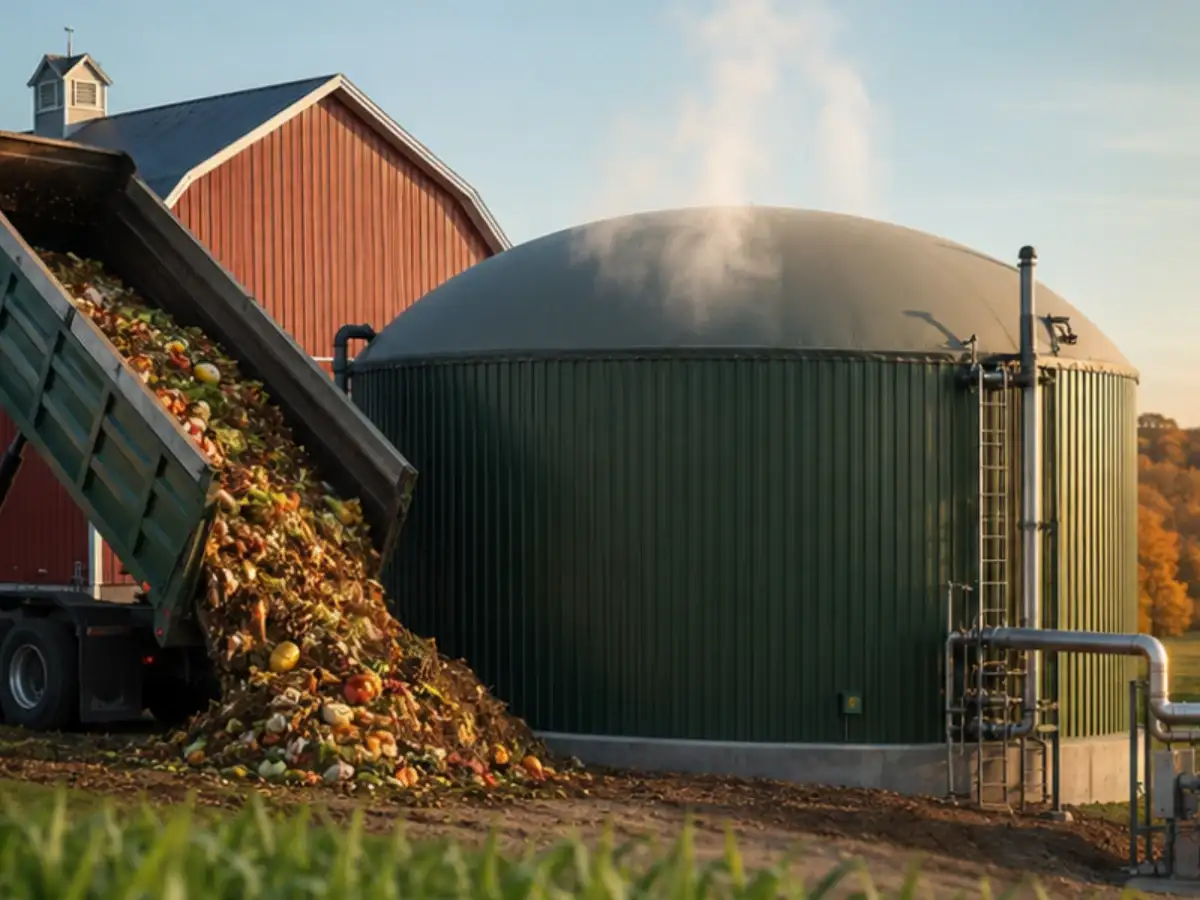
In Deerfield, Massachusetts, a fifth-generation dairy farm has discovered an unusual way to convert trash into power. According to a project profile published by the US Environmental Protection Agency, Bar-Way Farm now runs an anaerobic digester that converts 36,500 tons of food waste and 9,125 tons of cow manure into energy each year. The system produces enough renewable energy to power about 900 homes, and it helps keep the 600-acre farm financially viable. For readers interested in climate change and practical economics, the farm offers a concrete example of a circular economy in action.

What is actually happening on this farm

The Bar-Way Farm has been in the Melnik family since 1919. Currently, the farm belongs to Steven Melnik and his son Peter, who milk more than 250 dairy cows, producing 1,700 gallons of milk per day. Apart from dairy production, the farm raises hay, straw, pumpkins, butternut squash, and garlic. In 2016, the family entered into a partnership with Vanguard Renewables, a company dealing with renewable energy. The EPA profile explains that the partnership works under the third-party business model, whereby the Vanguard company designs, builds, and operates the digester, while the farm provides both the manure and the space. According to Peter Melnik, this partnership helps Northeast dairy farms stay sustainable because they have more food waste and more land than manure.

How the digester turns garbage into electricity

The process begins with waste. About 100 tons of food waste is transported every day from the local supermarkets, restaurants, and food processors, while 25 tons of manure is obtained from the cows raised on Bar-Way Farm itself. Next, the waste is loaded into a 100,000-gallon hydrolyzer, where it is broken down and mixed at about 105 degrees Fahrenheit for four to five days, according to the EPA's project profile. This is important because the digester at Bar-Way Farm was the first in the nation to use a hydrolyzer, a point also noted in that profile.

From there, the waste moves into a 700,000-gallon digester tank, where it decomposes without oxygen. Bacteria inside the tank release methane gas as they digest the material, and that methane fuels a one-megawatt generator. The setup produces about 7,700 megawatt-hours of electricity a year, along with roughly 1.62 million BTUs of heat every hour, some of which warms farm buildings while the rest is uploaded to the local Eversource grid.

Sign up to read this article
Read news from 100's of titles, curated specifically for you.
Already a member? Sign in here
Related Stories
Top stories on inkl right now
One subscription that gives you access to news from hundreds of sites
Already a member? Sign in here
Our Picks
Fourteen days free
Download the app
One app. One membership.
100+ trusted global sources.