CHANDIGARH: The Jat community in Haryana has been playing a key role in the state’s politics as well as in the state's economy. The community constitutes around 27% of state’s population and has a strong presence in around 40 of 90 state assembly seats of the state.
The dominance of the Jats in state politics can be gauged from the fact that in around 55-years of its existence, the state has been ruled by Jat chief ministers for 33 years.

The state is being run by another non-Jat CM since October 26, 2014. It was also for the first time that BJP had formed a government of its own in the state. Although the Jat community in Haryana had supported BJP in 2014 to give the state a option other than the Congress or INLD, there appears to be a strong sense of resentment among the community against the saffron party after its first regime (2014-2019).
It was only because of that the community had massively supported the newly formed political outfit –– Jannayak Janata Party (JJP) in 2019 assembly polls. It was only because of that the JJP could get 10 of the 90 state assembly seats in its very first election. However, Dushyant Chautala-led JJP also joined hands with BJP, which could not get the simple majority.
The main grouse of the community is unemployment because it was largely dependent on agriculture but due to shrinking landholding in the state, the youths of Jat community are facing severe employment crisis. Although BJP had tried to appease the community in 2016 by passing the Haryana Backward Classes (Reservation in Services and Admission in Educational Institutions) Act, 2016, providing reservation to the community in jobs and admissions. However, the same was later stayed by the court.
The community is also upset with the ruling saffron outfit ac- cusing it for creating a Jat and non-Jat divide in the state.
As majority of Jat community is into farming, they had massively supported the farmers’ agitation on Delhi borders providing all kinds of support to the Punjab farmers.
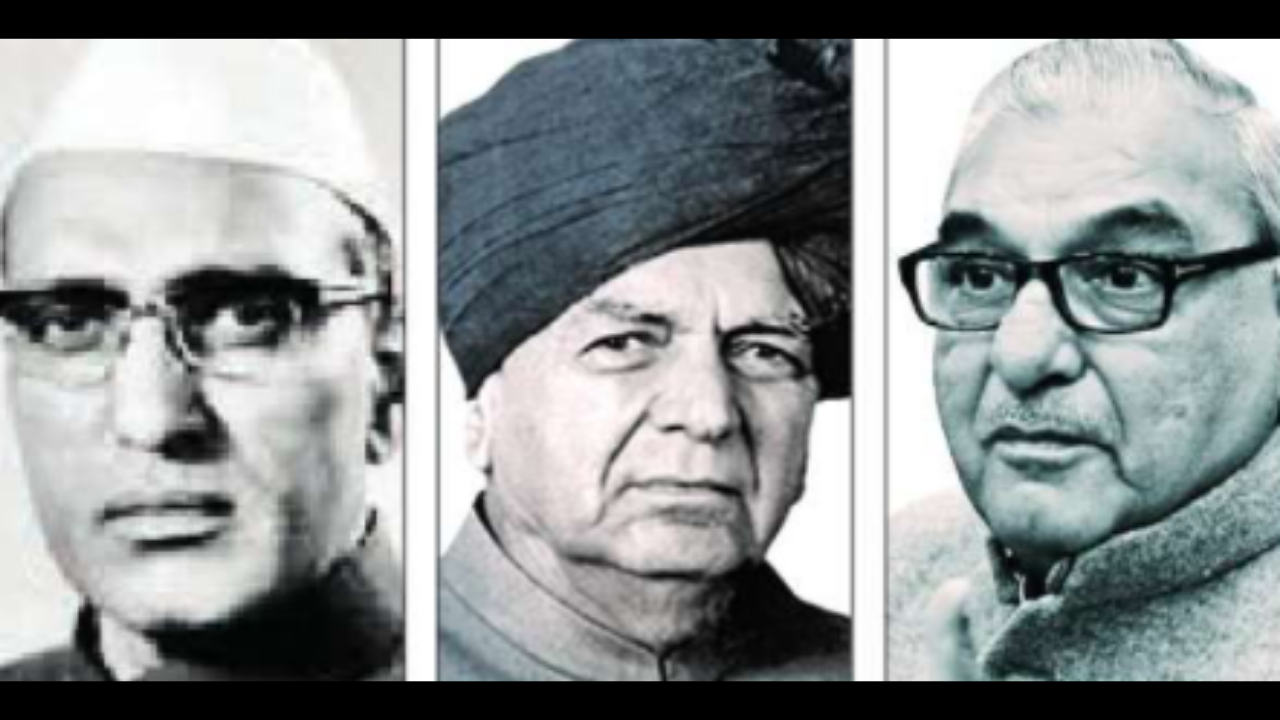
The state has mainly been ruled by two Jat families of Haryana — Devi Lal and Bansi Lal for the longest period. While Devi Lal has remained the deputy prime minister and state’s chief minister for two terms, Bansi Lal has served as defence and railways minister. Bansi Lal was also the state CM for the longest tenure.
Bhupinder Singh Hooda, whose father Ranbir Singh Hooda had served as member of constituent assembly, has also served as the CM for around 10 years. He also holds a strong following in Deswali belt (Sonipat, Rohtak and Jhajjar districts) of the state.
Even Jat pheasant leader, Chotu Ram’s grandson, Birender Singh had served as a Union minister and at present his son Brijender Singh is Lok Sabha MP from Hisar.
Former CM Bansi Lal’s daughter-in-law, Kiran Chaudhary is a legislator representing the Congress in the state assembly.
Even two of the 10 Lok Sabha MPs from Haryana, Dharambir Singh from Bhiwani-Mahendergarh and Brijender Singh from Hisar also belong to the Jat community.
The Connection
As Haryana was separated from Punjab in 1966 on linguistic basis, Jats of Haryana and Jat Sikhs still share a strong bond. Both communities are mainly dependent upon agriculture and are also one of the reasons that both share similar interests and objectives.
Apparently scared of losing land or thinking that they would become tenants of their own land because of the Centre’s now repealed farm laws, both Jats of Haryana and Jat Sikhs of Punjab had contributed the maximum during the recently concluded farmers’ agitation.
This bonding between the farmers of these two communities of two agrarian states was crucial for the farmers’ movement. Even both the Jats and Jat Sikhs have been traditionally sending their children into the armed forces since ages. Though culturally both are slightly different but still there have been several examples where they inter-marry.