Plants can experience what scientists call midday depression, a period when photosynthesis slows during the hottest part of the day. High temperatures, dry air and strong sunlight can make it harder for leaves to keep taking in carbon dioxide, even when water is still available in the soil. A 2025 study by University of Arizona researchers examined whether the shade created by solar panels could ease some of that stress in crops grown in Arizona's dry climate. The findings, published in npj Sustainable Agriculture , suggest that agrivoltaic systems can change the growing conditions around crops and help some plants maintain productivity under reduced irrigation.
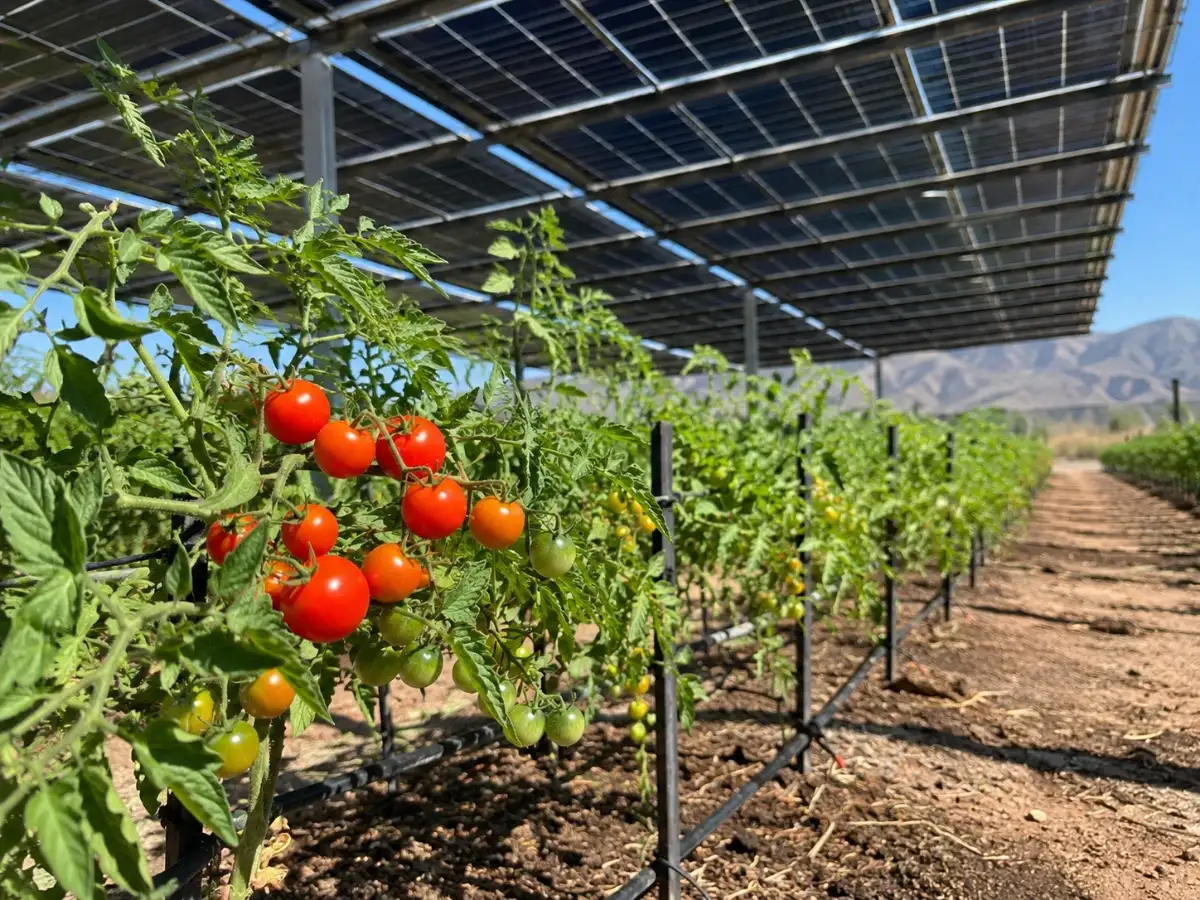
The experiment was conducted at the Biosphere 2 Agrivoltaics Learning Lab, an outdoor research site operated by the University of Arizona north of Tucson. Researchers planted Genovese basil, Anasazi bush red beans, and cherry tomatoes in open-sun plots and beneath a raised photovoltaic array. The panels were positioned 3.3 metres above the ground at their lowest end and tilted at 32 degrees. The researchers tested both normal irrigation and a treatment receiving 50% of the usual irrigation.