Get all your news in one place.
100's of premium titles.
One app.
Start reading
The Economic Times
The Economic Times
Shreya Biswas and ET Science Desk

In 478 BC, a temple was built to honour Confucius; centuries of rebuilding turned it into a complex with more than 100 buildings

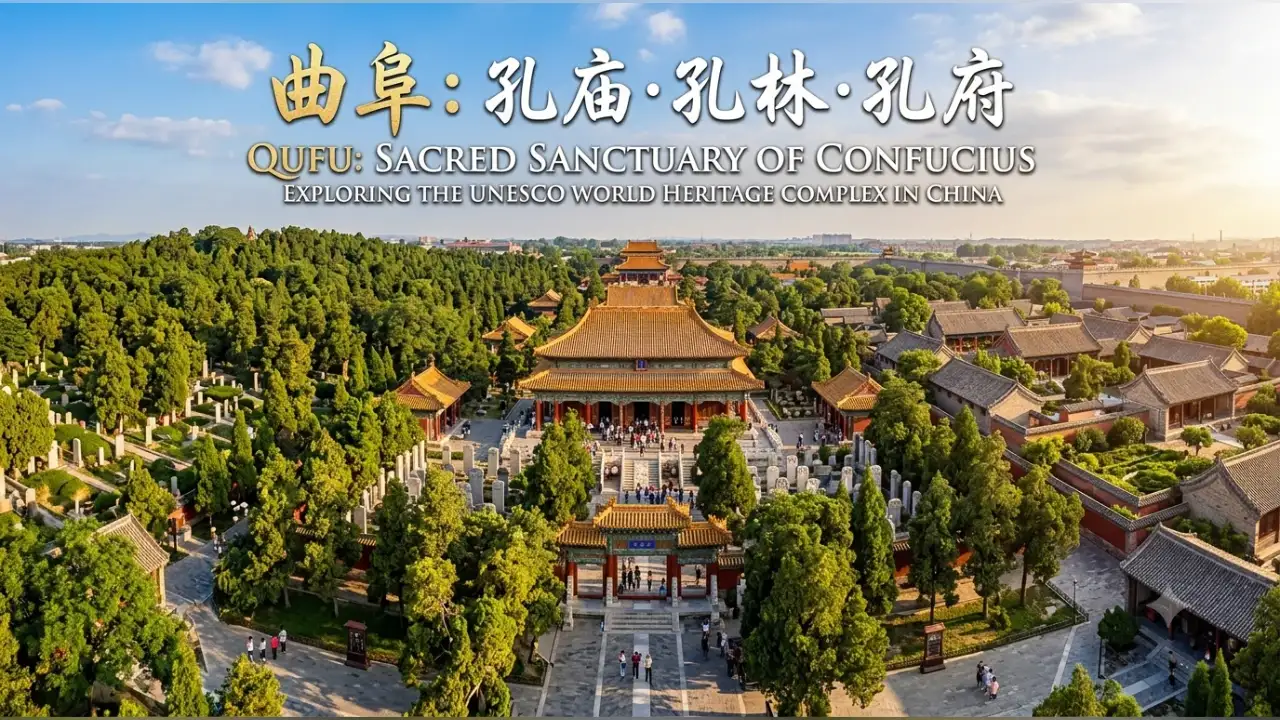
Temple of Confucius : In 478 B.C., a temple was built in Qufu, China, to commemorate Confucius. More than two thousand years of reconstruction and expansion later, the Temple of Confucius, the Cemetery of Confucius and the Kong Family Mansion form a historic complex that UNESCO recognizes for its outstanding artistic and historic character.

Located in Qufu City in Shandong Province, the site is closely associated with Confucius and his descendants. UNESCO says the complex retained its character through the devotion of successive Chinese emperors over more than 2,000 years.

Temple of Confucius Was Built in 478 B.C.

The Temple of Confucius was built in 478 B.C. to commemorate and offer sacrifices to Confucius. UNESCO describes him as a renowned philosopher, politician and educator in ancient China. His system of belief involving philosophy, politics and ethics later became known as Confucianism.

The temple was destroyed and reconstructed over the centuries. Today, UNESCO says it covers 14 hectares and has 104 buildings dating from the Jin to Qing dynasties. These include the Dacheng Hall, Kuiwen Pavilion and Xing Altar.

The temple also contains more than 1,250 ancient trees and more than 1,000 stelae made at different times. UNESCO also identifies Han stone reliefs, carved pictures depicting the life of Confucius and stone dragon carvings from the Ming and Qing dynasties among the site's features.

READ ALSO: In 500 BCE, ancient people created vast animal and geometric figures in Peru's desert. 2,500 years later, the Nazca Lines remain one of archaeology's great enigmas

Cemetery of Confucius Contains More Than 100,000 Graves

About 1,100 meters north of Qufu City lies the Cemetery of Confucius, covering 183 hectares. It contains the tomb of Confucius and more than 100,000 graves of his descendants.

UNESCO describes the cemetery as important material evidence for the development of the Kong Clan. The cemetery, temple and family mansion together form the historic group of monuments recognized as the Temple and Cemetery of Confucius and the Kong Family Mansion in Qufu.

Kong Family Mansion Developed Into An Aristocratic Residence

To the east of the temple stands the Kong Family Mansion. UNESCO says it developed from a small family house linked to the temple into an aristocratic mansion where the male direct descendants of Confucius lived and worked.

Following a fire and the rebuilding of the temple with an enclosure wall modeled on an imperial palace in the 14th century, the mansion was rebuilt a short distance from the temple. It was later expanded, destroyed again by fire and rebuilt in the late 19th century.

UNESCO's detailed description says the mansion covers seven hectares and has some 170 buildings. Its collections include more than 100,000 objects, including ceremonial utensils from the Shang and Zhou dynasties, portraits of Confucius from different periods, and clothes and caps from the Ming and Qing dynasties.

READ ALSO: In 2018, CRF measured coral restoration's economic ripple across Florida Keys for 5 years. 7 years later, researchers found up to 144% local economic contribution per dollar spent

Confucian Ideas Shaped The Design Of The Complex

UNESCO says the buildings were designed and constructed according to Confucian ideas concerning the hierarchy and arrangement of their different components. During the Ming period, outstanding artists and craftsmen contributed to the decoration of the temple.

During the Qing period, imperial craftsmen were assigned to construct the Dacheng Hall and Gate and the Qin Hall. UNESCO describes these buildings as representing the pinnacle of Qing art and architecture.

The organization says the support of Chinese emperors over more than two millennia ensured that leading artists and craftsmen were involved in the creation and reconstruction of the buildings and landscape dedicated to Confucius.

Qufu’s Confucius Complex Became A UNESCO World Heritage Site

The Temple and Cemetery of Confucius and the Kong Family Mansion were inscribed on the UNESCO World Heritage List in 1994. UNESCO recognizes the group as an outstanding architectural complex demonstrating the evolution of Chinese material culture over a considerable period of time.

UNESCO also recognizes the contribution of Confucius to philosophical and political doctrine in Eastern countries over two thousand years, as well as in Europe and the West during the 18th and 19th centuries.

READ ALSO: In 1921, Alaskan seamstress Ada Blackjack joined an Arctic expedition for $50 a month; nearly two years later, she was rescued as its only surviving person

Sign up to read this article
Read news from 100's of titles, curated specifically for you.
Already a member? Sign in here
Related Stories
Top stories on inkl right now
One subscription that gives you access to news from hundreds of sites
Already a member? Sign in here
Our Picks
Fourteen days free
Download the app
One app. One membership.
100+ trusted global sources.