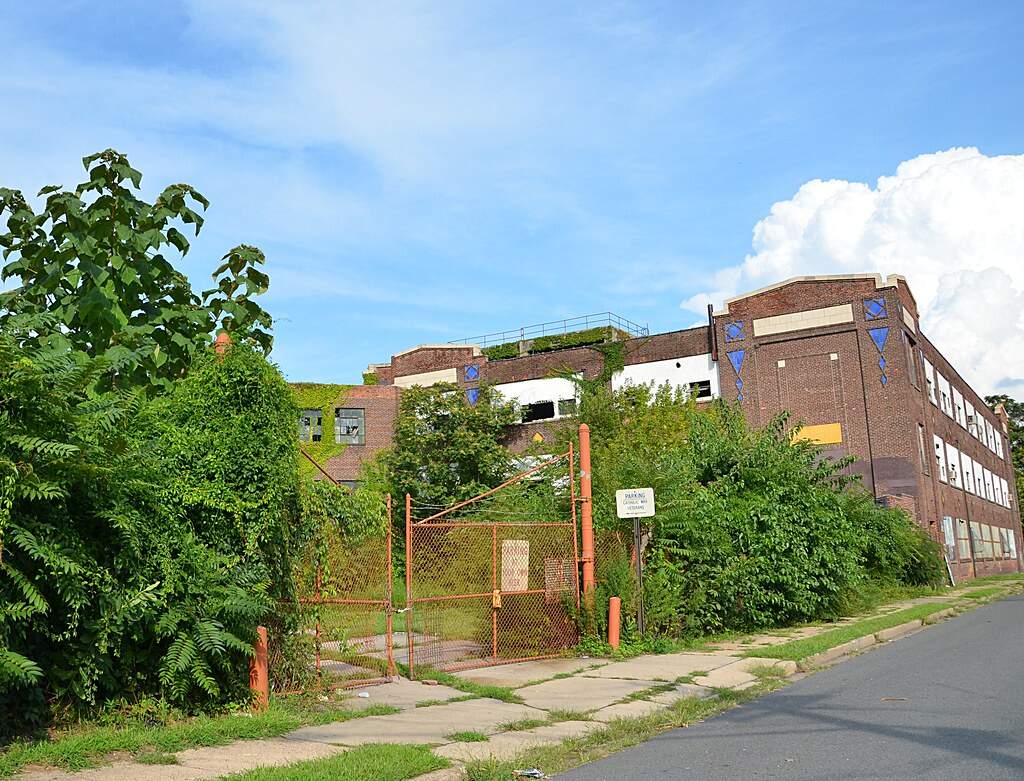
A building that once produced dolls for American children is preparing to welcome a new generation of students. According to Engineering News-Record , the nearly century-old Horsman Doll Factory in Trenton, New Jersey, has been transformed into the new home of Foundation Academy Collegiate, creating a 91,600-square-foot high school campus. Rather than replacing the old structure entirely, the project retains much of the historic factory while adding new spaces for classrooms, laboratories, a gymnasium and other facilities. The school is scheduled to open for the 2026–27 academic year.
Get breaking news anytime, anywhere. Download the TOI app now!

From a doll factory to an empty building
According to the Trenton Historical Society , the Horsman Doll Factory dates to the early 1930s, when Trenton was still an important manufacturing centre. The complex became the main manufacturing site for the Horsman family's dolls and, at its height, employed more than 800 people. Doll production eventually ended in the 1960s, after which parts of the complex were used by other businesses.
The building eventually fell into disuse, and by the early 2000s the former factory had become a vacant and deteriorating property. The Trenton Historical Society listed it among the city's endangered buildings, highlighting its importance to a neighbourhood once closely linked to industrial employment. Several proposals for redevelopment emerged over the years, but the site remained largely unused. The turning point came when Foundation Academies selected the property at 350 Grand Street as the future home of its new high school campus. As the organisation looked to expand in Trenton, the former factory offered a rare opportunity: an existing historic structure that could be adapted for a new purpose rather than replaced entirely.
Keeping the old structure while building something new
According to Foundation Academies , the project combines the historic 40,000-square-foot Horsman Doll Factory with a new steel-framed addition to create a modern high school campus. The renovated factory will house classrooms, laboratories, offices and other academic spaces, while the new addition includes facilities such as a gymnasium, performance spaces and specialised learning areas that could not be accommodated within the original building.
The gymnasium can also be adapted for use as an auditorium or theatre, giving the school a space that can serve more than one purpose. The construction team had to work with a building whose condition was not fully known at the start. Some parts of the brick façade had deteriorated, while the structure had settled unevenly over the decades. Engineers had to inspect sections of the building as work progressed, repair window openings and repoint the surviving brickwork. Three of the four main façades were retained, while the northern façade was removed at the point where the old structure meets the new addition.
A new chapter for a familiar landmark
Foundation Academies' 2023–24 Impact Report notes that the new campus is part of the organisation's broader plan to expand educational opportunities in Trenton. At the time of the report, Foundation Academies served 1,082 students across its K–12 network and projected that the addition of Foundation Academy Collegiate would increase total enrollment to about 1,820 students. The former Horsman Doll Factory was chosen as the future site of the campus to accommodate this planned growth.
Once filled with workers making dolls, the building will now house students studying subjects such as science and technology. While its outer appearance will reflect its former life, the activity inside the building will change significantly. In the case of Trenton, architects have managed to preserve large sections of what had been an endangered building along with facilities for a modern school. For a city with a long manufacturing history, the change also carries civic significance. The Horsman factory once represented Trenton's industrial economy. Its new role as a school connects that past with the city's future, allowing a building that spent years standing empty to once again become part of daily life in the neighbourhood.